Events General

Liene at Open Source in Finance Forum London 2026

15. Jul 2026

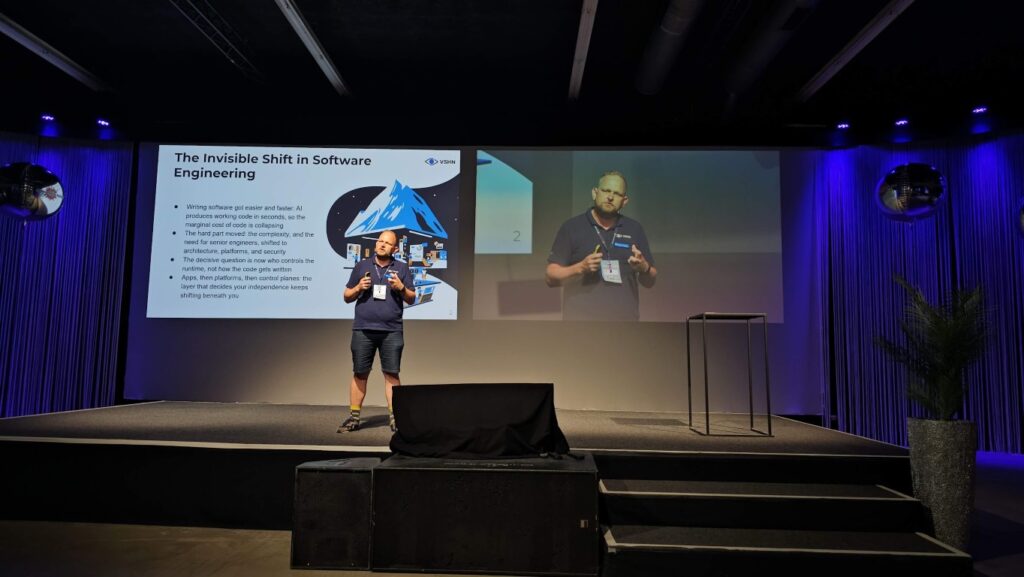
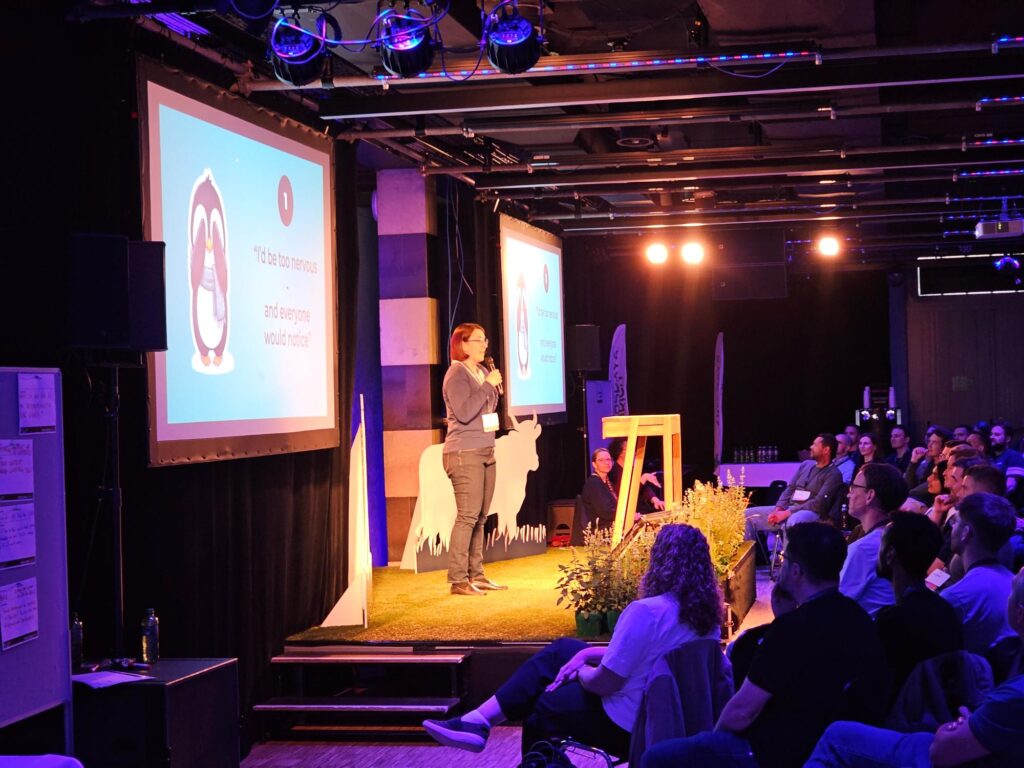
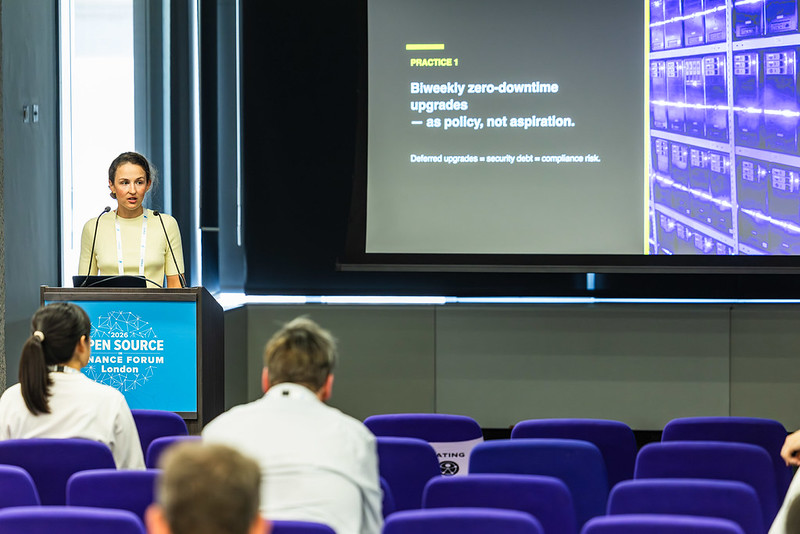
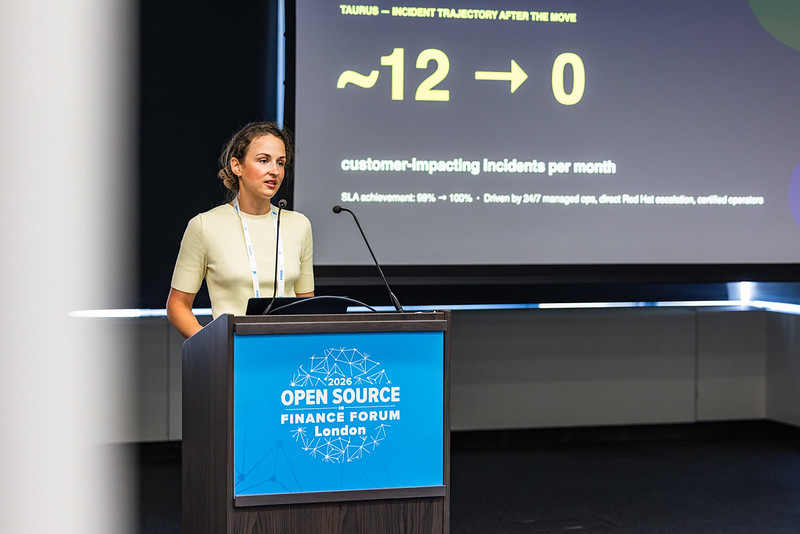
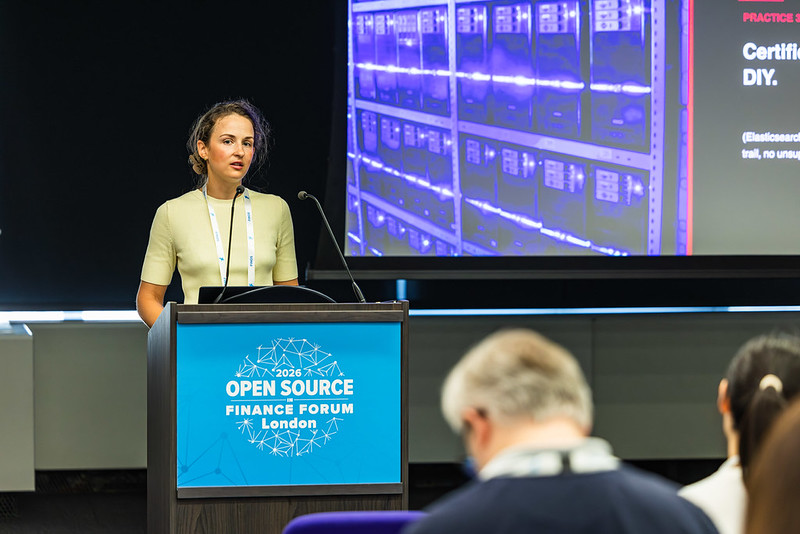
At the Open Source in Finance Forum London 2026, I took the stage to share lessons from operating a regulated digital asset platform on open, cloud-native infrastructure. The talk was part of the Fluxnova & Platform Automation track and ran on Thursday, June 25, 2026.

The talk

Operating Digital Asset Platforms on Open Infrastructure: Lessons From Regulated Production

Digital asset platforms operate under demanding conditions: strict security requirements, high availability expectations, and increasing regulatory scrutiny. At the same time, engineering teams need to retain the flexibility to evolve their systems as the digital asset ecosystem keeps developing. This was a real-life use case: what worked for us, and what didn’t.

You can find the full slide deck here.

The full recording of the talk is available here.

Two worlds that don’t normally talk to each other

I opened by explaining why I’m the one telling this story. I’ve lived the same tension from two different angles: highly regulated healthcare on one side, fluid open-source ecosystems on the other. Digital asset platforms sit exactly at that intersection – regulated discipline meets open-source speed.

Why digital assets are a different operational challenge

Three pressures make this space harder than typical cloud-native infrastructure:

  • Digital assets are bearer instruments – downtime doesn’t just mean a bad SLA, it means real money at risk.
  • The regulatory ground keeps moving: FINMA today in Switzerland, MiCA rolling out across Europe.
  • The asset universe itself keeps expanding – from crypto to tokenized securities to NFTs to CBDCs – and the platform has to evolve without breaking what’s already live.

As one of our partners, Taurus, put it: “We run on OpenShift, they run on OpenShift – we speak the same language.”

Three patterns we see across regulated financial infrastructure

Pattern 1: Stable core, agile edge. The clearest example is acrevis Bank, where a proven, regulated core banking system (Finnova) stays untouched, while a cloud-native layer on APPUiO/OpenShift, built with Lagoon, iterates fast at the edge – connected through a VPN/API gateway. This isn’t a Strangler Fig pattern. The interface between the two layers is exactly where governance lives. A digital asset platform is, by design, an agile edge – which is why Taurus’s 30+ bank customers all connect digital-asset capability at the edge of a stable core.

Pattern 2: Delegate platform ops, own your core. Everyone focuses on their own layer: banks focus on their business, Finnova focuses on banking software, VSHN focuses on platform operations. After Taurus moved to managed OpenShift, they were operating across 30+ institutions, 9 countries, and 3 continents, with several reclaimed FTEs redirected from platform maintenance to product and global expansion. Delegating platform ops also concentrates the compliance burden onto whoever can carry it best – which is why VSHN holds ISO 27001 and ISAE 3402 Type 2, and operates under FINMA guidelines.

Pattern 3: Evolutionary migration, not big bang. Taurus didn’t start with a fully managed enterprise platform – they grew into it in three deliberate stages: vanilla Kubernetes in 2018, then OKD (community OpenShift), and today, managed Red Hat OpenShift on VSHN. Each step was right for that stage of their growth. The lesson: you don’t need the full managed stack on day one, but you do need to design the handoff path from the start.

Operational practices that make financial-grade infra real

A few practices came up as non-negotiable in this space: biweekly zero-downtime upgrades as policy, not aspiration – because deferred upgrades quietly become security debt and compliance risk. Self-healing infrastructure isn’t just about reliability, it’s a compliance primitive. And certified operators beat DIY, even for something as well-understood as Elasticsearch – using ECK gives you a clean audit trail with no unsupported modifications.

The results speak for themselves: after the move, Taurus went from around 12 customer-impacting incidents per month to zero, with SLA achievement moving from 99% to 100%, driven by 24/7 managed ops, direct Red Hat escalation, and certified operators.

The honest part: what didn’t work

True to VSHN form, I didn’t stop at the success story. A few open questions I’d probe harder with hindsight: did the OKD-to-managed-OpenShift migration happen too late, and what did that interim period actually cost? How do you keep consistency at global scale when multi-geography compliance means different partners in different regions? How do you balance a stable biweekly platform cadence against an ecosystem that moves faster than most enterprise software cycles? And what should an RFP really screen for beyond technical specs – agility, escalation paths, and a willingness to co-design rather than just execute?

Highlights from the forum

A few things stood out over the two days in London beyond my own talk.

Platforms matter, whatever the industry. Whether you’re running infrastructure for finance, healthcare, or somewhere else entirely, the underlying challenges don’t really change. Security, availability, compliance, and the need to move fast without breaking production – these are the same conversations regardless of the label on the regulator’s letterhead.

Open source adoption in regulated industries is accelerating. A few years ago, “open source” and “regulated production” felt like they belonged in different rooms. Not anymore. Banks once feared open source; now their most critical infrastructure runs on it. The appetite for open, auditable, vendor-independent infrastructure in finance is growing quickly, and the questions from the audience reflected that shift – people aren’t asking if anymore, they’re asking how.

AI was everywhere, but it wasn’t everything. Unsurprisingly, AI featured heavily across the sessions. But the forum was a good reminder that solid tooling and honest conversations between people are still what actually gets regulated infrastructure into production. AI can help, but it doesn’t replace the groundwork.

Thank you, London

Thanks to the Linux Foundation and the Open Source in Finance Forum orgnisers for putting together two days of sharp, practical conversation. It’s encouraging to see how seriously the finance sector is now engaging with open source and cloud-native approaches for genuinely critical infrastructure.

Financial-grade open infrastructure isn’t about replacing what works – it’s about building the right fast layer alongside it, and handing the platform to people who live and breathe it. If you’re operating regulated platforms and thinking about how open infrastructure fits into that picture, let’s talk.

Liene Luksika

Product Manager

Contact us

Our team of experts is available for you. In case of emergency also 24/7.

Contact us
Events General Sovereignty

Switch Cloud Forward Forum Day 2026 Recap

29. Jun 2026

Sovereign cloud, real-world use cases, and a room full of Swiss higher education decision-makers

On June 23rd, VSHN was at the Cloud Forward Forum Day 2026 in Bern – an event organized by Switch for IT leaders, procurement specialists, and strategists from Swiss universities and research institutions. The topic: how to make public cloud work for Swiss higher education, without sacrificing sovereignty, compliance, or flexibility.

VSHN showed up twice – once with a use case from the health sector, and once on stage with a short elevator pitch. Here’s what the day looked like.

The bigger picture: AI, sovereignty, and the pressure to modernize

The day opened with a keynote from Marc Stampfli (NVIDIA), framing the current moment as an industrial revolution driven by intelligence – and raising the question of what sovereignty means when AI infrastructure is concentrated in a handful of global providers. It set the tone for everything that followed: institutions want to move fast, but not at the cost of control over their data.

Elevator pitches: fast takes, sharp angles

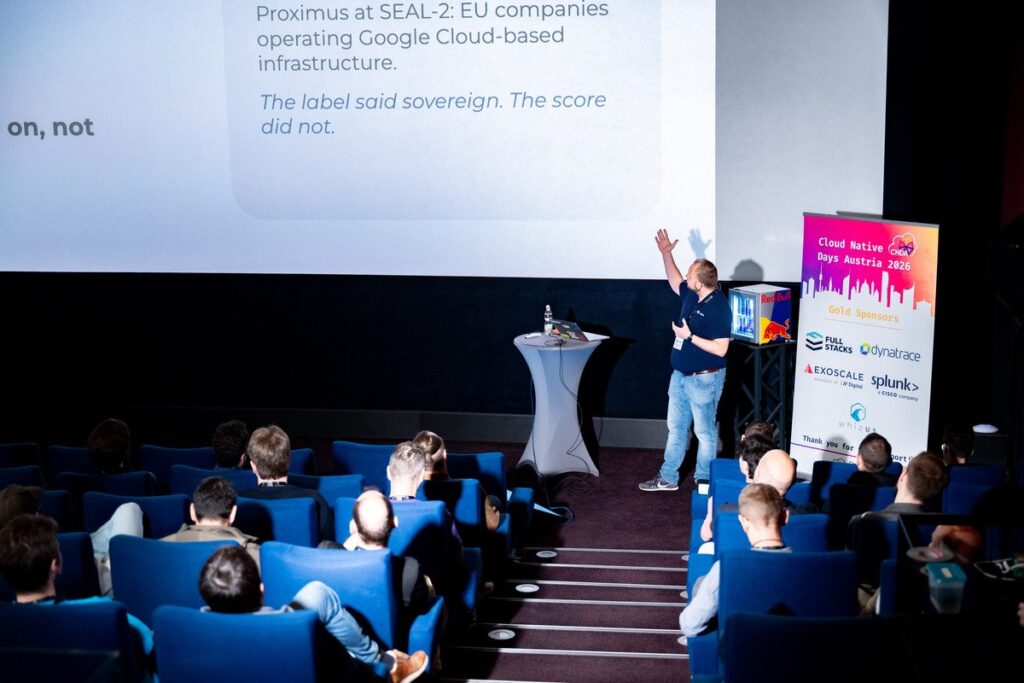
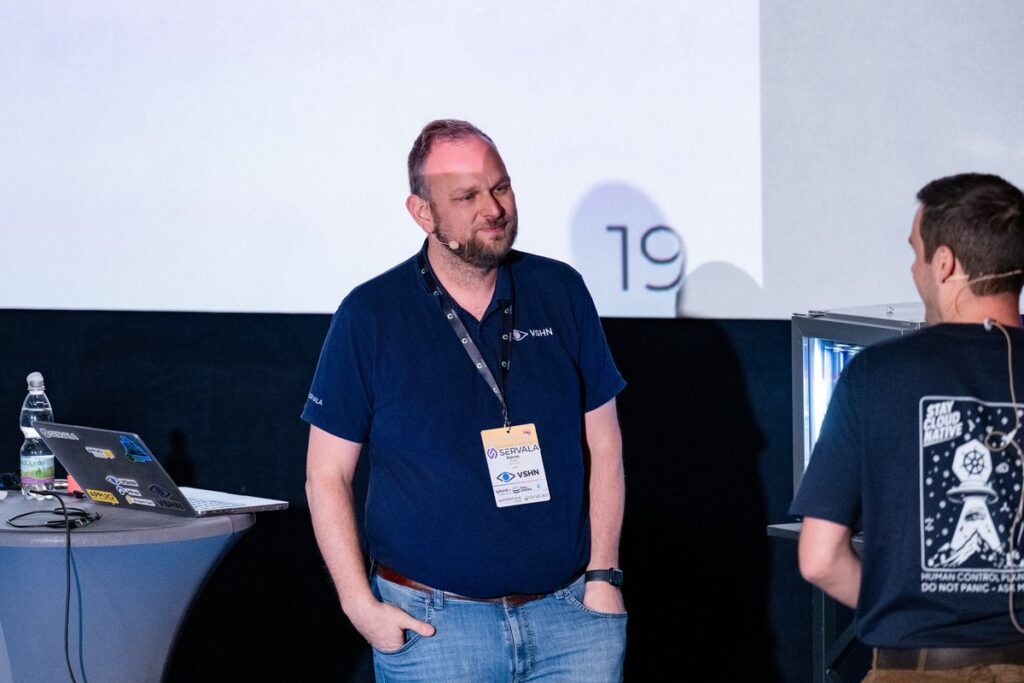
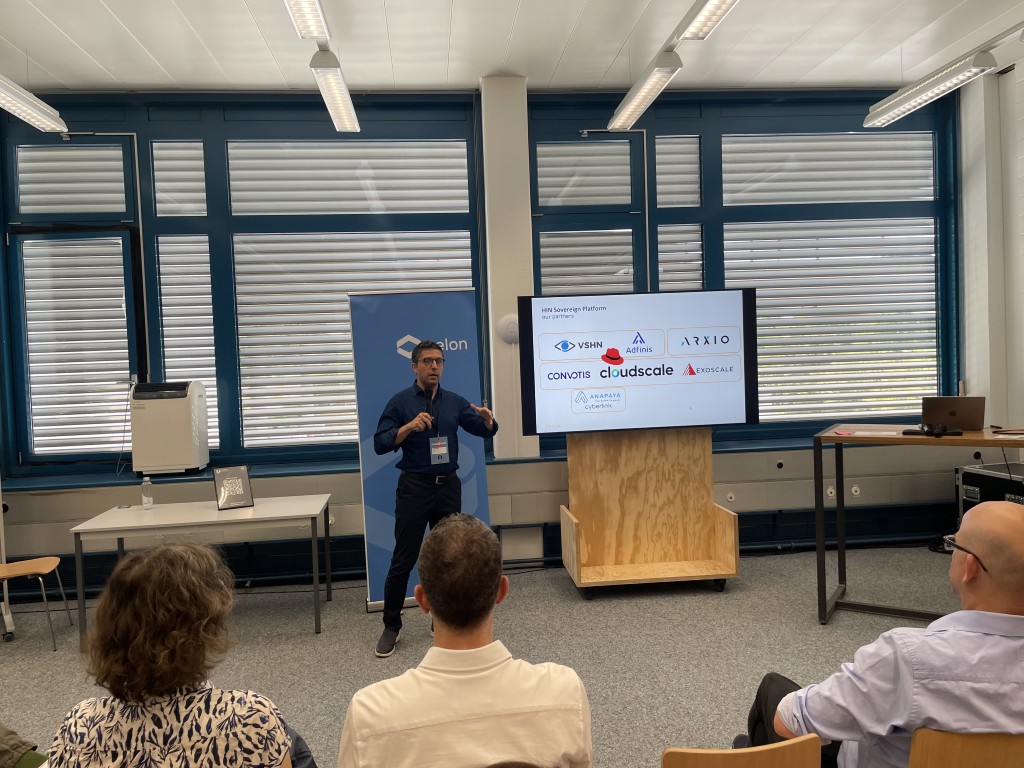
The mid-morning elevator pitch session gave a handful of speakers three minutes each to make their case. VSHN CEO Aarno Aukia took the stage with a single, sharp argument: sovereignty is no longer a philosophy – it’s a procurement criterion with a price tag attached.

His reference point was a EUR 180M cloud contract awarded by the EU Commission in April 2026, scored across eight sovereignty dimensions – supply chain (20%), strategic (15%), operational (15%), and technology (15%) among the highest-weighted. The real-world consequence: the Thales/Google joint venture cost Proximus a full SEAL level compared to pure-European competitors. Sovereignty now translates directly into contract wins and losses.

VSHN self-scores at SEAL-3 – the same level as the EU’s three strongest winners in that procurement. For an audience of Swiss higher education decision-makers thinking about cloud vendor selection, the message landed at exactly the right moment.

HIN: sovereign cloud for health data, built on Exoscale and VSHN

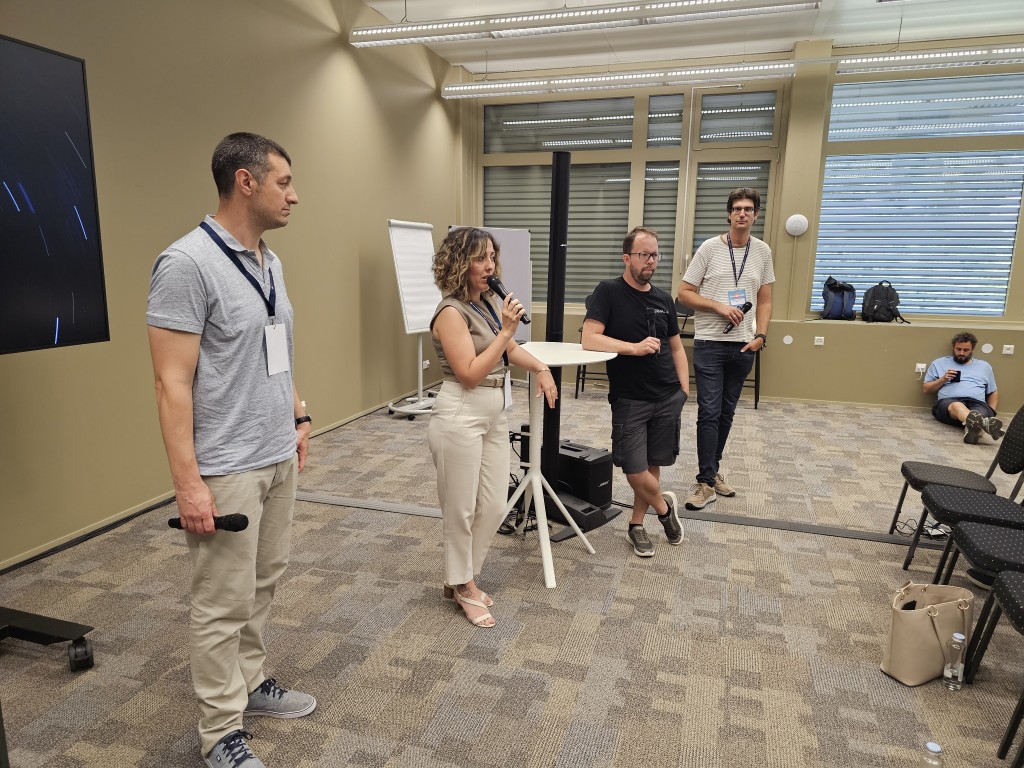
The morning use case session that resonated most with VSHN’s work came from Mohammad Alavi of Health Info Net (HIN). HIN is one of Switzerland’s largest providers in the health sector, and Mohammad walked the audience through a challenge many institutions share: how do you build a modern, scalable cloud platform for sensitive data when regulations are incomplete and the stakes are high?

HIN’s answer was to fill the regulatory gap themselves – setting their own principles for security and data privacy, then building a sovereign cloud platform together with Swiss partners Exoscale and VSHN. The result is a platform that not only hosts HIN’s own services securely, but also enables HIN community members to run their own applications on the same infrastructure.

It’s a strong example of what platform engineering can unlock in regulated industries: not just compliance, but genuine capability for others to build on top. Read the full story in our HIN success story.

Other use cases from the day

The afternoon sessions rounded out the picture with a range of perspectives. AWS, Sparkle, and Netcloud explored privacy and compliance as enablers of sovereignty. SoftwareOne made the case for Google Workspace as a practical complement to Microsoft 365 in higher education environments. And the Switch Cloud session featured an experience report from FHNW and Swiss Learning Hub on deploying Evento – a campus management system used by many Swiss universities of applied sciences – into the Switch Cloud, including the stumbling blocks and early-adopter lessons that came with it.

Bechtle also presented an AI-powered data access project from the Universitäre Altersmedizin FELIX PLATTER in Basel, where Azure OpenAI Services and Microsoft Fabric are being used to let researchers query clinical data using natural language – an example of how AI is finding its way into very practical, regulated workflows.

What we took away

Cloud Forward is a focused event – not a big trade show, but a room where Swiss higher education institutions compare notes on real decisions. The recurring theme across sessions was that sovereignty isn’t just a compliance checkbox: it’s a design principle that shapes architecture, partner selection, and long-term flexibility.

That’s exactly the kind of platform thinking VSHN brings to customers like HIN – and the conversation we want to keep having with Swiss institutions navigating the same challenges.

Curious how a sovereign, Kubernetes-based cloud platform could work for your organization? Let’s talk.

Markus Speth

Marketing, Communications, People
Contact us

Our team of experts is available for you. In case of emergency also 24/7.

Contact us
Events General

Swiss Software Festival Basel 2026 Recap

25. Jun 2026

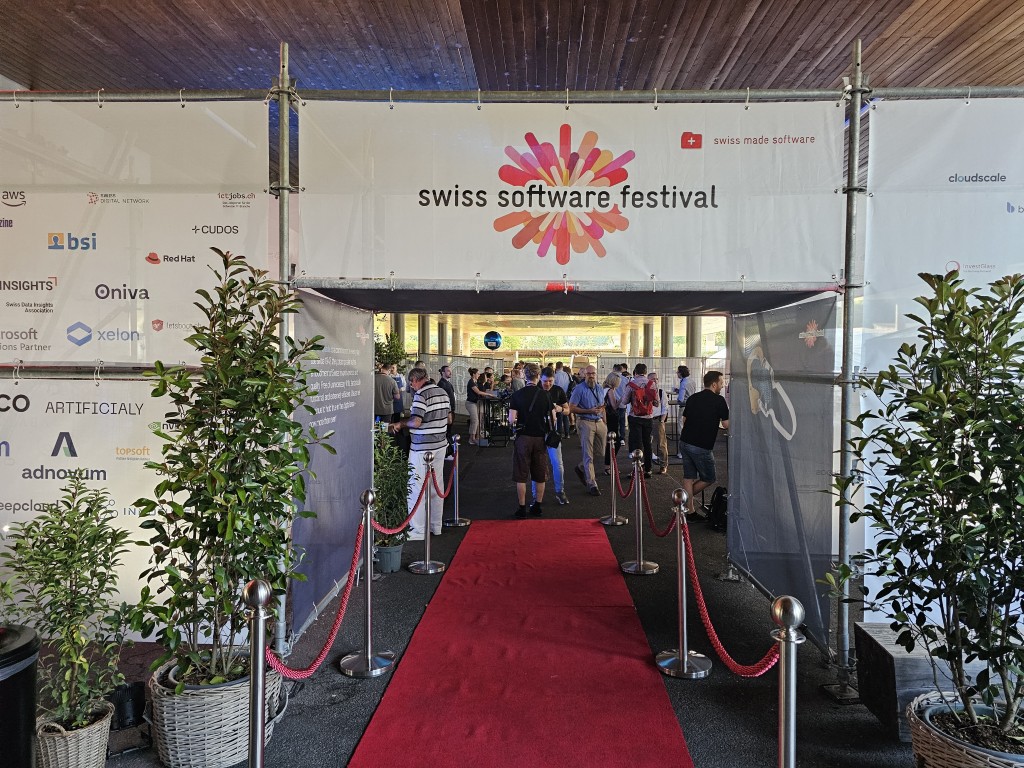
The Swiss Software Festival was back in Basel on June 24th 2026 – and the second edition delivered on everything the first promised, and much more. Around 650 people gathered at uptownBasel in Arlesheim to talk about software, platforms, and the forces fundamentally reshaping our industry: AI and Sovereignty. VSHN was back as a Matterhorn Sponsor, and didn’t just attend – we once again actively helped shape the program.

A festival that has found its rhythm

The second edition of any event is always a litmus test. The first year runs on excitement. The second shows whether there’s really something behind it. The Swiss Software Festival 2026 answered that question clearly: more attendees, more energy, and a program that genuinely feels well thought through. At uptownBasel in Arlesheim, there was life from the very first moment – with conversations in the hallways that carried on well into the evening.

Outside it was unusually hot for a June day in Basel. Anyone looking to cool down knew where to go: the joint VSHN and Red Hat booth was the most refreshing spot in the building. A good reason to stop by, strike up a conversation, and find out what we’re building right now.

Aarno on the main stage: digital sovereignty is not optional

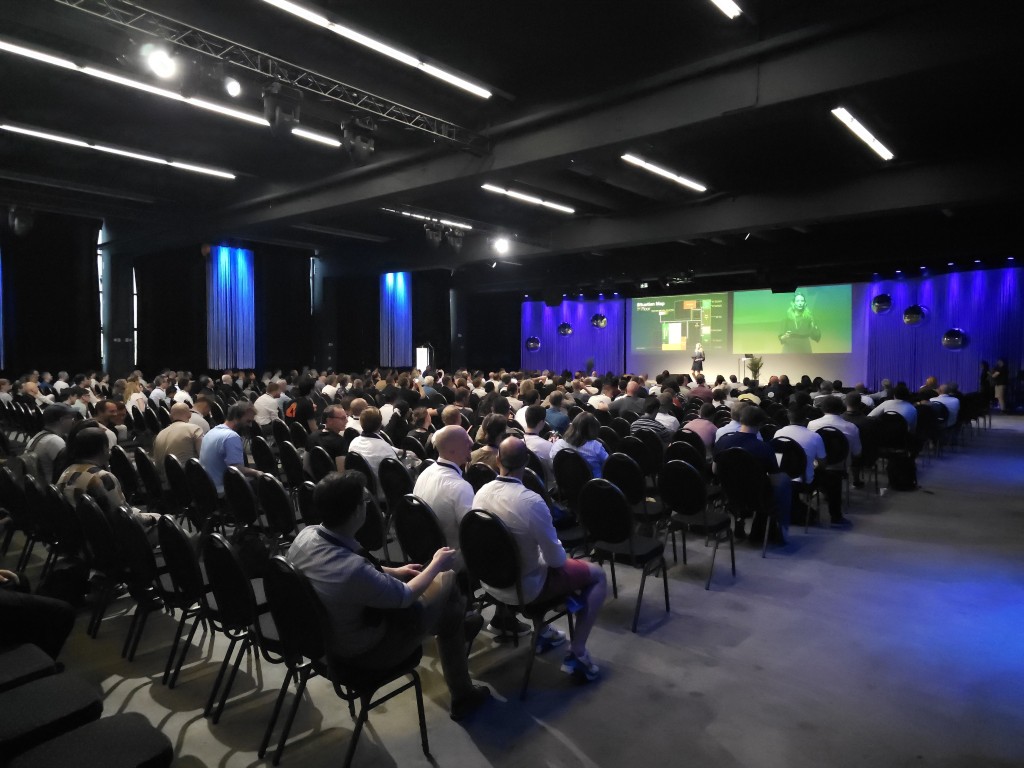
VSHN founder Aarno Aukia took the plenary stage to make the case for digital sovereignty – not as a compliance obligation, but as a genuine architectural decision every engineering team faces today. In a world where AI pulls organizations toward convenience and speed, Aarno’s keynote was a sobering counterpoint: the question of where your platform runs, who controls it, and whether you can trust it is no longer just a legal question. It’s an engineering question.

Aarno also joined a panel discussion that went even deeper – into the tensions between open ecosystems and sovereign infrastructure. The questions were pointed, a sign that the topic is no longer abstract for most teams in the room.

Watch Aarno’s keynote:

Tech Track 2: Platform Engineering under pressure

VSHN’s Markus Speth chaired Tech Track 2 – Platform Engineering and Software Architecture – together with co-chairs Andreas from ti&m and Florian from Abacus Research. The track covered two full sessions on the two forces currently pulling platform engineering in opposite directions: AI and Sovereignty.

AI wants speed and flexibility. Digital sovereignty wants control and transparency. Your platform is caught in the middle.

The morning session focused on AI-native platforms: what does it mean when software rewrites itself, when agents gain access to infrastructure, and where is the competency gap quietly growing? Eficode, White Duck, Noser Engineering, and Adobe brought hands-on experience from systems where AI isn’t a feature – it’s part of the foundation. Both sessions closed with open discussion rounds that the audience engaged with intensely. A big thank you to all participants and the many great questions!

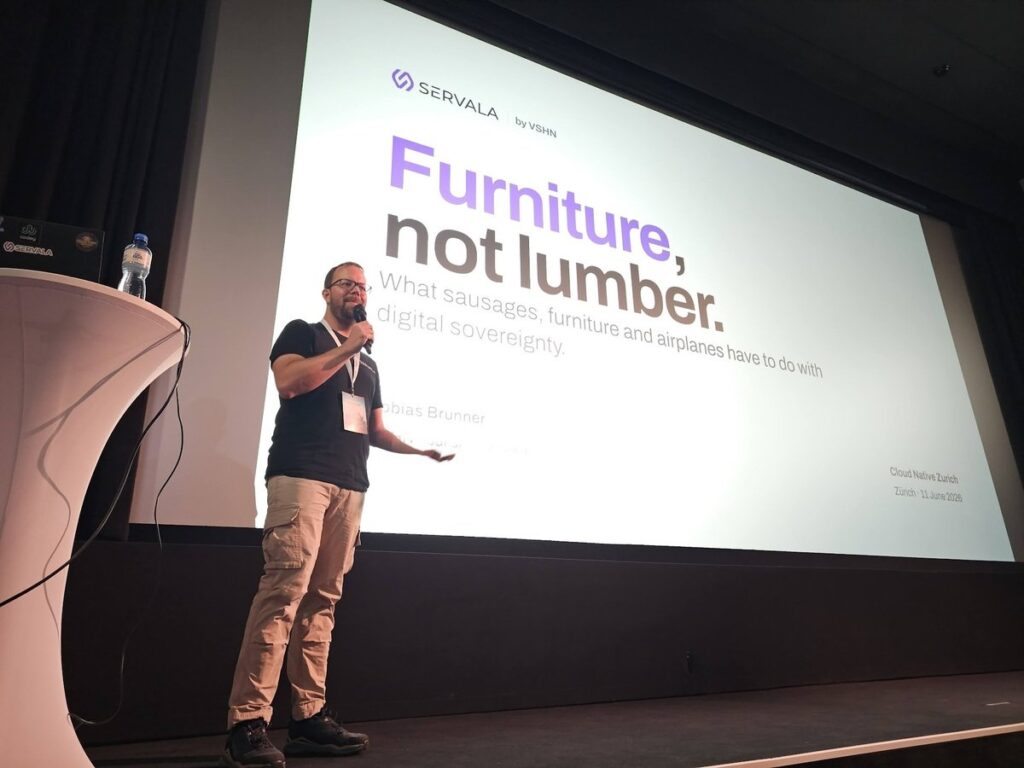
The afternoon put sovereignty and openness center stage as genuine architectural decisions. VSHN’s Tobias Brunner opened with a talk you won’t forget quickly: “Furniture, not lumber: what sausages, furniture and airplanes have to do with digital sovereignty.” The analogy landed perfectly – a memorable and surprisingly precise way to explain why not all sovereignty promises are worth the same, and what it really means to build on infrastructure you can trust. Speakers from PHOENIQS, Abacus Research, and ti&m rounded out the session with different perspectives on why open infrastructure decisions carry consequences that go far beyond vendor lock-in.

We were especially pleased to see Mohammad Alavi from HIN (Health Info Net) – a VSHN customer – speak in the festival’s dedicated Sovereignty Track. Watching a customer take the stage to share real-world sovereignty challenges in the Swiss healthcare sector was one of the highlights of the day, and a reminder that this conversation is anything but abstract for the organizations we work with.

And the Lego goes to…

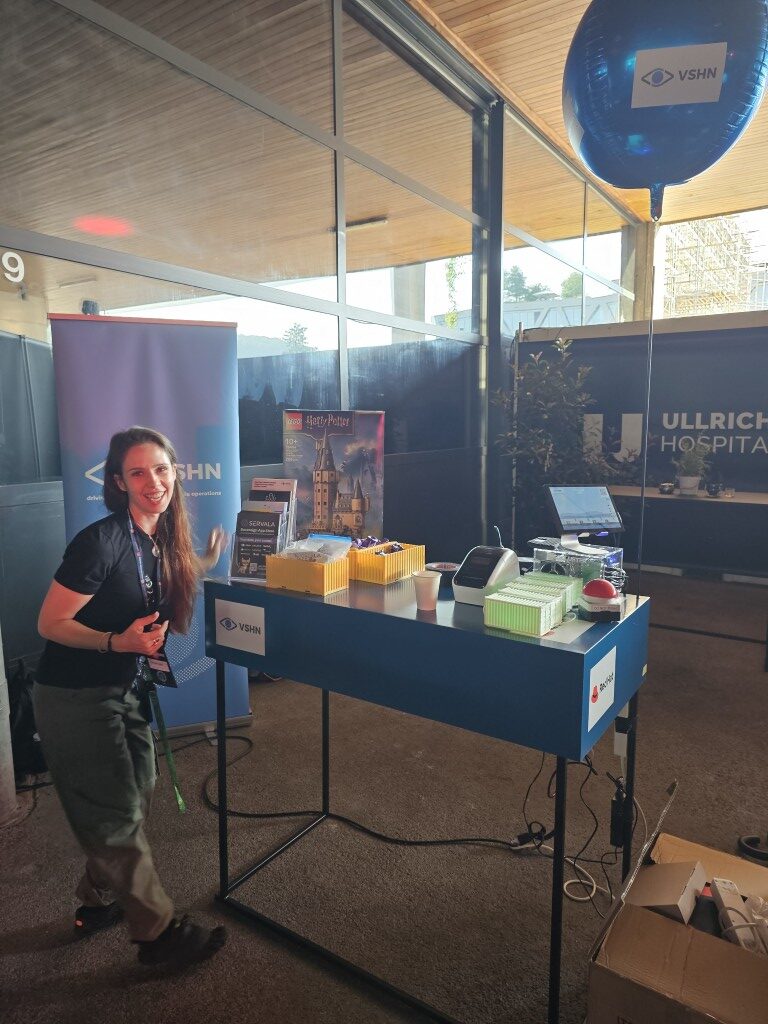
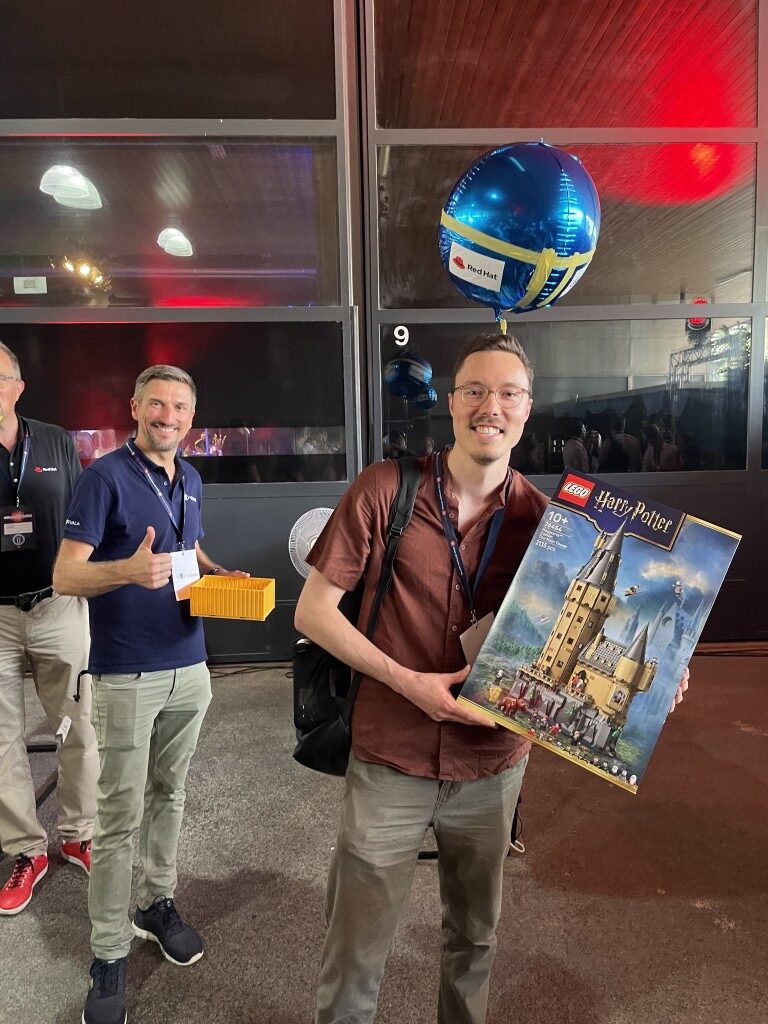
No VSHN event appearance is complete without a Lego giveaway. This time we raffled a Lego Harry Potter set – and the winner is Daniel Haß. Congrats Daniel, enjoy the build! 🧱

See you next year

The Swiss Software Festival is establishing itself on the Swiss tech calendar. It doesn’t aim to be a huge conference – it aims to be a good one. With 650 attendees, a carefully curated program, a truly great venue, and compelling conversations, it succeeds.

Thanks to Swiss Made Software for a fantastic second edition, and to everyone who stopped by the booth, attended Tech Track 2, or caught Aarno and Tobias on stage.

See you in 2027!

Markus Speth

Marketing, Communications, People
Contact us

Our team of experts is available for you. In case of emergency also 24/7.

Contact us
Events General

Win tickets to Swiss Software Festival 2026

15. Jun 2026

The Swiss Software Festival is back for its second edition – and this year, we are giving away tickets. Read on to find out how to win, and what VSHN is bringing to Basel on June 24th 2026.

Back in Basel: Swiss Software Festival returns for its second edition

When the Swiss Software Festival launched last year, it immediately established itself as one of the most relevant gatherings for the Swiss software industry – a full-day event bringing together engineers, software architects, product leaders, and decision-makers under one roof. VSHN was there from the start as a Matterhorn sponsor, and the first edition delivered on its promise: great talks, real conversations, and a crowd genuinely invested in the future of software in Switzerland.

This year, the festival returns to Basel for its second edition, with up to 700 attendees expected and an even stronger program spanning plenary sessions, leadership panels, and dedicated tech tracks. We are proud to be a Matterhorn sponsor again – and this time, VSHN is not just attending but actively shaping what happens on stage.

Win tickets to Swiss Software Festival 2026

To share the excitement with our community, we are giving away 5 festival tickets. To enter the draw, simply subscribe to VSHN News, our monthly newsletter, below. That’s it.

Winners will be drawn on Wednesday, June 17th at 4 pm CEST. The competition closes at that moment, so make sure you are subscribed before then.

Subscribe to VSHN News to win

Update: the winners have been drawn and they are informed, congratulations!

What VSHN is doing at the festival

Beyond sponsoring, VSHN is deeply embedded in this year’s festival – from the Advisory Board, where Aarno serves as a member, to the plenary stage, the tech tracks, and the track chair role.

Aarno Aukia – keynote on digital neutrality

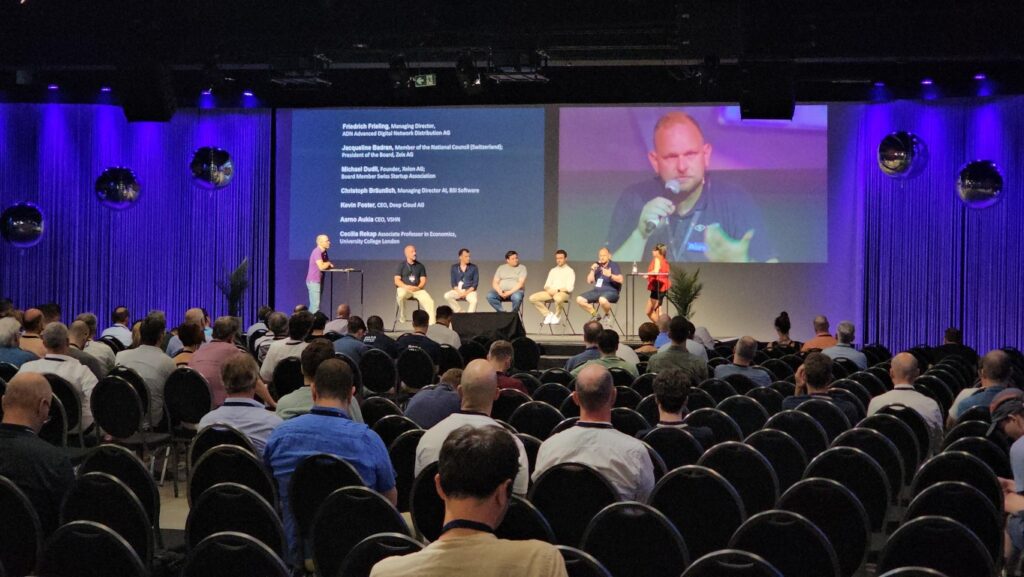
Aarno Aukia takes the plenary stage for the closing session, Digital Sovereignty: What’s next? His keynote is titled Digital Neutrality: Switzerland’s Engineering Advantage in the AI Era. Digital sovereignty has moved from a niche concern to a mainstream political and business priority – and Switzerland has a distinctive position in that debate. Aarno will lay out what that means in practice, followed by a leadership panel featuring voices from Microsoft, BSI Software, DeepCloud, Xelon, and the Swiss National Council.

Tobias Brunner – talk on platforms and ecosystems

Tobias Brunner speaks in Tech Track 2: Platform Engineering & Software Architecture. His talk, From platforms to ecosystems – why software innovation is a team sport, explores how platform thinking is maturing beyond infrastructure tooling. Building a platform is one thing – turning it into a thriving ecosystem where teams, partners, and products can grow together is another challenge entirely, and one that sits at the heart of what VSHN does every day.

Markus Speth – track chair Tech Track 2

Markus Speth is serving as Track Chair for Tech Track 2: Platform Engineering & Software Architecture. The track covers the full stack of modern platform engineering – from Kubernetes-based control planes and internal developer platforms to distributed AI workloads and multi-cloud runtime strategies. It is exactly the terrain VSHN operates in, which is why we were glad to help shape it.

About Swiss Software Festival 2026

The Swiss Software Festival is conceived and organized by Swiss Made Software and takes place in Basel. Now in its second year, the festival has quickly become a fixture in the Swiss tech calendar – a place where the people building Switzerland’s digital future come to exchange ideas, challenge assumptions, and find their next collaborators. With up to 700 attendees and a program built around both leadership perspectives and deep technical content, it is a rare event that works equally well for engineers and executives.

Don’t miss your chance to join us there – subscribe to VSHN News before June 17th at 4 pm for a chance to win your ticket.

We promise you no ads or any other nonsense – just exciting news about VSHN and the VSHNeers.

Markus Speth

Marketing, Communications, People
Contact us

Our team of experts is available for you. In case of emergency also 24/7.

Contact us
Events General

Cloud Native Zürich 2026 Recap

12. Jun 2026

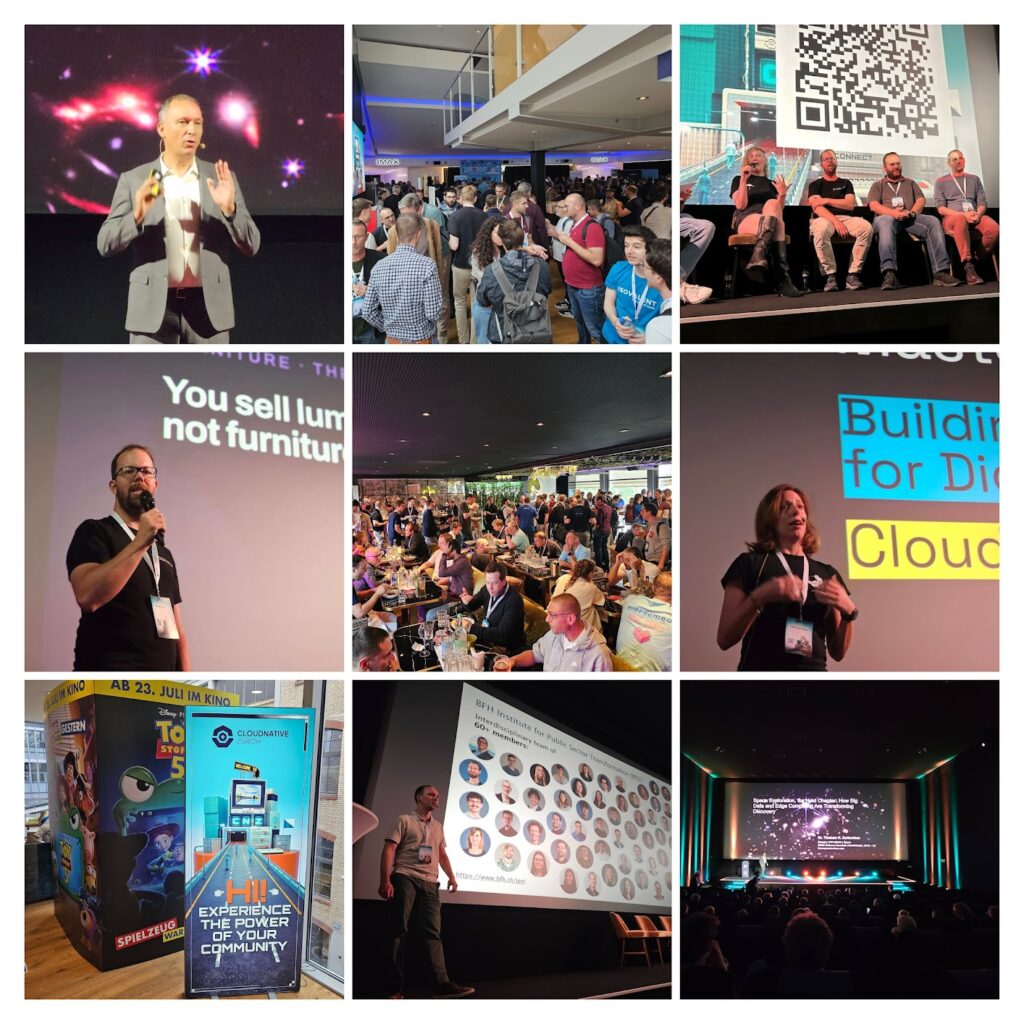
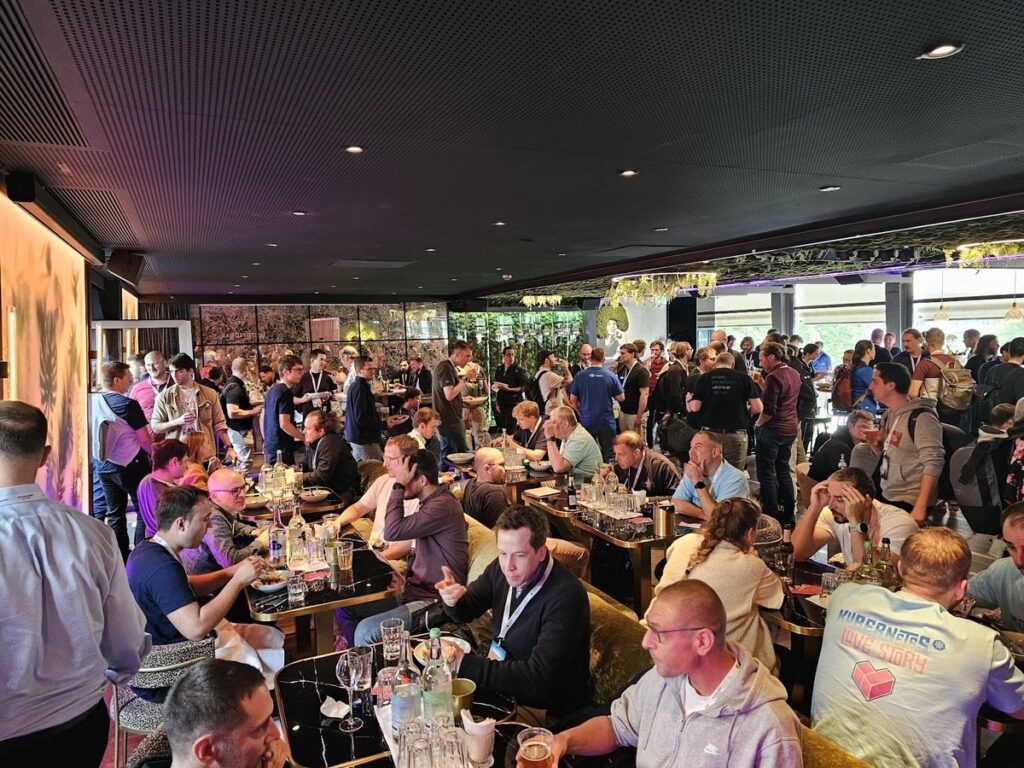
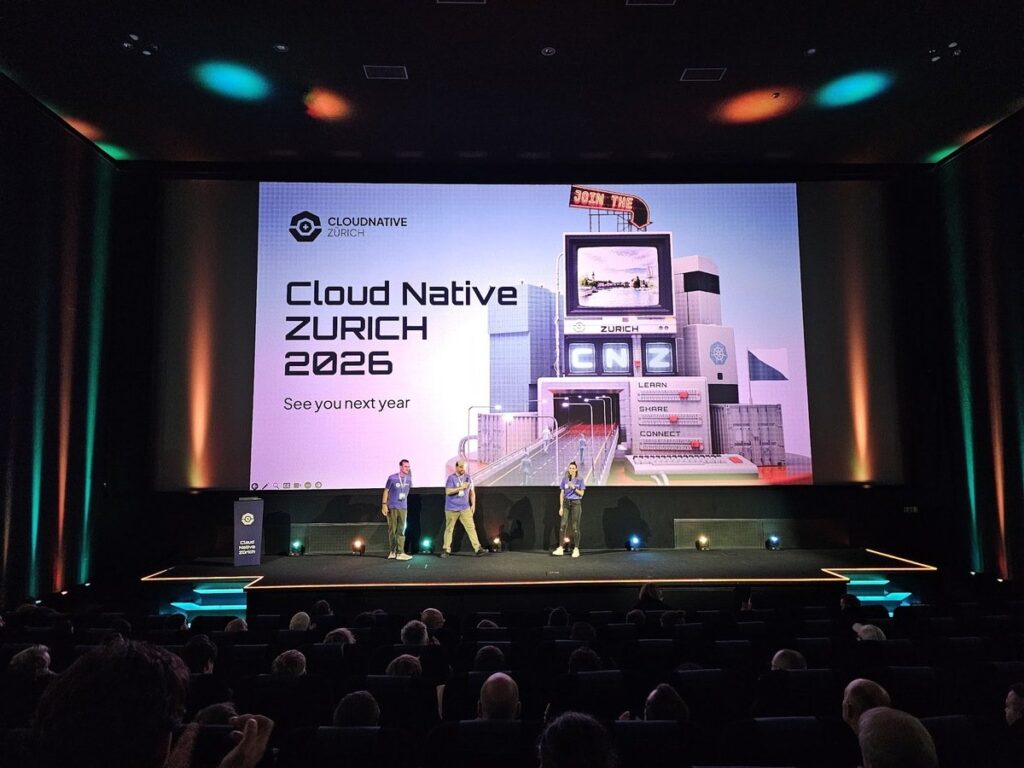
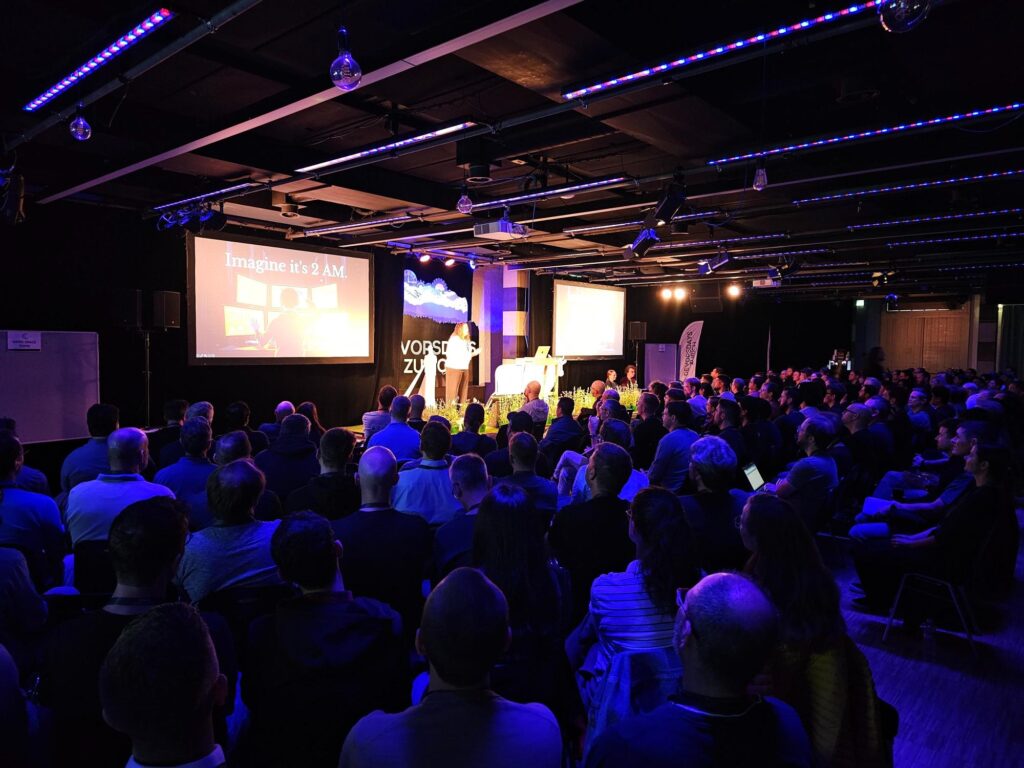
Another great edition of Cloud Native Zürich is behind us. Across the two interconnected venues, Abaton and Soho Zürich, more than 400 attendees – platform engineers, Kubernetes practitioners, developers, operators, and open source enthusiasts – came together for a day of learning, networking, and discussion across four tracks, including a dedicated Sovereignty Track for the first time.

VSHN was proud to participate once again as a Silver Sponsor, while Servala sponsored the Sovereignty Track.

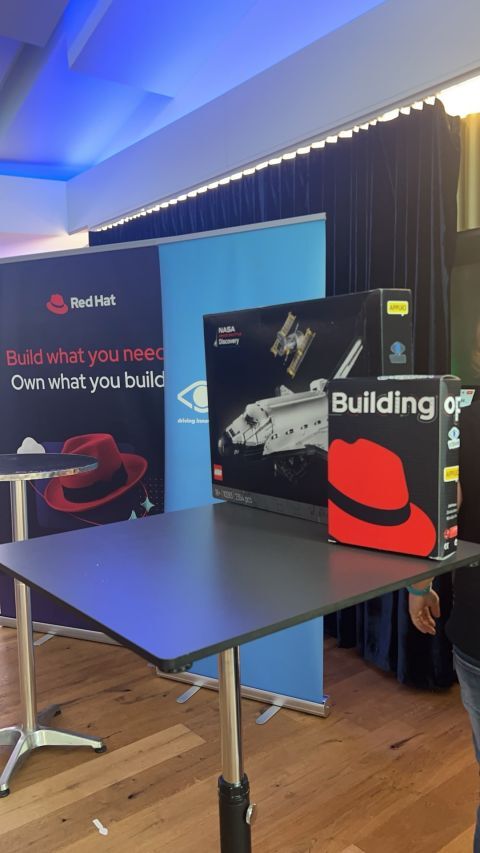
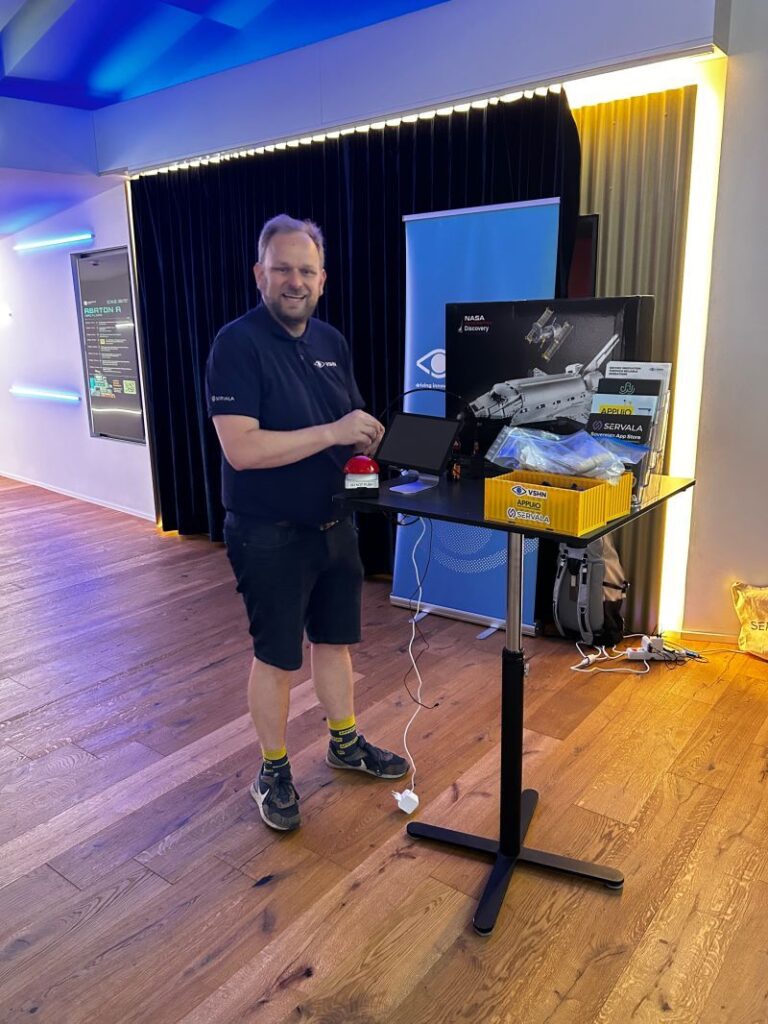
VSHN booth with Legos 🙂

If you stopped by our booth, thank you for the great conversations – on Kubernetes and OpenShift, platform engineering, digital sovereignty, Servala, APPUiO, Codey, and the European cloud native ecosystem more broadly. And yes, the LEGO sets found new owners again this year. 🙂

On stage

Beyond the booth, we were also happy to actively contribute to the program this year:

Tobias Brunner gave a talk on how Servala came to be – from an internal observation at VSHN that our managed services lacked the marketplace experience customers were used to from the hyperscalers, to where Servala is heading as a growing ecosystem of cloud providers, software vendors, managed service providers, and implementation partners.

Aarno Aukia spoke about running LLMs the cloud-native way – building an open-source LLM stack on Kubernetes with tools like Kubeflow, vLLM, LiteLLM, and llm-d, and why that matters for sovereignty, compliance, and long-term operational control.

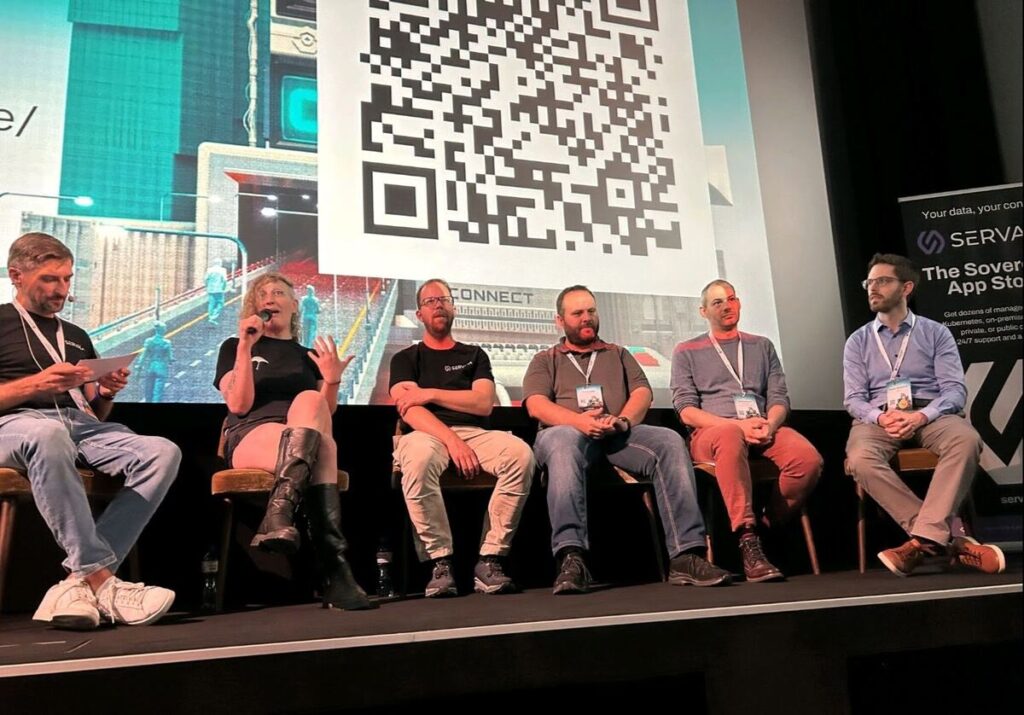
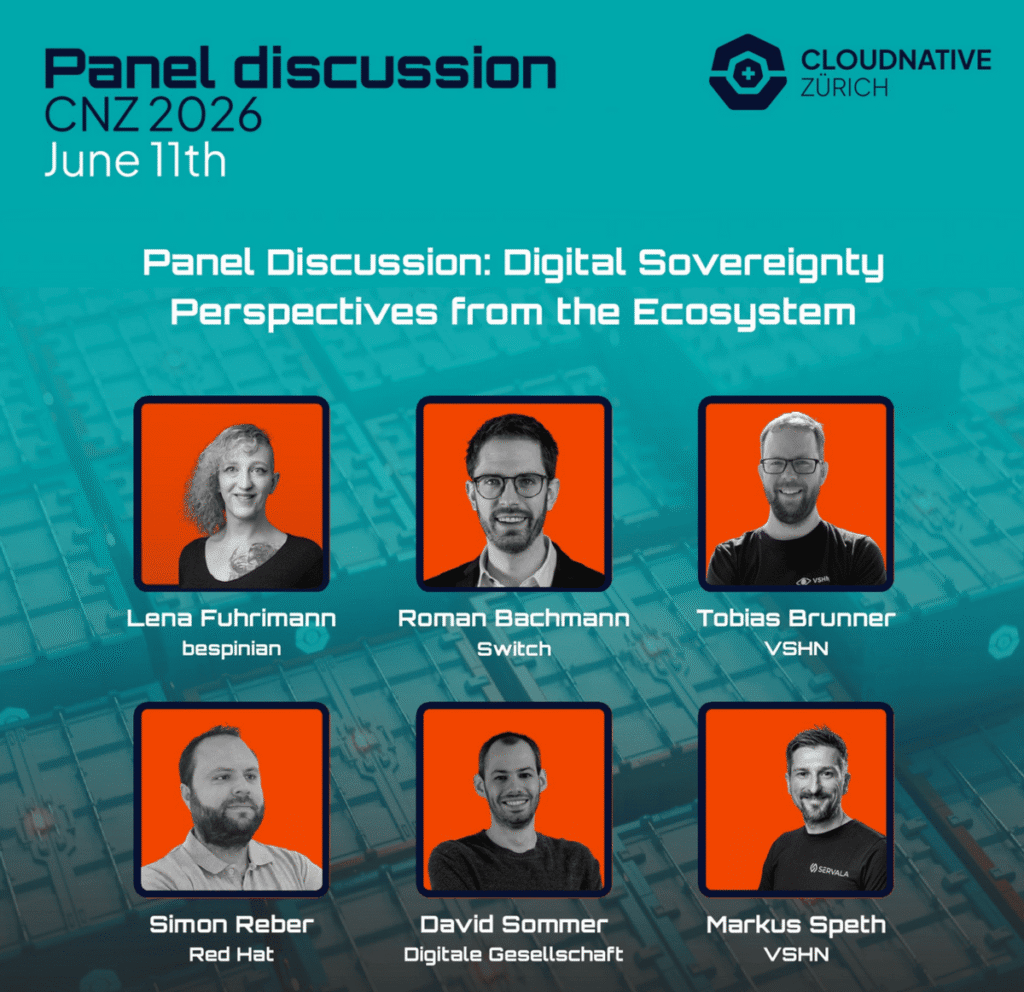
And in the new Sovereignty Track, Markus Speth was track lead and moderated a panel discussion with perspectives from across the ecosystem – an implementation partner, a cloud provider, a managed service provider, a software vendor, and civil society. We wrote a separate recap of that panel, which you can find here: Digital sovereignty – perspectives from the ecosystem.

A strong keynote

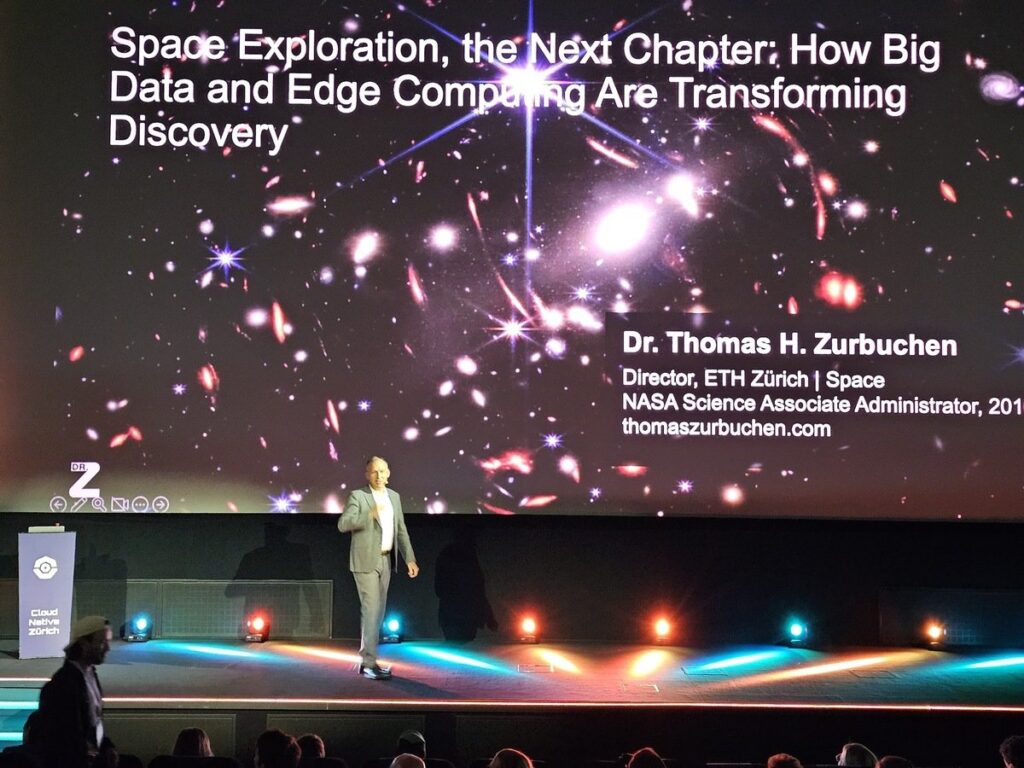
We were also looking forward to seeing keynote speaker Thomas Zurbuchen live again – always a highlight, and a reminder that the questions our industry is grappling with are part of much bigger conversations.

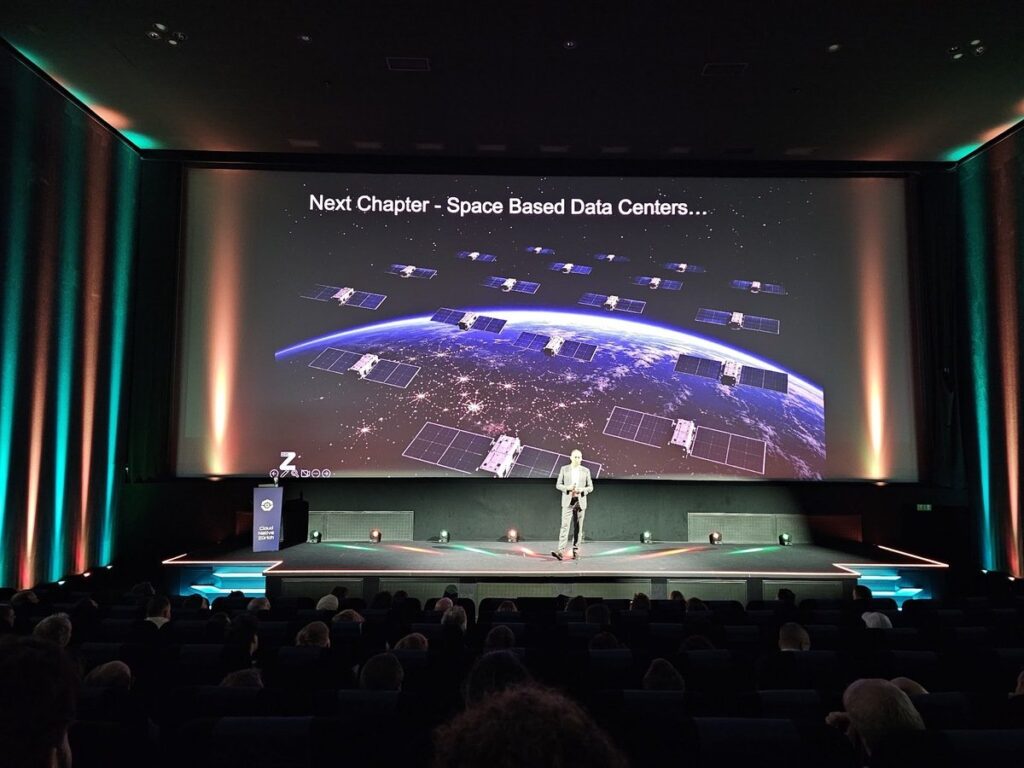
Data centres in space?

Thomas Zurbuchen also briefly raised the idea of operating data centres in space. He suggested that the economics could shift in the coming years – on the one hand due to rising energy costs on Earth, and on the other hand due to declining costs and efficiency gains in “getting payloads into space”.

The assessments of this idea diverged significantly afterwards. While it attracted a lot of attention, both the underlying economic assumptions and the claim that such systems would be “safer” in space than on Earth were discussed in further conversations during the aperitif and were viewed quite critically from different perspectives.

But actually, it would be quite a funny thought – just imagine someone saying “I quickly have to change a disk” and watching the engineer get launched into space… 🙂

Thanks to the organizers

A big thank you to the Cloud Native Zürich organizing team for putting together another excellent event – the level of detail, the community spirit, and the quality of the program keep getting better every year. If you couldn’t make it, or want to revisit a talk you missed, recordings will be published on the official Cloud Native Zürich channels – keep an eye on cloudnativezurich.ch for updates.

Want to be part of the ecosystem?

If digital sovereignty, sovereign managed services, or the broader Servala ecosystem are topics on your mind – check out Servala, and feel free to get in touch if you’d like to become part of our growing ecosystem of cloud providers, software vendors, and implementation partners.

See you next year!

Markus Speth

Marketing, Communications, People
Contact us

Our team of experts is available for you. In case of emergency also 24/7.

Contact us
AppCat Events General

A guided tour through our digitally sovereign ecosystem – Liene at KCD Czech & Slovak 2026

8. Jun 2026

At KCD Czech & Slovak 2026 in Prague, I took the stage to walk the audience through five years of building a digitally sovereign managed-services ecosystem from the ground up – the architectures that worked, the ones we threw away, and the bigger picture of where this is all going. The conference ran on May 21-22 at the Faculty of Information Technology, CTU in Prague, in three languages and packed with the wider European cloud-native community.

True to form, I framed the whole talk around Czech food – each chapter of the journey paired with a dish.

Watch the recording of my talk

The starting point: a single customer project

The story starts in February 2021 with what looked like a normal customer project. The ingredients: Crossplane v0.17, MariaDB, Redis, and an external Cloud Foundry that needed databases on demand via the Open Service Broker API. We called this Framework 0.1.

The architecture was already recognisably what we’d build on later – a control-plane cluster running Crossplane with XRDs and Compositions, talking to one or more service clusters through provider-helm, provider-sql, and provider-kubernetes. Customers ordered an instance, Crossplane composed it, and the right Helm releases, database objects, users, and Kubernetes resources showed up in the service cluster. Four environments: dev, nonprod, prod-nonpremium, prod-premium.

That worked. So I asked the obvious next question: if it works for one customer, can it be a product?

AppCat 1.0: from project to platform

By December 2022 we had AppCat 1.0 – VSHN’s Application Catalog – first wired up to external services, then by 2025 with our own catalog of managed PostgreSQL, Redis, MariaDB, Keycloak, and MinIO. The framework had matured into what we now call Framework 1.0: a clean stack with Service Definitions (XRDs), Service Implementations (Compositions), Crossplane as the control plane, and provider plugins for $App, $Cloud, and Helm – all driven by the Kubernetes API and exposed through the OSB API.

This is the picture most people see when we talk about Crossplane at VSHN. We’ve been running it in production since 2021, we’re an official Crossplane vendor, and we’ll happily argue that you should stop fighting Terraform state and manage your infrastructure through Kubernetes instead. But the framework diagram on a slide hides everything that makes a managed service actually managed.

The unglamorous middle: everything that makes a service managed

The “more features” slide was deliberately boring – a wall of words that anyone who has run a managed database in anger will recognise: backup, restore, logs, metrics, alerting, maintenance, version upgrade, scaling, user management. Plus application-specific things like Collabora for NextCloud, plus giving customers a free choice of infrastructure underneath.

This is where the real engineering lives. The control plane is the easy part. The hard part is everything you have to build, automate, and operate around it before a customer can rely on it at 3am on a Sunday.

The detour: split architecture (and back again)

Not every decision survives contact with reality, and I was refreshingly direct about one we walked back. At some point we tried a Split Architecture – separating the control cluster from the service cluster more strictly, with Crossplane on one side, managed resources and providers in their own namespace, and instances deployed into a service cluster on the other side. The diagram was elegant. The operational reality was not.

So we went back to one cluster. The “Nope – back to one cluster” slide – with the instance namespace dramatically circled in red – got a laugh, and it makes a serious point: sovereignty and operational simplicity aren’t opposed. Sometimes the right answer is the boring one.

Crossplane v2.0 – deliberate adoption

By August 2025 Crossplane v2.0 was on the horizon, with significant changes to how Compositions and packages work. Our position was simple: we wait. Not because we’re conservative for the sake of it, but because the framework we’d built was carrying real production workloads and the migration needed to be deliberate, not opportunistic.

In the meantime, we kept going.

Framework 2.0 and AppSlap

By May 2026 we had Framework 2.0, with a much cleaner separation between what service maintainers do and what framework engineers do. Service maintainers work with a ServiceBundle that references their custom functions. A Converter turns that into proper Crossplane artifacts – Composition, Composite, package metadata – using the VSHN function stdlib. The Crossplane CLI reads those artifacts and builds the Crossplane package. The whole pipeline is what we now call AppSlap 2.0.

The point of this isn’t the diagram. The point is that we can now onboard new services without rebuilding the framework around them – which is what you need if you want an ecosystem rather than a product.

Servala – the sovereign app store

May 2026 also marked the Codey instance running in production on Servala – the part of all this that turns a framework into an ecosystem. Servala is, in plain terms, a sovereign app store: a marketplace and ecosystem hub that connects four kinds of players and routes services to customers.

  • Cloud Service Providers bring sovereign infrastructure – compute, storage, network
  • Software Vendors bring the applications and tools, open source and commercial
  • Managed Service Providers bring 24/7 operations and support
  • Implementation Partners bring consulting and integration

Servala sits in the middle. Customers get sovereign managed applications without having to assemble the network themselves, and without locking themselves to any single party in it.

This is what I mean when I say sovereignty is a network problem, not a software problem. No single vendor can credibly claim to be sovereign end to end. What you can do is build the connective tissue that lets independently sovereign providers compose into something a customer can actually buy and run.

What it takes from a sovereign cloud provider

A practical note from the talk: not every cloud calls itself sovereign, and not every sovereign cloud is ready to host this kind of stack. I listed the concrete requirements: a real API to manage cloud resources, self-service VM provisioning, custom VM base image upload, S3-compatible object storage, fast SSD block storage, CSI storage attachments at scale (100+), a managed load balancer with 100+ listeners, NAT gateway and firewall. If any of these are missing, the ecosystem doesn’t land.

These are not exotic asks. They’re the baseline that hyperscalers normalised a decade ago. The good news is that a growing number of European and Swiss providers now check all the boxes – which is what makes the whole project realistic in 2026 in a way it wouldn’t have been five years ago.

Always under construction

One of the slides was just a picture of the Sagrada Família. I took the joke – and the seriousness behind it. Building a sovereign ecosystem is a long game. There’s no version where you finish, take a photo, and walk away. The framework will keep evolving, Crossplane will keep evolving, partners will join and leave, and customers will ask for things nobody has thought of yet.

The CNCF landscape slide made the same point a different way – the cloud-native ecosystem is enormous, and standing on its shoulders is the only sane way to build something at this scale. Sovereignty doesn’t mean reinventing everything. It means assembling the right things, with the right partners, in the right jurisdictions, and keeping the option to change your mind.

Conclusion

Five years in, one lesson stands out above all others: digital sovereignty is not a product that any single company can sell. It’s an ecosystem that has to be built together.

Thank you, Prague

Huge thanks to the KCD Czech & Slovak organisers and the local cloud-native community for two excellent days at FIT ČVUT. The conversations after the talk were as valuable as the talk itself – it’s clear that many people across Europe are thinking hard about what a sovereign, open, and operationally serious cloud-native ecosystem should look like.

I was genuinely energised by the discussions, questions, and feedback after the session. It’s encouraging to see how much interest there is in practical approaches to digital sovereignty and how many organisations are tackling similar challenges.

If you’re building sovereign cloud platforms, managed services, or ecosystem partnerships, I’d love to exchange experiences and explore how we can work together.

Want to learn more about VSHN’s work on digitally sovereign managed services? Visit crossplane.ch, servala.com, or appcat.ch.

About VSHN Application Catalog (AppCat)

VSHN Application Catalog (AppCat) is VSHN’s platform for delivering production-ready managed services across multiple cloud providers and Kubernetes environments. Built on Crossplane and Kubernetes, AppCat automates the full lifecycle of services such as PostgreSQL, MariaDB, Redis, and Keycloak – from provisioning and upgrades to backups, monitoring, and day-2 operations.

What started as a solution for a single customer project has evolved into a framework that powers managed services for organisations across Switzerland and beyond. AppCat enables customers to consume services through self-service interfaces while giving operators a consistent way to manage applications across different infrastructures.

Today, AppCat serves as a core building block of the wider sovereign ecosystem presented in Liene’s talk. It provides the automation and operational foundation that allows managed service providers, cloud providers, software vendors, and implementation partners to collaborate through platforms such as Servala while maintaining openness, portability, and customer choice.

Liene Luksika

Product Manager

Contact us

Our team of experts is available for you. In case of emergency also 24/7.

Contact us
Events General

Cloud Native Computing Switzerland Meetup May 2026 Recap

22. May 2026

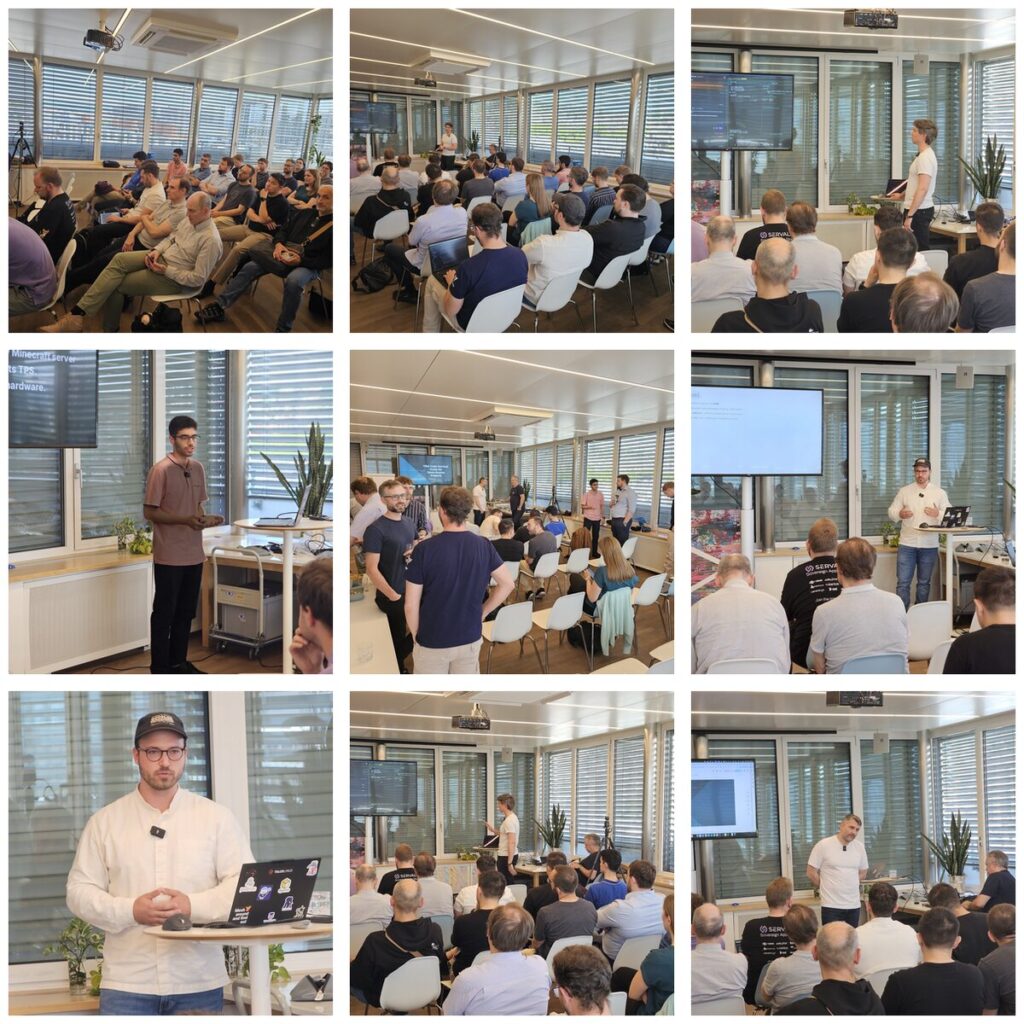
On May 21, 2026 the Cloud Native Computing Switzerland Meetup Community gathered once again at the VSHN Tower in Zürich for an afternoon of technical talks, discussions, and community exchange.

With more than 3’000 members in the meetup group, the CNC Switzerland community continues to bring together platform engineers, DevOps practitioners, architects, and open-source enthusiasts from across the Swiss cloud-native ecosystem.

The May edition featured four talks covering topics from Kubernetes-native deployment orchestration and Rust-based control planes to open-source project governance in the age of AI and cluster autoscaling for non-mainstream clouds.

Opening and community updates

The meetup kicked off with a short welcome and community update by the organizers. As always, the CNC Switzerland meetup follows a few important principles:

  • All talks are technical and open-source focused
  • No product or sales pitches
  • Talks are held in English
  • Speakers from diverse backgrounds are strongly encouraged

These principles help keep the meetup a true technical community event rather than a marketing stage.

Kuberik: Safe, hands-off deployments for Kubernetes

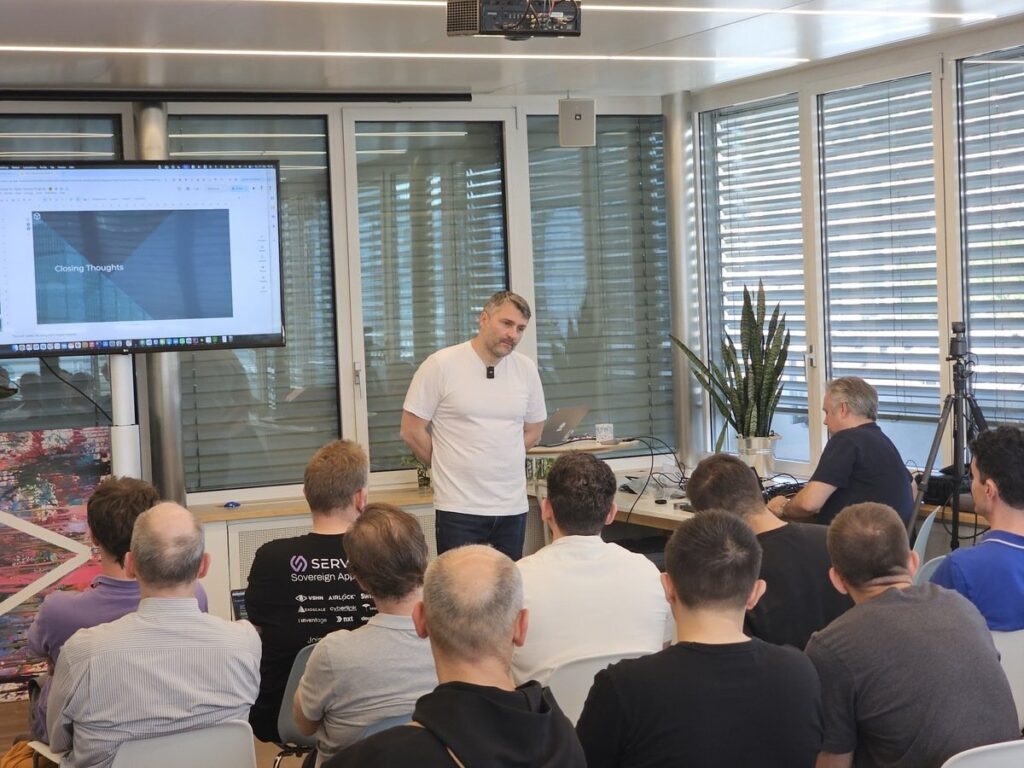
Luka Rumora

Luka Rumora opened the technical programme with a look at what continuous delivery on Kubernetes still gets wrong. Most teams, he argued, end up in one of two places: GitOps setups that stop at applying manifests, or brittle CI pipelines held together with bash and glue. Neither delivers true end-to-end delivery.

The ingredients of a good deployment pipeline are well known – canaries, health checks, smoke tests, promotions, rollback – but Kubernetes lacks a native, reusable way to compose them. Existing tools like Argo Rollouts, Flagger, and Kargo each solve a piece of the puzzle, but not the whole pipeline.

Kuberik aims to fill that gap. It orchestrates the full journey from release to production – detecting, gating, rolling out, verifying, and promoting – using opinionated, pluggable Kubernetes resources that integrate cleanly with existing GitOps setups.

The talk highlighted how a more composable, Kubernetes-native approach to CD can:

  • replace step-based pipelines with reusable resources
  • bring canaries, verification, and rollback under one model
  • integrate with the GitOps tooling teams already run

Download slides

Kubernetes without the operator: A Minecraft panel with Rust and kube-rs

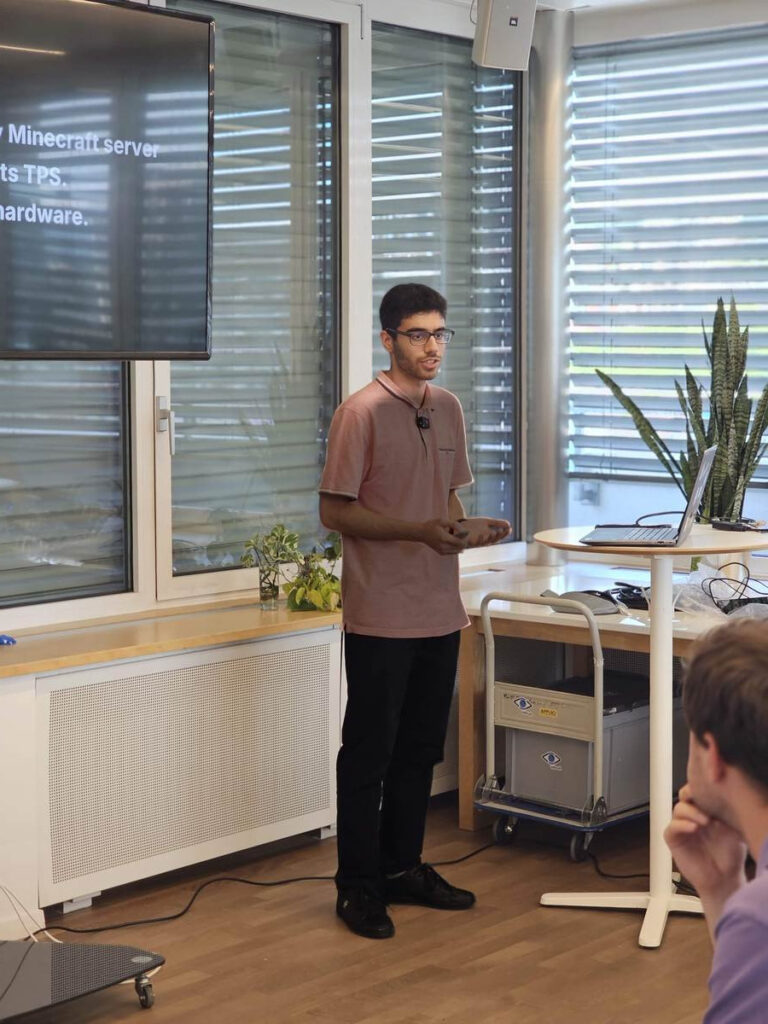
Hadi Cherkaoui – CM Informatik AG

Hadi Cherkaoui, a 17-year-old Plattformentwickler apprentice at CM Informatik AG, brought a refreshingly contrarian take on a pattern many in the room build their daily work around: the operator.

The project Anvil is a Kubernetes-native Minecraft server panel written in Rust. It creates one StatefulSet, PVC, and Service per server through direct kube-rs calls – with no CRD and no controller. The Kubernetes API itself serves as the runtime state store, and every user action is a direct API call.

The argument behind the design was just as interesting as the implementation: the operator pattern is sometimes the wrong tool. Controllers earn their complexity when there is autonomous state to reconcile. When there isn’t, they become ceremony. Anvil is a worked example of the imperative alternative, running on a home lab k0s cluster.

Key takeaways from the talk:

  • not every Kubernetes-native application needs a controller
  • direct API calls can be a perfectly valid pattern
  • Rust and kube-rs make for an ergonomic combination
  • homelab projects remain a great place to challenge defaults

Vibe code survival guide for open-source

Vadim Bauer – 8gears

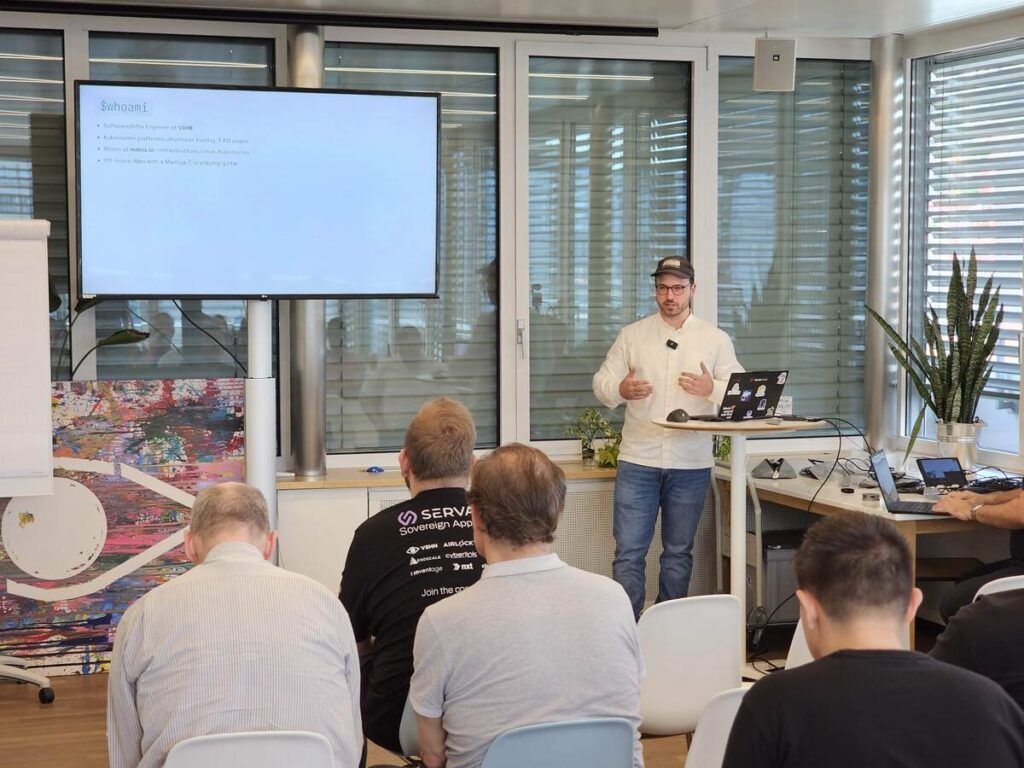
Vadim Bauer, maintainer of the CNCF project Harbor, tackled a topic that is rapidly becoming one of the hardest in open source: how to keep a project coherent when AI-assisted contributions arrive faster than maintainers can review them.

Banning AI contributions outright, he argued, isn’t the answer – but neither is letting the volume erode a project’s direction. Drawing on experience from Harbor and Harbor Satellite, Vadim shared the playbook his team is building to stay sane:

  • define a clear project direction so contributors, human or AI-assisted, know what is in scope
  • set explicit acceptance criteria and guardrails
  • use AI on the maintainer side to triage, review, and filter incoming contributions
  • decide as a project what is core, what is an extension, and what is out of scope

The session was an honest look at what works, what fails, and how open-source projects can rethink contribution, community, and project boundaries in the age of vibe coding.

Writing a Kubernetes Cluster Autoscaler provider with externalgrpc

Marco De Luca – VSHN

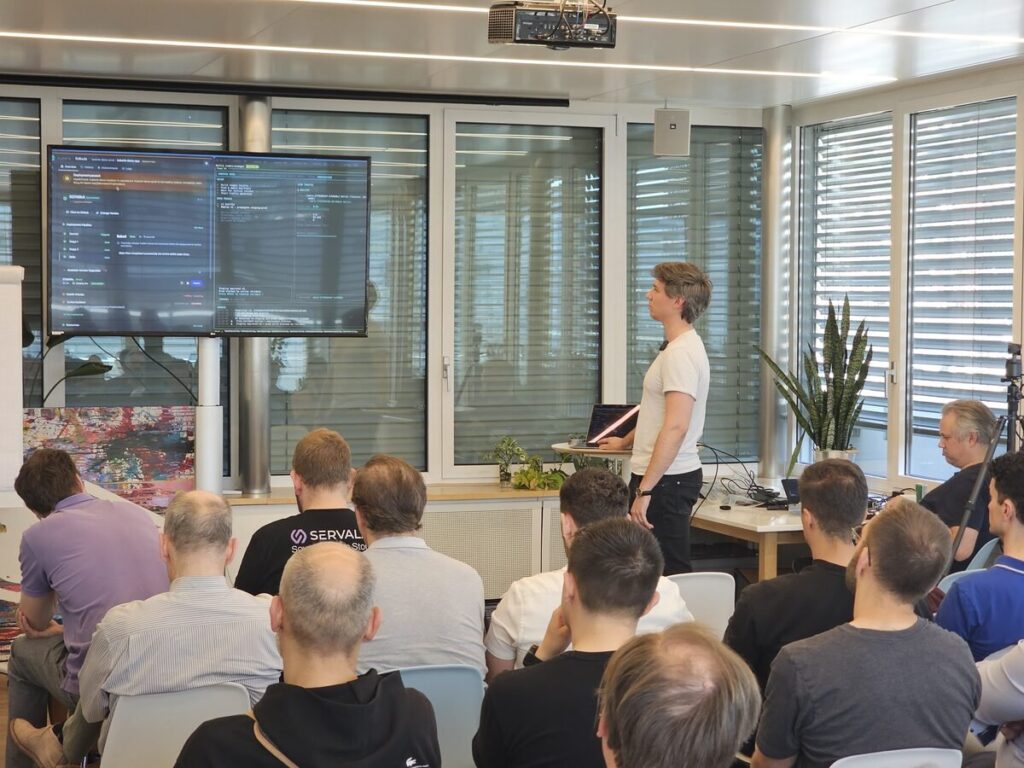
The final talk closed out the afternoon with a deep technical walkthrough from VSHN’s own Marco De Luca. At mdnix.io, he writes about infrastructure, Linux, Kubernetes, and the things he builds along the way.

The Kubernetes Cluster Autoscaler decides when to scale, but it doesn’t know how to create a VM – that’s the cloud provider’s job. The upstream tree covers mostly the big clouds, which leaves regional and specialised providers out in the cold. With externalgrpc, you can plug virtually any cloud into the autoscaler over gRPC.

Marco walked the audience through:

  • how the Cluster Autoscaler works under the hood and where the cloud provider fits in
  • implementing an out-of-tree gRPC provider for a Swiss IaaS platform
  • the design choices and parts of the contract that really matter
  • the gotchas you only discover by reading the autoscaler source

By the end of the talk, attendees had a solid mental model of how to attach autoscaling to any cloud that isn’t on the upstream list – a topic particularly relevant for the Swiss ecosystem, where sovereign and regional cloud providers play an important role.

Download slides

Marco wrote a follow-up blog post about this topic if you want to dive deeper!

Networking and apéro

After the talks, participants stayed for networking and the traditional Swiss meetup apéro, continuing discussions about Kubernetes-native delivery, Rust, open-source governance, and autoscaling.

Meetups like these highlight the strength of the Swiss cloud-native community: engineers from different companies sharing real-world experiences, lessons learned, and open-source solutions.

Watch the talks

The sessions from this meetup will be published on the VSHN TV YouTube channel.

Subscribe to stay notified when the recordings become available.

Join the community

The Cloud Native Computing Switzerland Meetup welcomes engineers, architects, and developers interested in cloud-native technologies and open source.

If you would like to present a talk or share your project or sponsor the meetup location and apéro, submit your proposal here.

We look forward to seeing you at the next CNC meetup in September!

Markus Speth

Marketing, Communications, People
Contact us

Our team of experts is available for you. In case of emergency also 24/7.

Contact us
Events General

VSHN is back as a Matterhorn sponsor of Swiss Software Festival 2026

19. May 2026

We are happy that VSHN is once again a Matterhorn sponsor of the Swiss Software Festival 2026. The festival takes place on June 24, 2026, at uptownBasel in Arlesheim, bringing together more than 600 peers, two plenary sessions, and over 75 speakers across seven thematic tracks and two special tracks.

This year’s edition has a clear focus, and it is one close to our heart: in times of geopolitical uncertainty, Swiss companies and organizations are increasingly looking for autonomy-first, Swiss-made solutions that support digital sovereignty. That is exactly the conversation we want to be part of – not just as a sponsor, but on stage and behind the program.

Aarno Aukia keynotes the opening plenary

VSHN co-founder Aarno Aukia is one of the keynote speakers in Plenary Session 1, “The future of software development.” His talk, “Digital Neutrality: Switzerland’s Engineering Advantage in the AI Era,” looks at a question that runs through the whole festival: who will build software in the future, humans or machines, and what that means for Switzerland’s position in an AI-shaped world.

He shares the stage with keynote speakers from UBS, IMD, and ti&m, followed by a leadership panel with voices from Adnovum, Adobe, and Abacus Research – a strong lineup for a discussion about where the Swiss software industry is heading.

VSHN chairs Tech Track 2: Platform Engineering & Software Architecture

We are also the track chair of Tech Track 2, “Platform Engineering & Software Architecture.” Modern software systems need more than tooling – they need thoughtful architecture and resilient platforms. This track digs into platform engineering, internal developer platforms, distributed systems, and cloud-native runtime strategies, from Kubernetes-based control planes to distributed AI workloads.

Our Product Manager & Partner Tobias Brunner contributes a talk titled “From platforms to ecosystems – why software innovation is a team sport,” alongside speakers from Eficode, White Duck, Abacus Research, and Noser Engineering.

See you in Arlesheim

The Swiss Software Festival has become a unique meeting point for the Swiss software ecosystem, and the topics on this year’s agenda – sovereignty, platform engineering, and the role of AI in software development – are right at the center of what we do at VSHN. We are looking forward to good conversations, great talks, and meeting the community in person.

Join us on June 24, 2026, at uptownBasel in Arlesheim. Tickets are available here.

Markus Speth

Marketing, Communications, People
Contact us

Our team of experts is available for you. In case of emergency also 24/7.

Contact us
Events General

VSHN Returns as Sponsor of Cloud Native Zürich 2026

11. May 2026

We have been supporting the Cloud Native community for many years and are excited to once again sponsor Cloud Native Zürich in 2026.

Over the years, Cloud Native Zürich has become one of the most important cloud native community events in Switzerland – bringing together platform engineers, Kubernetes practitioners, developers, operators, architects, startups, enterprises, and open source enthusiasts from across the ecosystem.

At VSHN, supporting and helping grow the cloud native community has always been an important part of who we are. From sponsoring and attending community events, to organizing the Cloud Native Computing Switzerland Meetups, to contributing to open source projects and Kubernetes ecosystems – community has always mattered to us.

That is why we are very happy to be back as sponsors again this year.

Meet Us at Our Booth

If you are attending Cloud Native Zürich, make sure to stop by our booth.

We are looking forward to many great discussions around:

  • Kubernetes & OpenShift
  • Platform Engineering
  • Digital Sovereignty
  • Cloud Native Operations
  • Servala – Sovereign App Store
  • APPUiO
  • Codey
  • Open Source & European cloud ecosystems

Or simply stop by for a chat and good conversations. And of course, you can once again win a nice LEGO set at our booth. 😉

👉 Event website: Cloud Native Zürich

Servala sponsors the Sovereignty Track

This year, Servala is also sponsoring and helping shape the dedicated Sovereignty Track at Cloud Native Zürich 2026.

The track brings together talks and discussions around sovereign cloud infrastructure, open ecosystems, digital sovereignty, and practical cloud native approaches for independent infrastructure strategies.

👉 Read more about the Sovereignty Track at CNZ on Servala

Tobias Brunner: How to build a Sovereign App Store

At VSHN we’d been running managed services for Swiss companies for years before we noticed something obvious.

Our customers loved how we operated their PostgreSQL or their OpenShift, but they couldn’t reach it the way they reached AWS: through a marketplace, a self-service portal, a few clicks. So we set out to build one. That’s how Servala started.

In this talk I’ll walk you through how Servala came to be, what it is today, and where we want to take it next. On paper it’s a marketplace for sovereign managed applications like PostgreSQL, GitLab, Keycloak, and Nextcloud, deployed on European cloud providers and operated by managed service providers you can name and trust. In practice, it’s growing into an ecosystem of CSPs, ISVs, MSPs, and implementation partners who’ve decided that sovereignty is worth working on together.

I’ll also be honest about why this work feels urgent right now, and about what it will take for a sovereign app store to succeed: open standards, real choice, partners who show up, and customers willing to bet on something other than the default.

Panel Discussion: Digital Sovereignty – Perspectives from the Ecosystem

Markus Speth will be moderating the panel discussion “Digital Sovereignty – Perspectives from the Ecosystem”.

Digital sovereignty is widely discussed across technology, business, and society – yet what it means in practice is still evolving.

In this panel, participants share perspectives and experiences from different angles, exploring how digital infrastructure is shaped and how approaches in this space are developing.

Panelists representing the various stakeholders in the ecosystem:

  • Implementation Partner: bespinian, Lena Fuhrimann
  • Cloud Provider: Switch, Roman Bachmann
  • Managed Service Provider: VSHN, Tobias Brunner
  • Software Vendor: Red Hat, Simon Reber
  • Society: Digitale Gesellschaft, David Sommer

Aarno Aukias talk: Running LLMs the Cloud-Native Way: Kubeflow, vLLM, LiteLLM and llm-d on Kubernetes

LLMs do not have to be consumed only through hyperscaler APIs. With Kubernetes and open source tools like Kubeflow, vLLM, LiteLLM, and llm-d, platform teams can build their own cloud-native LLM stack with more control over cost, data locality, model choice, and operations.

At VSHN, we believe AI platforms should be operated like other critical cloud-native workloads: automated, observable, reproducible, secure, and portable across infrastructure.

This session shows how an open-source LLM stack can be built on Kubernetes and why that matters for sovereignty, compliance, and long-term operational control.

Not Just a Sponsor, But Also on Stage

We are especially excited to not only participate as a sponsor with our booth this year, but also to actively contribute to the program – as speakers and moderators of the Sovereignty Track.

Through talks, discussions, and the panel around digital sovereignty, we want to help bring topics like open source, sovereign cloud infrastructure, and independent digital ecosystems further into the cloud native community.

We are also especially looking forward to seeing keynote speaker Thomas Zurbuchen live again.

Get Your Ticket with 20% Discount

Want to join Cloud Native Zürich 2026?

Use our discount code:

VSHN-20

and get 20% off your ticket purchase.

Cloud Native Zürich is one of the best opportunities in Switzerland to connect with the local and European cloud native ecosystem, discover new ideas, meet maintainers and practitioners, and exchange experiences around Kubernetes, platform engineering, AI, security, operations, and digital sovereignty.

Whether you are deeply technical, leading platform teams, building products, or simply interested in where the cloud native ecosystem is heading – this event is absolutely worth attending.

👉 Get your ticket now

Markus Speth

Marketing, Communications, People

Contact us

Our team of experts is available for you. In case of emergency also 24/7.

Contact us
Events General

DevOpsDays Zurich 2026 – Still One of the Best Community Events in Tech

8. May 2026

On May 6 and 7, 2026, the Swiss DevOps and cloud native community gathered once again at Alte Kaserne Winterthur for DevOpsDays Zurich 2026. Once again, it reminded us why this event has become such an important part of the community over the years.

For us at VSHN, DevOpsDays Zurich is something special. We have been part of it since the very first edition in 2016 – as sponsors, participants, speakers, and community members. Watching the event grow over the years, while still keeping its open and community-driven spirit, has honestly been pretty amazing.

And somehow, despite the industry changing massively over the last decade, the core idea of DevOpsDays still feels just as relevant as it did back then: bring people together, share real experiences, talk openly about challenges, and learn from each other.

This year’s edition once again had exactly that feeling.

Real Talks Instead of Buzzwords

The program covered many of the topics currently shaping our industry – from platform engineering and AI to software supply chain security, observability, developer experience, and organizational culture. But what made the event valuable was not just the topics themselves, it was the way people talked about them: practical, honest, and grounded in real-world experience.

Some talks focused on scaling engineering organizations and platforms, others on AI-assisted operations and the growing importance of observability and verification. Security and software supply chain topics were also everywhere this year – from SBOMs and dependency management to secure coding practices in the age of AI-generated code.

One thing that stood out across many sessions was how much the industry is shifting from “just running infrastructure” towards building platforms, workflows, and ecosystems that actually help developers move faster without losing control or reliability. Platform engineering clearly continues to mature from a trend into a real discipline.

Really Fun Ignite Talks

One highlight this year were definitely the ignite talks. The new format with auto-advancing slides made the sessions feel even more dynamic, entertaining, and challenging for the speakers at the same time.

The format forced people to get straight to the point, which led to many talks feeling more personal, honest, and memorable. From AI and security to team culture and engineering realities, the ignites brought a great mix of technical insights, humor, and community spirit.

Aarno Aukia’s Sponsor Talk About VSHN

DevOps Is Still About People

At the same time, many talks also reminded us that DevOps has never only been about tooling. Sessions around leadership, collaboration, communication, and team dynamics showed once again that most technical challenges eventually become organizational challenges at scale.

That has honestly always been one of the strengths of DevOpsDays: it is one of the few technical conferences where people openly talk not only about successes, but also about failures, friction, and the messy reality behind engineering work.

And that openness continues outside the talks themselves.

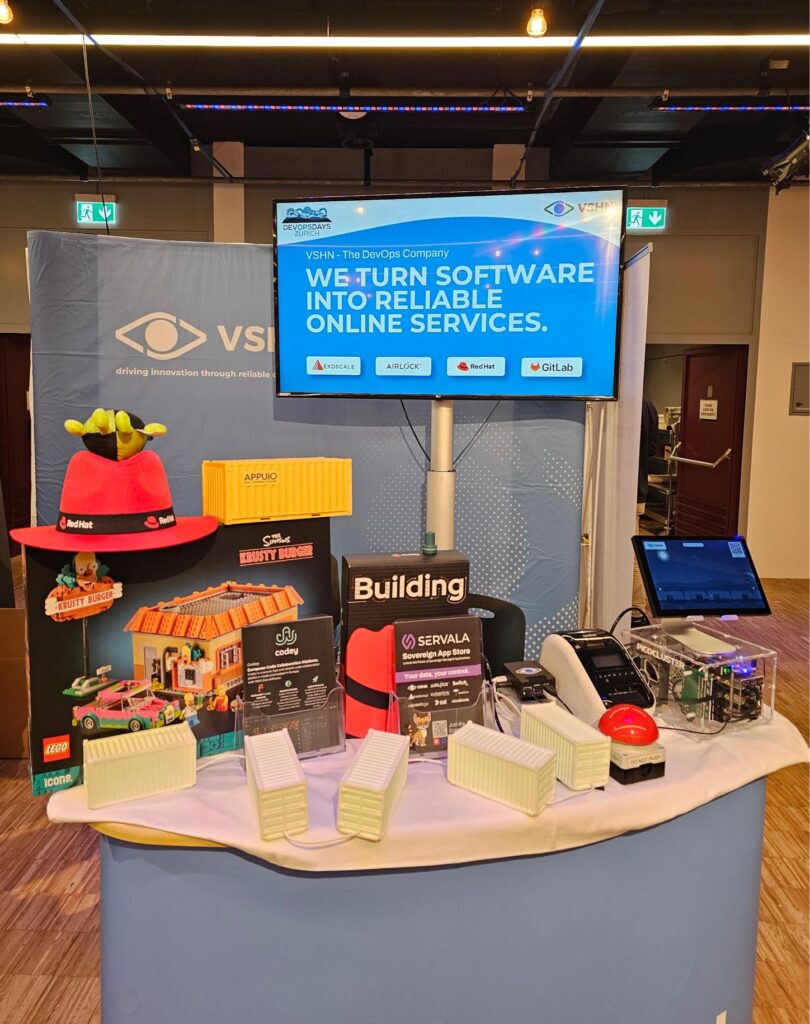
Our Booth, Great Conversations, and the LEGO Winners 🎁

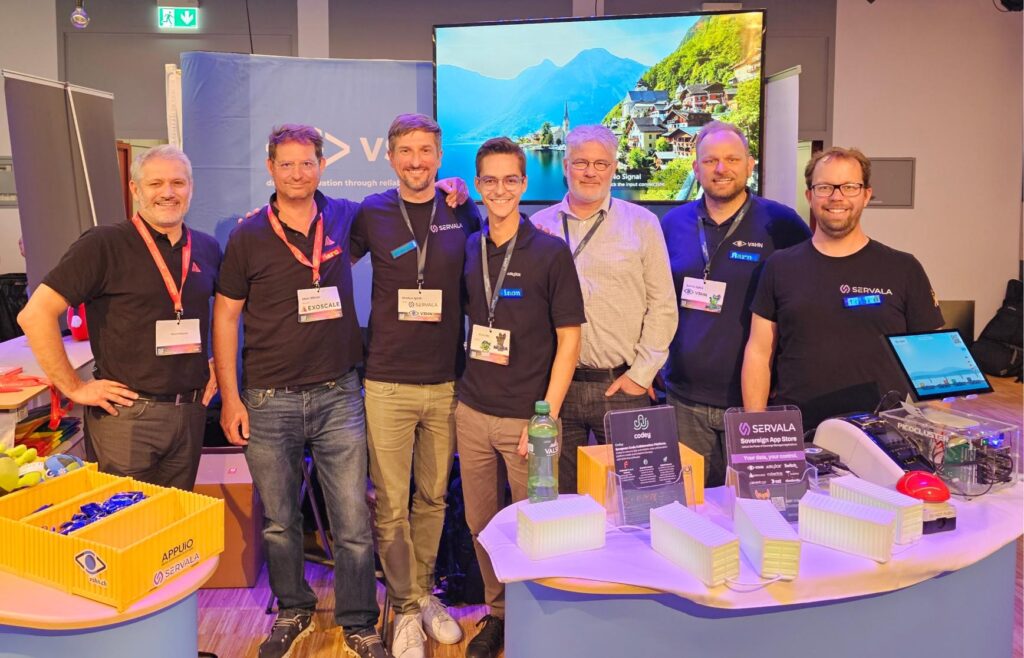
Of course, we also want to thank everyone who stopped by our booth. It was two days full of really interesting conversations – about Kubernetes, Servala, Codey, platform engineering, open source, AI, digital sovereignty, community topics, and everything in between.

That is honestly what makes events like DevOpsDays so valuable for us every year. Some of the best ideas and connections happen outside the talks themselves – somewhere between coffee breaks, sticker exchanges, and spontaneous discussions at the booth.

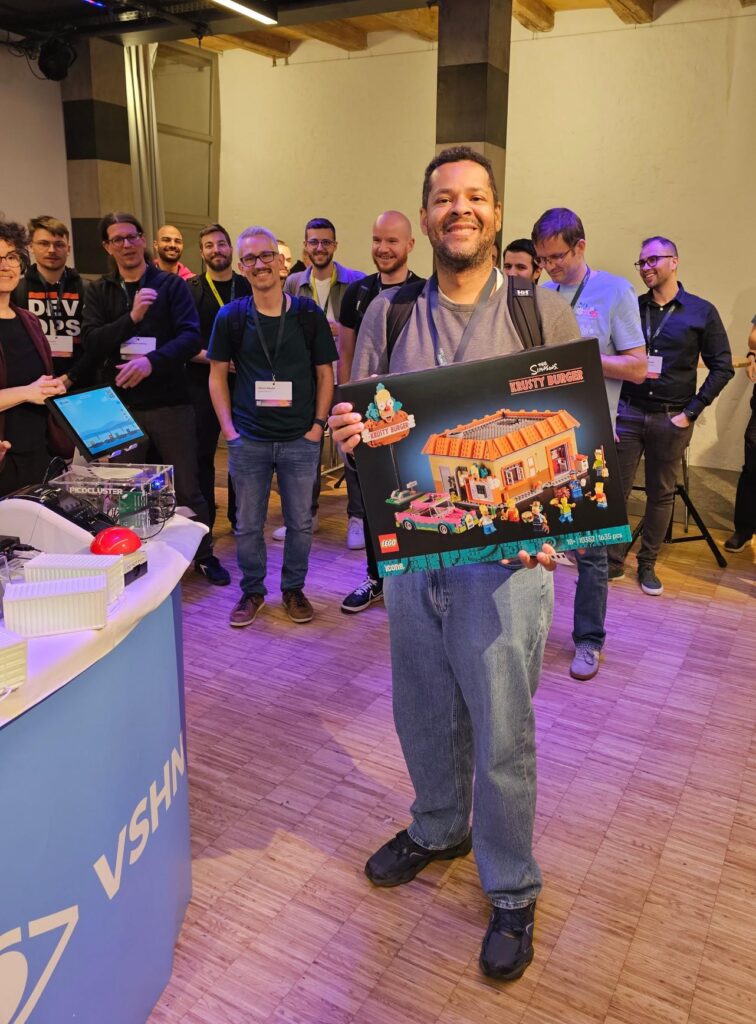
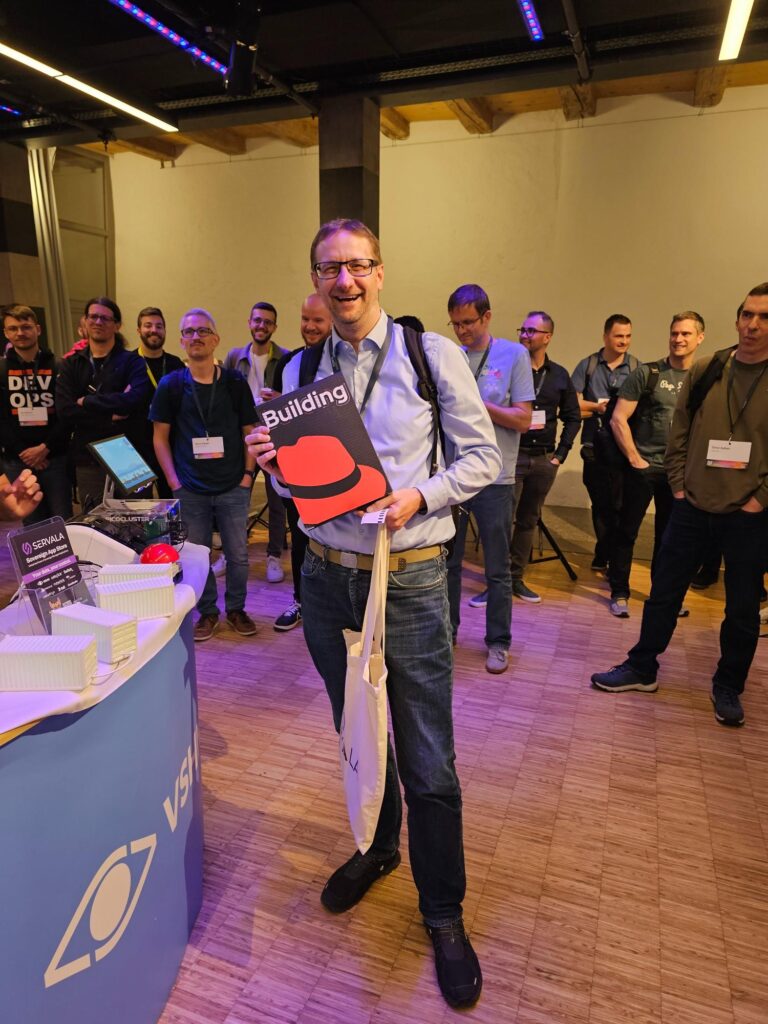
We were also very happy about the huge interest in our LEGO giveaways 👀

The winners of the two LEGO sets:

  • LEGO The Simpsons Krusty Burger
  • LEGO Red Hat Fedora

Congratulations again to the winners and have fun building. 😊

The Community Aspect Matters

The open spaces are still one of the best parts of DevOpsDays. Some of the most valuable conversations happen outside the official talks: spontaneous discussions in hallways, small groups debating architecture decisions, or people openly sharing what did not work in production.

That willingness to exchange experiences without pretending everything is perfect is what makes community events like this so valuable.

It was also simply great seeing so many familiar faces again and many new ones joining the community for the first time. The Swiss cloud native ecosystem has grown enormously over the last years, and DevOpsDays Zurich has definitely played a role in that journey.

Looking Ahead to 2027

A huge thank you to the organizers, volunteers, speakers, sponsors, and everyone involved. Community events like this require a massive amount of work behind the scenes, and it showed throughout the entire two days.

And now we are already looking forward to next year: the 10th anniversary of DevOpsDays Zurich. That is honestly quite wild to think about.

See you in 2027. 🎉

Markus Speth

Marketing, Communications, People
Contact us

Our team of experts is available for you. In case of emergency also 24/7.

Contact us
Events General

Meet VSHN at DevOpsDays Zurich 2026

20. Apr 2026

DevOpsDays Zurich is back – and of course we’re joining again. We’re happy to announce that VSHN is once again Gold Sponsor of DevOpsDays Zurich 2026, taking place on May 6 and 7, 2026 at the Alte Kaserne in Winterthur.

Two Days of DevOps, Community, and Good Conversations

DevOpsDays Zurich is one of our favourite events of the year – and for good reason. This is where the Swiss DevOps community comes together for two days of talks, open spaces, workshops, and the hallway conversations that sometimes move things more than any presentation. If you care about software delivery, infrastructure, platform engineering, or simply building better teams, this is the place to be.

Come Find Us at the Booth

Come by, ask us anything, and find out how we at VSHN help teams run their applications on Kubernetes and OpenShift – reliably, securely, and with a great developer experience.

Whether you want to learn more about what we offer, geek out on specific topics, or just say hi – we’d love to see you.

Win a Lego – Yes, Really

A VSHN booth without a Lego raffle? Unthinkable. Stop by, enter the draw, and maybe you’ll walk away with something to keep you busy for a while. It’s become a little event tradition of ours – and we’re keeping it going, of course. 🙂

See You in Winterthur!

You can find the full programme at devopsdays.ch. We’re looking forward to great conversations, good coffee – and of course finding out who takes home the Lego this year.

Markus Speth

Marketing, Communications, People
Contact us

Our team of experts is available for you. In case of emergency also 24/7.

Contact us
Events General Kubernetes Sovereignty

KubeCon Europe 2026 Recap – Sovereignty, AI Agents and a Strong Community

26. Mar 2026

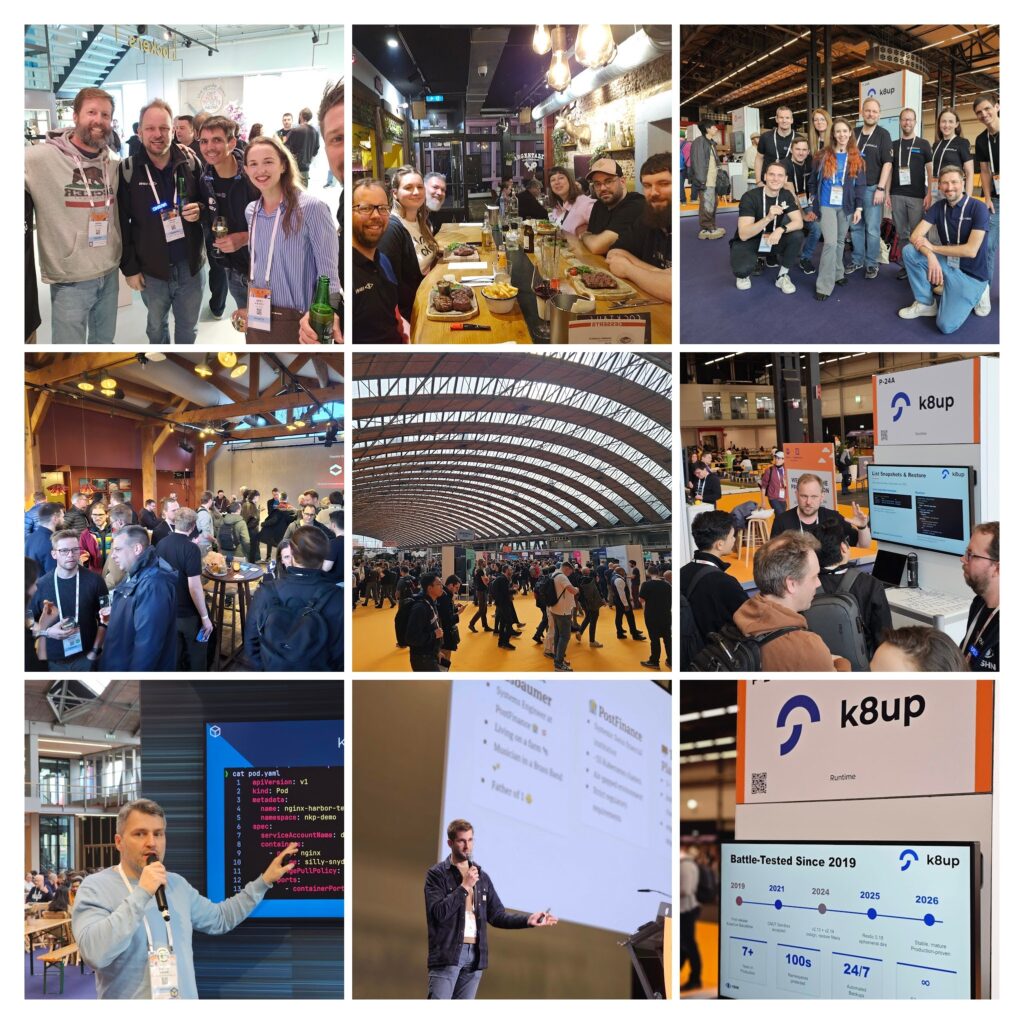
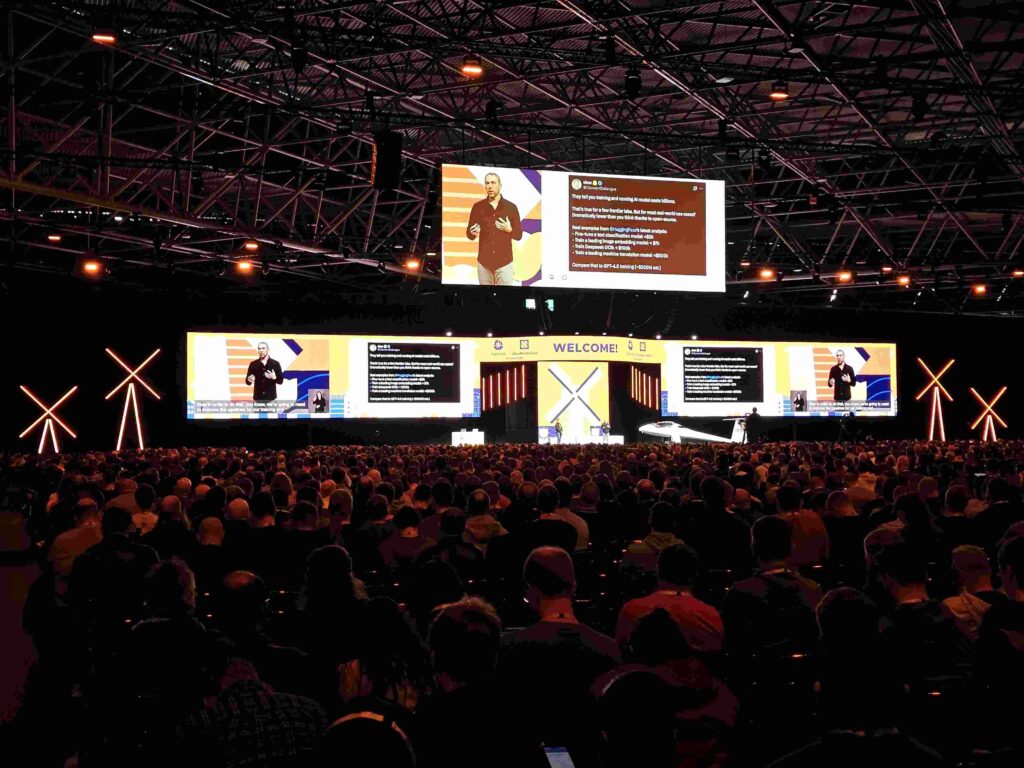
KubeCon + CloudNativeCon Europe 2026 in Amsterdam is coming to an end – and it once again showed why this event remains the beating heart of the cloud native ecosystem.

A Clear Direction: Sovereignty and “Agentic” AI

Two themes were impossible to miss this year.

First: digital sovereignty.
Not as a buzzword, but as a real, practical goal. Across talks and discussions, it became clear that organizations are actively looking for ways to build independent, resilient platforms – based on open standards and open ecosystems.

Second: AI – especially “agentic” systems.
From hallway conversations to keynote stages, the focus has shifted from experimentation to application. The big question is no longer if AI will be integrated into platforms, but how.

K8up: Strong Interest and a Call for Maintainers

One of the highlights for us was the strong interest in K8up.

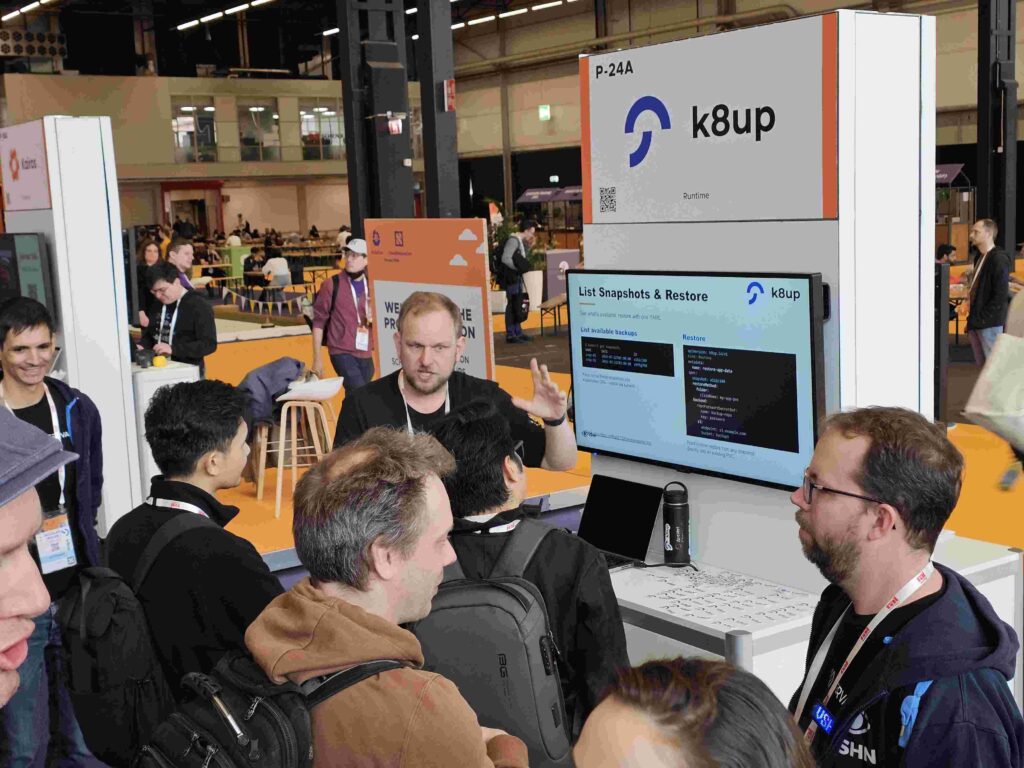
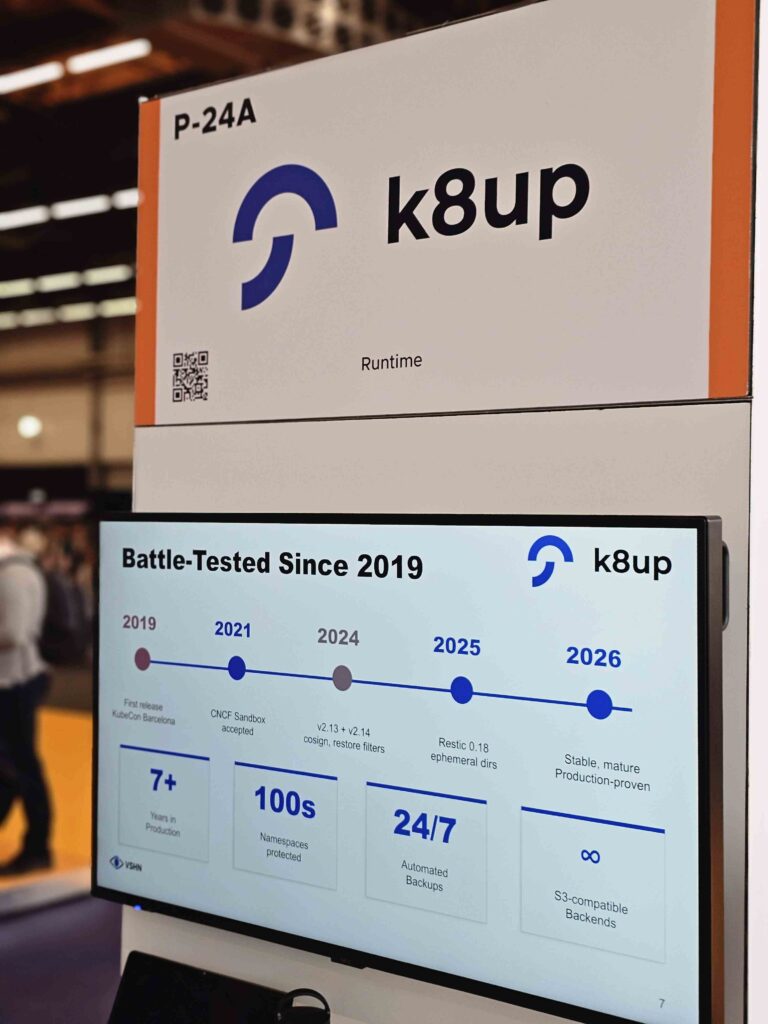
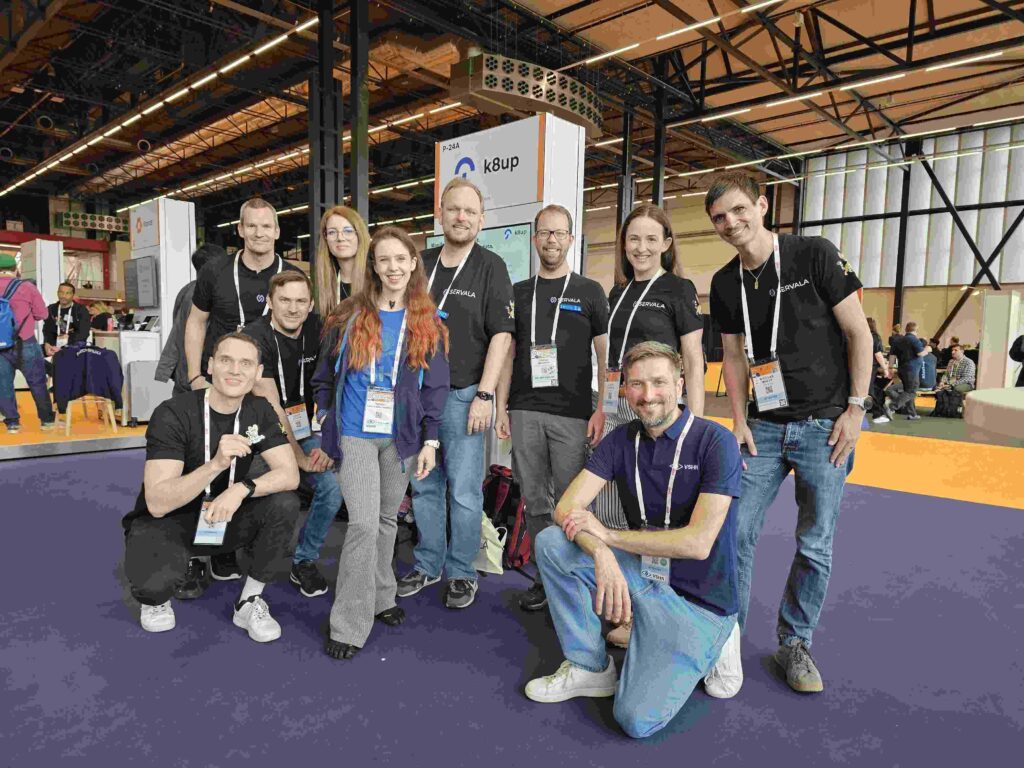
At the K8up kiosk in the Project Pavilion, we had many great conversations with users, contributors, and curious newcomers.

It became clear:
👉 The need for simple, reliable Kubernetes backup solutions is growing
👉 The community around K8up is highly engaged
👉 There is real momentum to push the project forward together

At the same time, we’re actively looking for maintainers and contributors to help shape the future of K8up.

If you’re interested in getting involved, join the discussion here:
https://github.com/k8up-io/k8up/issues/1187

Lightning Talk: Aarno on Stage

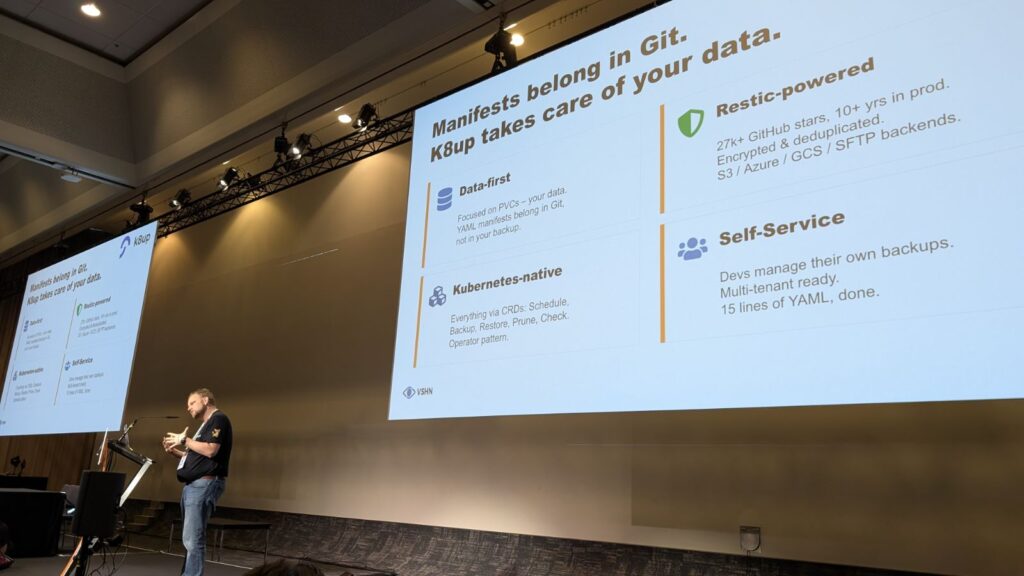
A special moment was Aarno Aukia’s lightning talk on K8up.

Short, focused, and right to the point – it sparked great discussions afterwards and brought even more attention to the project.

(And yes – in true Kubernetes fashion, there was even a live moment where an NGINX ingress got archived during a talk. Cloud native never gets boring.)

Servala: From Concept to Real Interest

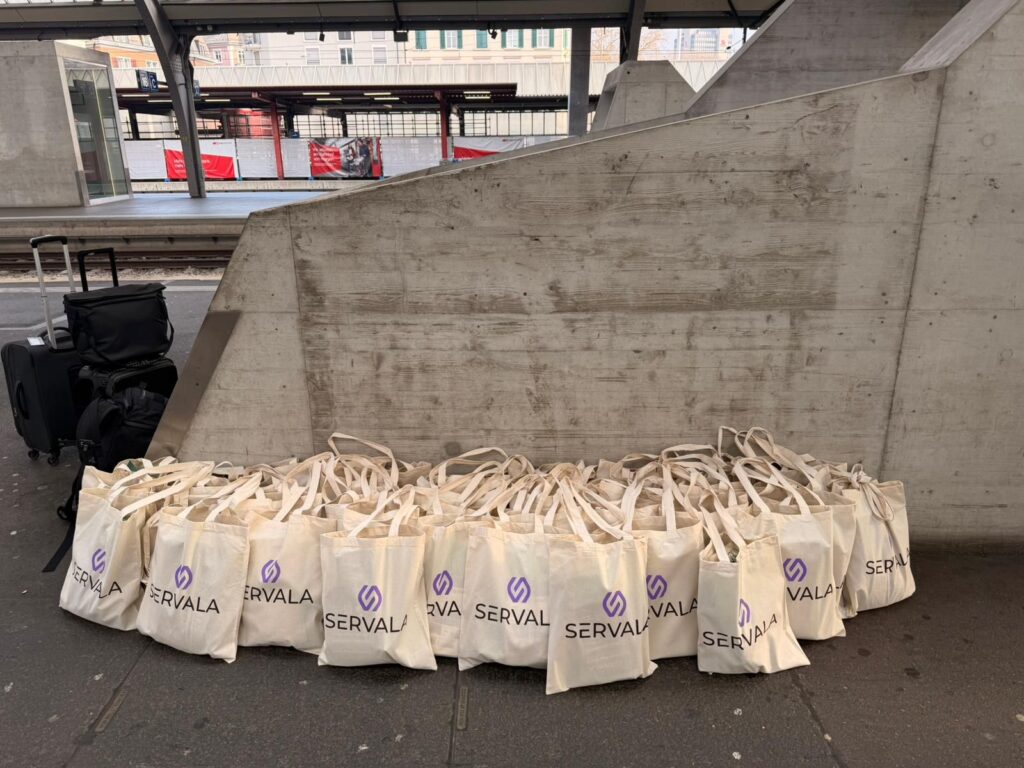
Servala – Sovereign App Store was another big topic throughout the week, not only because of the goodie bags for the KubeTrain attendees:

What stood out most was the level of understanding and curiosity.

The conversations have clearly evolved:

  • From ‘What is Servala?’
  • To ‘How can we participate?’

This reflects a broader shift in the industry – towards ecosystems instead of isolated platforms, and towards practical implementations of sovereignty.

Switzerland Punching Above Its Weight

One thing that stood out clearly this year: Switzerland’s impact on the cloud native ecosystem is disproportionately strong.

Despite its size, Switzerland contributed 3 out of 48 CNCF projects present at KubeCon – roughly 6%.
Projects like Harbor, K8up and Capsule are actively shaping the ecosystem.

And that’s only part of the story.

When including major contributions such as Cilium, the influence of Swiss engineering and open source involvement becomes even more significant.

But it’s not just about projects.

Switzerland was highly visible across the board:

  • Talks and lightning talks
  • Maintainers and contributors
  • Active community participation
  • Strong presence at events and discussions

This combination of engineering quality, open collaboration and community engagement is what makes the Swiss cloud native scene stand out.

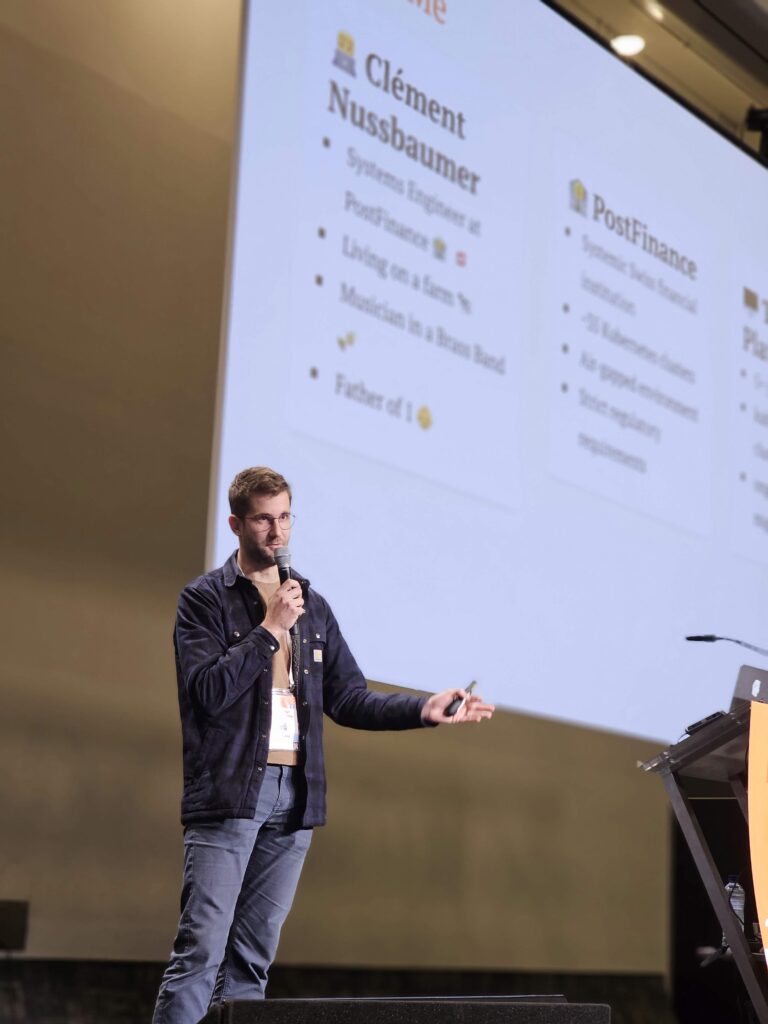
Clément Nussbaumer – PostFinance

A perfect example of what makes this community special:
Open, collaborative, and deeply involved.

Because in the end, the best conversations often happen outside of the actual sessions.

The Swiss Apéro – Community at Its Best

One of the highlights of the week was the KubeCon Swiss Apéro organized by Rocket Engineers.

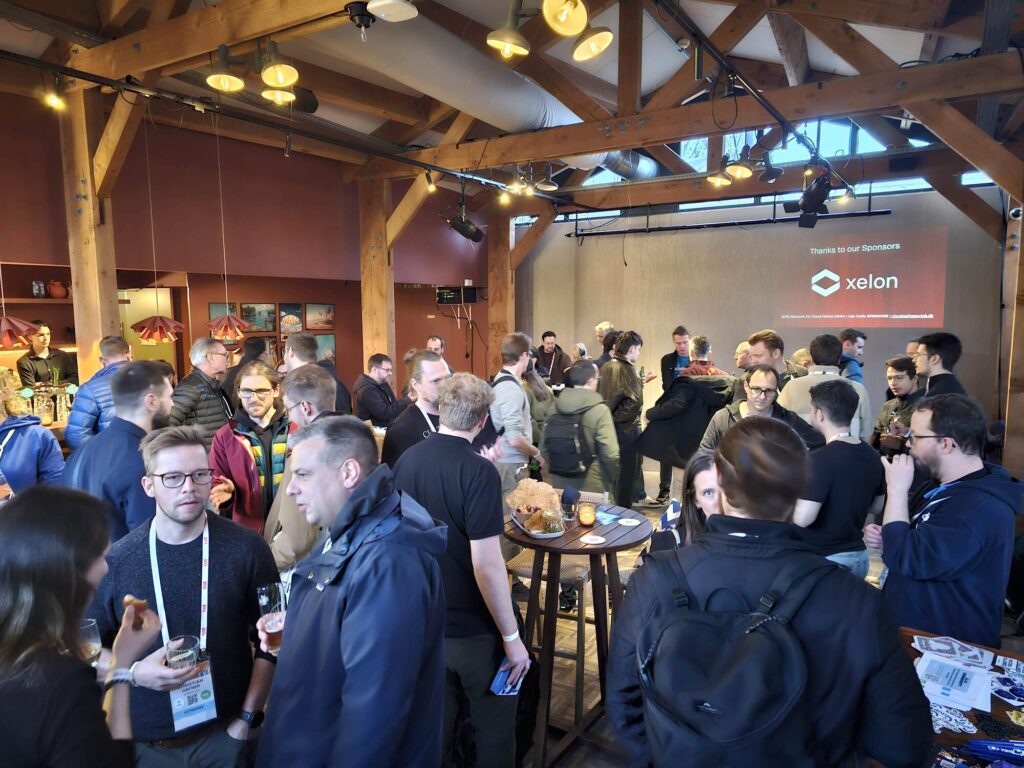
Around 130 people from the Swiss cloud native community came together in Amsterdam.

More Than Just Talks

Beyond the official program, KubeCon once again delivered a full week of side events and community moments:

  • KubeTrain
  • KubeCon Swiss Apero
  • Upbound, Isovalent and many more community events
  • Countless spontaneous meetups and discussions

These moments are where ideas turn into collaborations.

What We Take Away

KubeCon Europe 2026 confirmed a few key trends:

  • Sovereignty is becoming a real, actionable priority
  • AI is moving into practical, platform-level use cases
  • Open ecosystems are replacing isolated solutions
  • Community remains the driving force behind everything

And maybe most importantly:

👉 The best ideas don’t happen in isolation – they happen when people come together

Thank You, Amsterdam

A big thank you to everyone we met throughout the week – partners, contributors, customers and the broader cloud native community.

We’re heading home with new ideas, new connections, and a lot of momentum.

See you next year in Barcelona!

Markus Speth

Marketing, Communications, People
Contact us

Our team of experts is available for you. In case of emergency also 24/7.

Contact us
Events General Tech

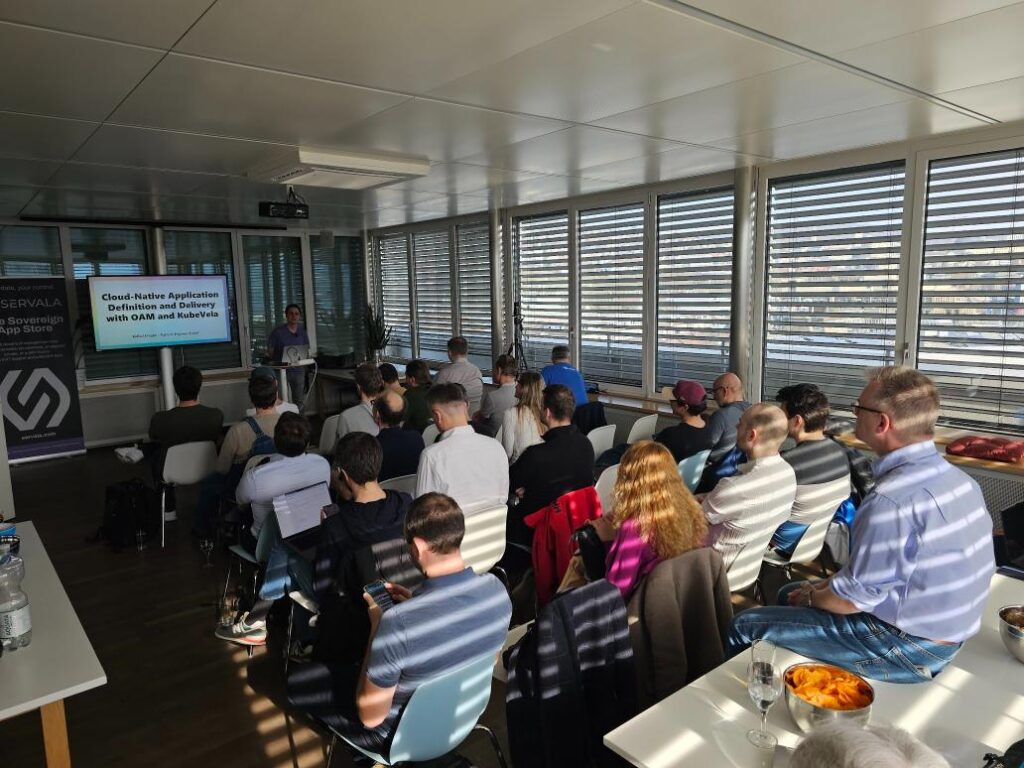
Cloud Native Computing Switzerland Meetup – March 2026 Recap

10. Mar 2026

On March 10, the Cloud Native Computing Switzerland Meetup Community gathered again at the VSHN Tower in Zürich for an afternoon of technical talks, discussions, and community exchange.

With more than 3,000 members in the meetup group, the CNC Switzerland community continues to bring together platform engineers, DevOps practitioners, architects, and open-source enthusiasts from across the Swiss cloud-native ecosystem.

The March edition featured four talks covering topics from Kubernetes security and networking to platform engineering and MLOps.

Opening and Community Updates

Aarno Aukia and Patrick Mathers – VSHN

The meetup kicked off with a short welcome and community update by the organizers. As always, the CNC Switzerland meetup follows a few important principles:

  • All talks are technical and open-source focused
  • No product or sales pitches
  • Talks are held in English
  • Speakers from diverse backgrounds are strongly encouraged

These principles help keep the meetup a true technical community event rather than a marketing stage.

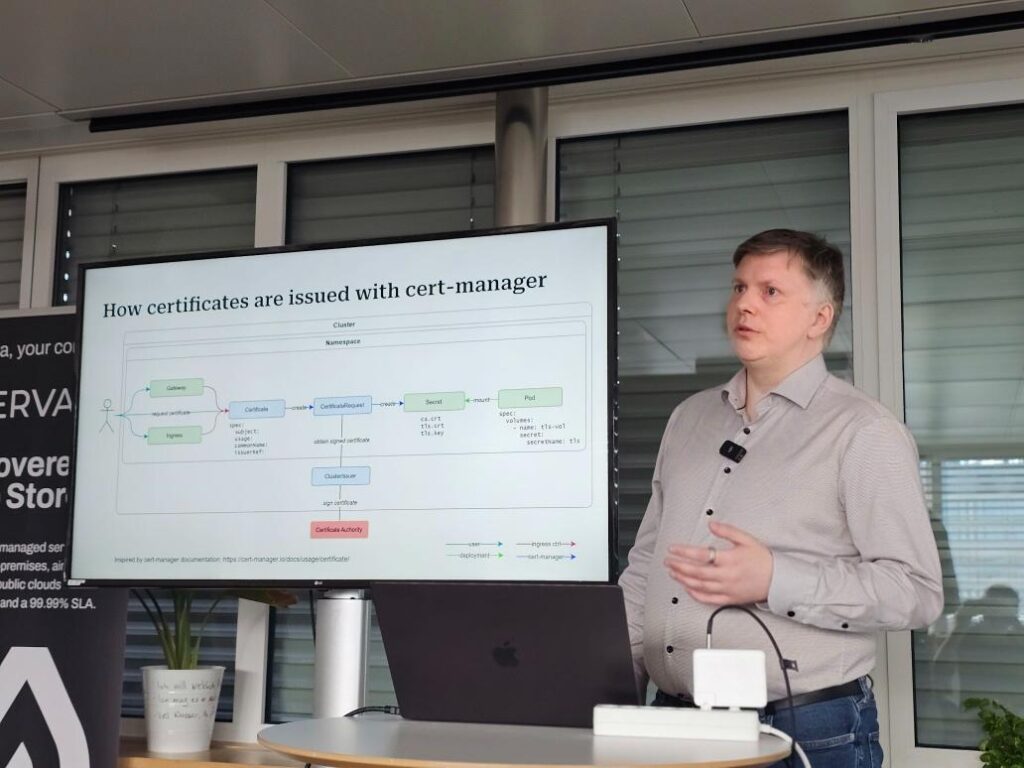
TLS Hot Reload in Kubernetes

Janne Kataja – SIX

Janne Kataja from SIX explained how applications can implement hot reloading of TLS certificates, allowing certificates stored in Kubernetes Secrets to be updated without restarting pods.

Instead of forcing service restarts during certificate renewals – which can introduce downtime and operational risk – hot reload mechanisms detect changes in mounted secret volumes and reload certificates dynamically.

This approach enables:

  • seamless certificate rotation
  • higher availability
  • the use of shorter-lived certificates for improved security

The talk demonstrated how relatively small architectural decisions can significantly improve reliability and operational resilience.

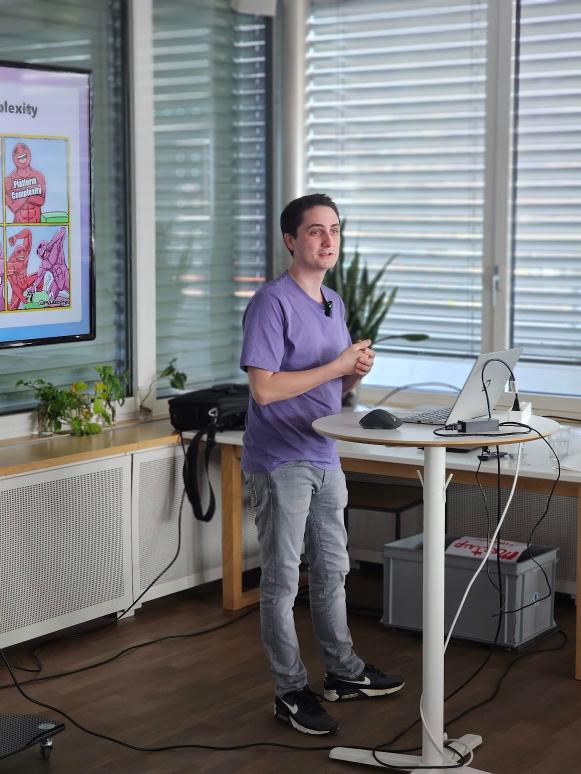
Application-Centric Platforms with OAM and KubeVela

Raffael Klingler – AXA Schweiz

The second session explored a topic that is gaining traction across many organizations: platform engineering and internal developer platforms.

Raffael Klingler from AXA introduced the Open Application Model (OAM) and how it shifts the focus from Kubernetes infrastructure toward application-centric definitions.

Instead of writing complex Kubernetes manifests, developers define applications using modular building blocks. These definitions are then rendered into deployable infrastructure resources using KubeVela.

The talk showed how this approach allows organizations to:

  • standardize application deployment patterns
  • reduce Kubernetes complexity for developers
  • integrate cloud services and GitOps workflows

As more companies build internal developer platforms, models like OAM illustrate how Kubernetes can become more accessible and developer-friendly.

DevOps for AI: Running ML in Production with Kubeflow

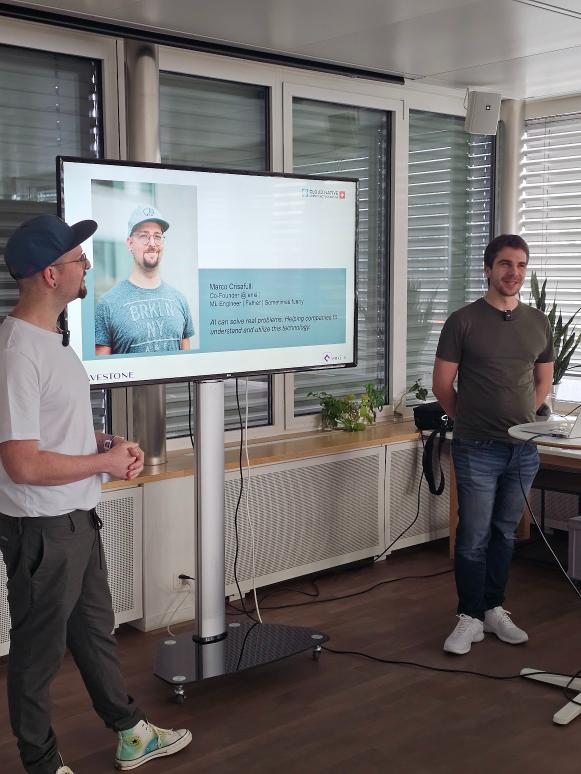
Fabrizio Lazzaretti (Wavestone) & Marco Crisafulli (enki)

AI is everywhere right now, but turning machine learning experiments into reliable production systems remains difficult.

Fabrizio Lazzaretti and Marco Crisafulli explored how MLOps practices and Kubeflow help bridge the gap between data science experimentation and production-grade systems.

The session demonstrated how Kubeflow enables:

  • reproducible ML pipelines
  • collaboration between teams
  • automated training workflows
  • integration with the broader CNCF ecosystem

Using a real end-to-end example, the speakers showed how organizations can move from ad-hoc AI experiments to repeatable, scalable ML platforms running on Kubernetes.

The talk highlighted a key insight: AI systems still need strong DevOps foundations.

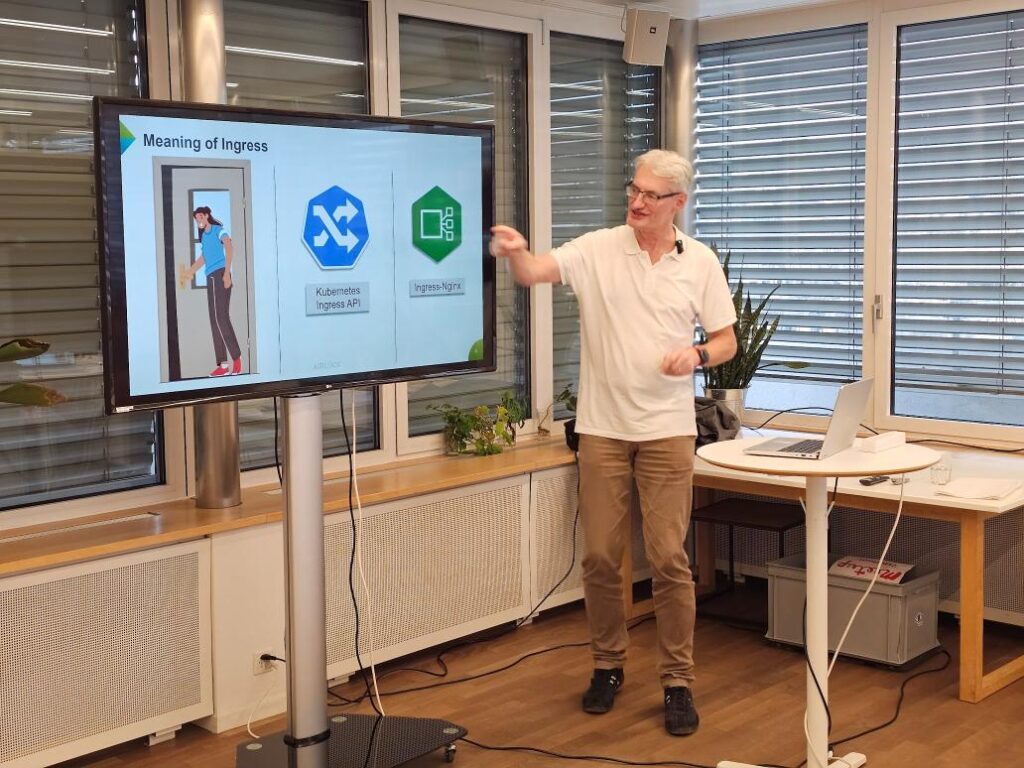
Bye-bye Ingress-NGINX – Hello Gateway API

Urs Zurbuchen – Airlock

The final talk addressed a major architectural shift happening in the Kubernetes networking ecosystem.

Urs Zurbuchen from Airlock explained why the traditional Ingress model – often powered by the NGINX Ingress Controller – is reaching its limits.

Many Kubernetes users have experienced challenges such as:

  • configuration complexity
  • heavy reliance on annotations
  • security issues in older controller implementations

The emerging Gateway API aims to address these limitations with a more structured and extensible networking model.

The talk walked through:

  • the architectural improvements of Gateway API
  • why it is becoming the future standard
  • migration considerations for existing Kubernetes clusters

For many attendees, this session provided a helpful overview of where Kubernetes networking is heading next.

Networking and Apéro

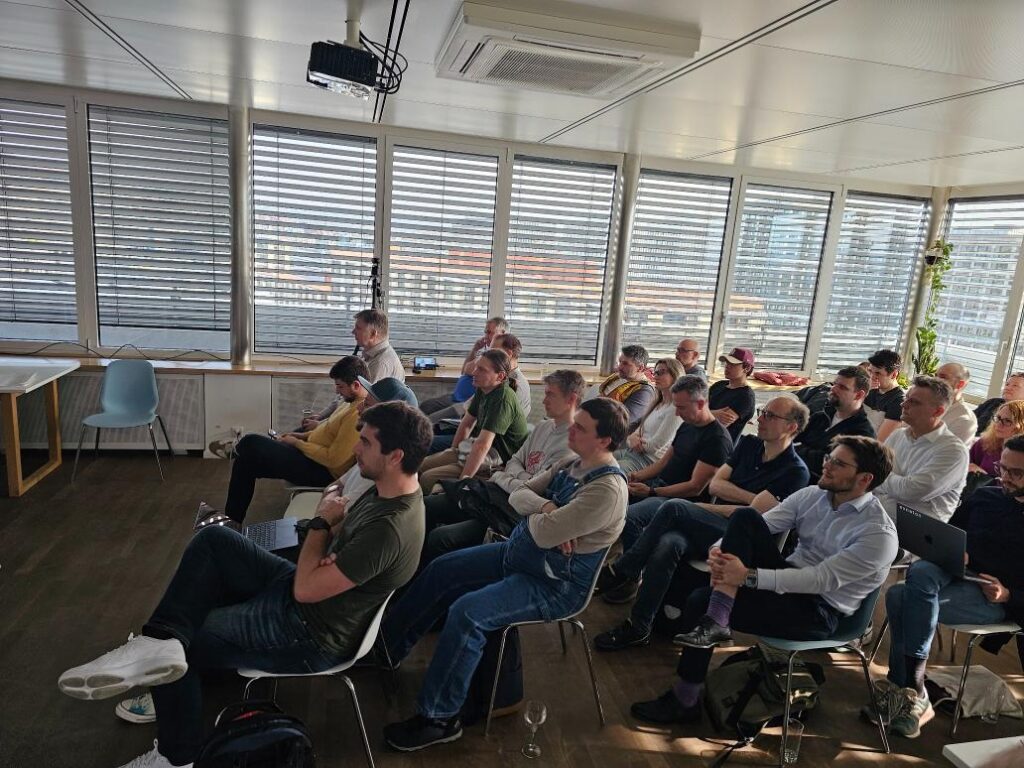
After the talks, participants stayed for networking and the traditional Swiss meetup apéro, continuing discussions about Kubernetes, platform engineering, and the rapidly evolving cloud-native ecosystem.

Meetups like these highlight the strength of the Swiss cloud-native community: engineers from different companies sharing real-world experiences, lessons learned, and open-source solutions.

Watch the Talks

The sessions from this meetup will be published on the VSHN TV YouTube channel.

Subscribe to stay notified when the recordings become available.

Join the Community

The Cloud Native Computing Switzerland Meetup welcomes engineers, architects, and developers interested in cloud-native technologies and open source.

If you would like to present a talk or share your project, submit your proposal here.

We look forward to seeing you at the next meetup!

Markus Speth

Marketing, Communications, People
Contact us

Our team of experts is available for you. In case of emergency also 24/7.

Contact us
Events General

Recap Red Hat Summit: Connect Switzerland 2026 in Zürich

15. Jan 2026

On January 14, 2026, the Swiss enterprise IT and open source community came together in Zurich for Red Hat Summit: Connect Switzerland 2026. The event offered a full day of insights, discussions, and exchange around hybrid cloud, OpenShift, automation, DevSecOps, AI, and above all, digital sovereignty.

For us at VSHN, it was a strong start into the new year and, as a Silver Sponsor, another clear signal of how relevant open source, cloud native platforms, and sovereign IT architectures have become for Swiss organizations.

VSHN in the opening keynote by Red Hat Country Manager Richard Zobrist

The day kicked off with a special moment right away: a strong quote about VSHN and our collaboration with HIN (Health Info Net), shared by Richard Zobrist, Red Hat Country Manager Switzerland, during the opening keynote. Aarno later summed it up with a wink: “Its not every day that the Red Hat country manager Richard drops my name during the opening keynote 🥰” – a great start to an exciting event day.

Focus on real enterprise challenges

Red Hat Summit: Connect Switzerland once again delivered a well-balanced mix of strategic perspectives and hands-on implementation topics. Across keynotes, breakout sessions, and partner talks, one thing became clear: organizations are no longer asking whether they should adopt hybrid cloud and Kubernetes, but how to operate these platforms reliably, securely, and in line with regulatory and sovereignty requirements.

Topics that were particularly in demand included:

  • Hybrid and multi-cloud architectures with OpenShift
  • Platform engineering as an enabler for developer productivity
  • Automation and Day-2 operations
  • Security and compliance in regulated environments
  • AI workloads on enterprise Kubernetes platforms
  • … and all of these topics in the context of digital sovereignty

Digital sovereignty is built, not bought

One of the highlights for us was the Partner Spotlight talk by Aarno Aukia, CTO & Partner at VSHN. In his lightning talk “Data Sovereignty Is Built, Not Bought“, Aarno addressed a topic that ran like a common thread through many conversations throughout the day.

The key message: sovereignty is not a label you can buy. It is an architectural and operational capability that must be intentionally designed and operated. OpenShift plays a key role here by decoupling applications and data from individual infrastructure providers and enabling consistent operations across on-premises, private cloud, and trusted public cloud environments.

This is exactly where platforms like Servala come into play – delivering managed services to OpenShift environments where the data already lives, without unnecessary data movement or lock-in.

Many great conversations at the VSHN booth

Throughout the day, our booth was a meeting point for customers, partners, and community members. We had many exciting conversations around:

Once again, it was striking how concrete the questions have become. Many organizations are deep into implementation and are looking for proven operating models rather than theoretical concepts.

Community, partners, and exchange

Beyond the sessions and breakout talks, Red Hat Summit: Connect Switzerland is first and foremost a community event and is rightly regarded as the largest open source event in Switzerland. The open exchange with Red Hat experts, partners, and peers made it easy to share experiences, challenges, and learnings.

A big thank you goes to Red Hat and the local team for organizing such a well-rounded and successful event in Zurich.

Looking ahead

The conversations clearly showed that 2026 will be another decisive year for digital sovereignty. We look forward to continuing to build reliable, open, and sovereign platforms together with our customers and partners – and to keeping the dialogue going at future community events.

Thank you to everyone who stopped by our booth, joined the sessions, and shared their perspectives. We are already looking forward to the next Red Hat Summit: Connect.

Contact VSHN

Would you like to learn more about what we do or how we can support you?
Then get in touch with us – we look forward to the exchange.

Markus Speth

Marketing, Communications, People
Contact us

Our team of experts is available for you. In case of emergency also 24/7.

Contact us
Events General Kubernetes

VSHN at KubeCon Europe 2026 in Amsterdam – we look forward to seeing you!

11. Dec 2025

KubeCon + CloudNativeCon Europe 2026 – the cloud native community meets again in Amsterdam

From 23 – 26 March 2026, KubeCon + CloudNativeCon Europe returns to beautiful Amsterdam and brings together thousands of cloud native practitioners, platform engineers, SREs, developers and open source enthusiasts. For VSHN, this event has been one of the most important community gatherings for many years, and 2026 is no exception.

We will be on-site throughout the week, connecting with the community, learning about the latest CNCF developments, sharing our experience in operating reliable Kubernetes and OpenShift platforms, and meeting partners, customers, friends and fellow cloud native enthusiasts.

Community support – KubeTrain and KubeTrain Party

We are very excited to support the community as sponsor of KubeTrain 2026 and the KubeTrain Party.

KubeTrain – 22 March 2026: A fun and sustainable journey for everyone traveling together to KubeCon in Amsterdam. This initiative brings cloud native fans onto one train and creates networking and great conversations along the way.

KubeTrain Party – 22 March 2026: After arrival, the excitement continues at the official KubeTrain Party. Drinks, music, networking and a great start into KubeCon week.

Meet us at the KubeCon Swiss Apéro

Swiss Apéro – 24 March 2026: We will also be present and sponsoring the KubeCon Swiss Apéro 2026. It takes place at the Beach House, Strandzuid, Europaplein 22, 1078 GZ Amsterdam from 18:30. You can look forward to an evening full of conversations about Kubernetes, OpenShift, platform engineering, digital sovereignty, Servala and more.

Why you should meet us at KubeCon

VSHN is not just another Kubernetes service provider. For more than ten years, we have helped shape the cloud native landscape in Switzerland and beyond.

Here is why a conversation with us is worth your time:

  • We are the first Swiss Kubernetes Certified Service Provider (KCSP)
  • We are the first Swiss Red Hat Premier CCSP Partner
  • We operate Kubernetes and OpenShift platforms for organizations across Europe and beyond
  • We build and run Servala – the Sovereign App Store. Servala connects companies, developers and cloud providers with secure, scalable and user-friendly cloud native services and applications
  • Application Catalog – a large selection of managed services that integrate seamlessly into your development workflow
  • APPUiO – expert hosting for expert software engineers based on OpenShift
  • VSHN Solutions – your DevOps enabler – individual, modular, scalable
  • We help teams improve developer productivity, reliability and operational excellence
  • We live open source, collaboration and sustainable ecosystems
  • We actively grow and support the cloud native community

Our blog post What is Kubernetes? The Engine of the Digital World, Simply Explained explains the basics of Kubernetes in a simple and understandable way.

Our CNCF Sandbox Project – K8up

We also maintain our own CNCF Sandbox Project: K8up, a backup operator for Kubernetes and OpenShift that helps teams run backup and restore processes securely and automatically. As active maintainers, we contribute to strengthening the open source ecosystem and providing reliable tools for the Kubernetes community.

Community engagement – organizers of the largest cloud native meetup group in Switzerland

We organize the Cloud Native Computing Switzerland Meetup group with more than 3000 members, one of the most active tech communities in the country.

Our next Cloud Native Computing Meetup will take place on 10 March 2026 at the VSHNtower in Zurich – with exciting talks, exchange and networking. Join us.

And if you would like to contribute a talk, submit it here: https://cnc-meetup.ch/

What we are looking forward to at KubeCon 2026

  • The ongoing evolution of the Kubernetes ecosystem
  • Platform Engineering as a key discipline for modern software teams
  • Digital sovereignty and European alternatives
  • AI-assisted operations and smarter automation
  • New CNCF projects shaping the future of cloud native

Let us meet in Amsterdam

If you are attending KubeCon Europe 2026, we would love to meet you. Whether you want to talk about Kubernetes operations, OpenShift, Servala, cloud native strategies, backups with K8up or simply grab a coffee – get in touch with us.

You will find us:
🚆 On the KubeTrain
🎉 At the KubeTrain Party
🫕 At the Swiss Apéro
🇳🇱🌷🚲 All around KubeCon in Amsterdam

We look forward to seeing you in Amsterdam. Let us shape the future of cloud native together.

Markus Speth

Marketing, Communications, People
Contact us

Our team of experts is available for you. In case of emergency also 24/7.

Contact us
Events General

VSHN at Red Hat Summit: Connect 2026 in Zurich in January – proud to be a Silver Sponsor again

10. Dec 2025

The year 2026 starts with a highlight right away: Red Hat Summit: Connect Switzerland 2026 will take place on January 14 in Zurich and we are very happy to be part of it again this year as a Silver Sponsor. A full day of digital sovereignty, hybrid cloud, automation, DevSecOps, OpenShift, AI and enterprise IT innovation – right in Zurich.

The event brings together IT leaders, developers, platform engineers, architects and open source enthusiasts to learn from each other, exchange experiences, and connect with Red Hat experts. This fits perfectly with what we do every day at VSHN: running Kubernetes and OpenShift platforms reliably, enabling developer productivity, and supporting teams in modern infrastructure operations.

What to expect

The program is packed with keynotes, breakout sessions, labs, and plenty of networking time. A few highlights:

  • Keynotes on Open Hybrid Cloud, AI, platform strategy and digital sovereignty
  • Insights into RHEL 10, OpenShift AI and security in hybrid cloud environments
  • Sessions on IT automation, DevSecOps, platform engineering and infrastructure security
  • Hands-on labs in the afternoon
  • Networking opportunities for deep technical conversations and new connections

If you are interested in AI architectures, modern infrastructure, automation, delivery speed, or hybrid and multi-cloud strategies, you will definitely find what you are looking for.

VSHN and Red Hat

VSHN is the first Kubernetes Certified Service Provider (KCSP) in Switzerland and the first Swiss Red Hat Premier CCSP Partner. We are ISO 27001 certified, operate under strict FINMA guidelines, and hold an ISAE 3402 Report Type 2 audit. As a long-standing Red Hat partner with deep expertise in OpenShift and managed services, our focus is on security, reliability and professional 24×7 operations.

Meet VSHN on site

Visit our booth and talk to us about:

  • Servala – the Sovereign App Store that connects enterprises, developers and cloud providers with secure, scalable and user-friendly cloud-native services and applications
  • Managed OpenShift – we handle everything from setup and configuration to monitoring, maintenance and backups. Our goal: free your mind and simplify operations
  • Application Catalog – a wide selection of managed services that integrate seamlessly into your development workflow
  • APPUiO – expert hosting for expert software engineers based on OpenShift
  • VSHN Solutions – your DevOps enabler – individual, modular, scalable

We look forward to inspiring conversations, knowledge exchange from real projects, and exploring together how we can help teams operate modern software efficiently.

See you on January 14 in Zurich

If you are attending – stop by and say hello. Let us connect, learn, and shape the cloud-native future together.

Markus Speth

Marketing, Communications, People

Contact us

Our team of experts is available for you. In case of emergency also 24/7.

Contact us
Events General Kubernetes

KCD Suisse Romande 2025 at CERN – Community, Cloud Native, and Two Great Days in Geneva

5. Dec 2025

The first Kubernetes Community Days Suisse Romande took place on December 4-5, 2025 – and what a venue: CERN Science Gateway in Geneva. A place where science meets innovation made the perfect backdrop for the local cloud native community to come together, share ideas, learn, and collaborate.
VSHN was proud to be Silver Sponsor of the KCD.

Around 300 participants from Switzerland and beyond gathered for two days filled with workshops, sessions, hallway talks, and a whole lot of Kubernetes energy. The atmosphere was fantastic – friendly, curious, and buzzing with exchange. Exactly what KCDs should be about.

Workshops, Talks and Great People

Day 1 kicked off with three parallel hands-on workshops, followed by CERN and LHC tours for those lucky enough to grab a spot. The combination of technology and the magic of CERN definitely created excitement early on.

Day 2 continued with even more workshops – and later the stage belonged to the speakers. Nearly 50 sessions touched on Kubernetes, platform engineering, open source tooling, DevOps culture, security, AI topics and more. Talks were held in French and English, highlighting the multilingual and open nature of the Swiss tech scene.

Among the featured speakers were well-known community voices including:

  • Jessie Frazelle – Zoo.dev
  • Sarah Novotny – Kosai / Operant AI
  • Mauricio Salatino – LearnK8s
  • Aurélie Vache – OVHcloud
  • Engin Diri – Pulumi
  • Shérine Khoury – Red Hat
  • Luc Juggery – Exoscale
  • Kasper Nissen – Lunar

But beyond names and sessions, what stood out most were conversations in the corridors, shared learnings, and genuine collaboration. Networking at events like this is where ideas turn into projects.

Why Events like KCD Matter

KCDs are community-driven by design – organized for practitioners and by practitioners, supported by CNCF. They create a space where we meet as peers, share solutions, discuss challenges, and grow together. For us at VSHN, this is exactly the spirit we believe in.

Cloud native is evolving fast – platforms, automation, developer experience, sovereignty, and AI are changing how we build and operate software. Meeting the community in person helps everyone stay ahead and shape what’s next. Aarno and Pierre were very happy to meet so many interested people.

See You Again in 2026

A huge thank you to the Cloud Native Suisse Romande organizers, all speakers, sponsors, and every participant we met at the booth.
We loved the conversations, the exchange, and the energy inside CERN.

Already looking forward to next year!

📬 Want to continue the conversation about Kubernetes, OpenShift, or Servala?
Reach out – we’re happy to connect.

👉 More info about KCD Suisse Romande

Markus Speth

Marketing, Communications, People
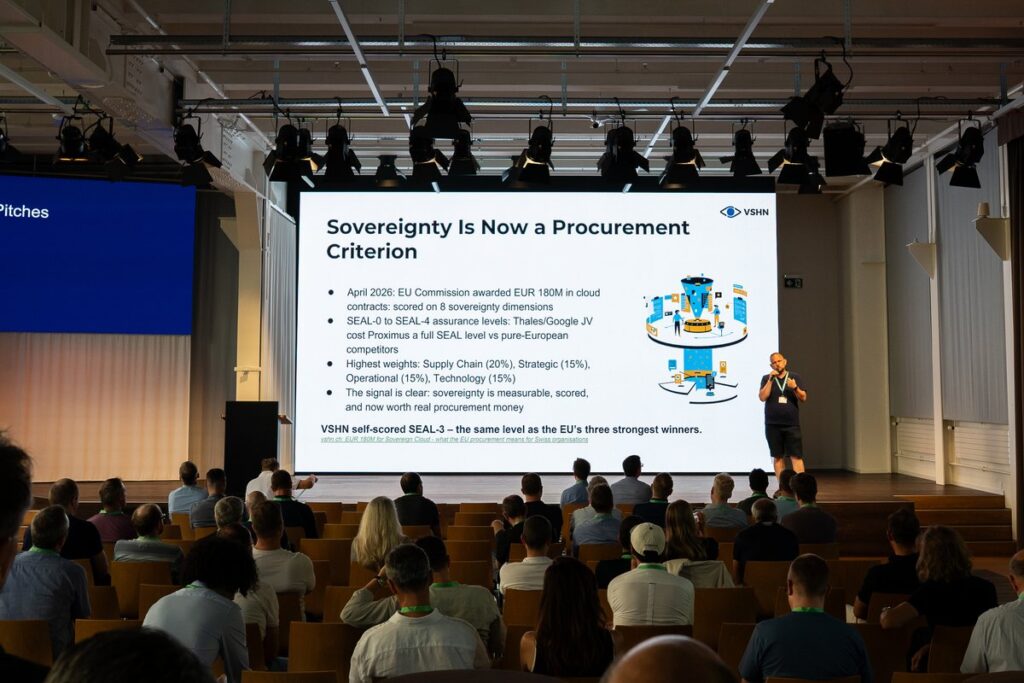
Contact us

Our team of experts is available for you. In case of emergency also 24/7.

Contact us
Events General Sovereignty

DINAcon 2025: Sovereignty Needs Collaboration, Courage, and Real Openness

21. Nov 2025

DINAcon 2025 took place on Tuesday, November 18 at the Kongresszentrum Kreuz in Bern, and VSHN was right in the middle of it. Tobias Brunner was invited as a panelist, joining Henry Poole, Nina Müller from Nextcloud, and Rahel Estermann to discuss digital sovereignty. The message was clear: we are moving in the right direction, but we are far from finished.

And the atmosphere? A mix of curiosity, realism, and momentum.

AI is everywhere. But it is not sovereign yet.

A dominant theme across the conference was Artificial Intelligence. Nearly every session, conversation, and coffee break circled back to it. The key realization: AI is already here, but it is not yet sovereign.

One highlight was the demo of MeLODy – Der intelligente Linked Open Data Chatbot, developed for public administration in the City of Zurich and the Canton of St. Gallen. Here, AI is not only being discussed in theory, but actively used in real applications. That is encouraging and shows that progress is not just conceptual, but operational.

Switzerland already has strong foundations: law, infrastructure, and community

There was also positive news. Tobias pointed out during the panel that Switzerland already has several important building blocks in place.

  • EMBAG creates clear legal requirements for the use of open source in public administration
  • GPU capacity for sovereign AI is already available, for example at Stepping Stone, and providers like Exoscale and Cloudscale also offer AI compute
  • With Apertus, a Swiss LLM is emerging. It is not finished yet and not on the level of large foundation models, but it is a start and publicly testable at Public AI Inference Utility

So the foundation exists. Now we need to build on it together.

Ecosystems are forming. Companies are investing.

Another key takeaway from DINAcon was the momentum in the European tech landscape.

  • The Heinlein Group is investing heavily in Open Cloud, a fork of ownCloud and direct competitor to Nextcloud, and is expanding its presence with a new office in Switzerland
  • Open source culture was visible not only in technology, but also creatively. There was even open source music: Music Album Open Up | Open Source | MD Systems GmbH

Solche Entwicklungen zeigen, dass Open Source längst kein Nice-to-have mehr ist, sondern StThese developments show that open source is no longer a nice-to-have. It has become a strategic differentiator.

Panel insights from Tobias Brunner

During the panel, Tobias addressed three key questions.

What was the worst misuse of the term digital sovereignty?

Tobias began with a clear definition of sovereignty, summarised in three pillars:

  • Confidentiality: Who has access to my data and under which jurisdiction?
  • Availability: Do I always have access or is there a technical or legal kill switch?
  • Control: Am I free to move or export my data, or am I locked into proprietary licenses, APIs, or opaque operating models?

Many providers today fulfil only one or two of these pillars, yet still label their solutions as sovereign. Unfortunately, many such offerings already exist and there is even a name for it: Sovereignty Washing.

Ein Beispiel, das er nannte: Ein Anbieter betreibt Infrastruktur in einem Schweizer Rechenzentrum und Tobias shared an example: a provider runs infrastructure in a Swiss data center and advertises Swiss hosting and data portability. Yet the provider is subject to a foreign jurisdiction with extraterritorial access laws. The result: the solution looks sovereign on the surface, but underneath it is not. These grey areas make decision-making extremely difficult for organisations striving for sovereignty.

How can Switzerland take a sovereign role in global software supply chains?

His answer was clear: not by doing everything alone, but by working together. Tobias stressed that historically, Switzerland has always found ways to be part of global value chains, even when production physically happened elsewhere. The same applies to software. To achieve this, three things are needed:

  • open standards instead of proprietary protocols
  • open source software as a shared foundation
  • shared ecosystems and collaboration between cloud providers, developers, and operators

For years, hyperscalers have repeated the narrative that data must move to them. Today, this has led to dangerous centralisation of power and infrastructure. Tobias flipped the logic: why not bring the services to the data?

This idea was the spark for Servala – The Sovereign App Store. An open platform that connects cloud service providers, software vendors, and enterprise clouds while giving customers true freedom of choice.

At the end of the discussion, the panelists were asked for their call to action for organisations and public institutions.

Tobias closed with a simple but clear message:

Understand the value of sovereign software services for your organisation and start using them. It is never too late to become sovereign.

Conclusion

DINAcon 2025 made one thing clear: we have the expertise, the community, the infrastructure, and the legal frameworks. But we need more courage and more collaboration to achieve real digital sovereignty.

Not just marketing terms. Not just buzzwords. But real control over data, infrastructure, and value creation.

At VSHN, we will continue to drive this vision forward. And we look forward to building this sovereign future together.

If you would like to continue the discussion or have questions, get in touch. We are happy to continue the conversation.

Tobias Brunner

Tobias Brunner is working since over 20 years in IT and more than 15 years with Internet technology. New technology has to be tried and written about.

Contact us

Our team of experts is available for you. In case of emergency also 24/7.

Contact us
Events General

VSHN at Red Hat Summit: Connect Darmstadt

20. Nov 2025

Yesterday we were at the Red Hat Summit: Connect in Darmstadt – and the trip was absolutely worth it. The event brought together cloud native specialists, platform engineers, partners, and long-time Red Hat users to discuss what’s next in AI, automation, Kubernetes, OpenShift, and enterprise open source.

For us at VSHN, events like this are always more than talks or product updates. They’re an opportunity to connect with the community, build new relationships, and exchange ideas with people who are actively shaping the future of digital infrastructure.

Aarno and Markus were at the VSHN booth, handing out delicious popcorn and talking with attendees about:

We had many great conversations with organizations expanding their OpenShift landscape, modernizing legacy applications, or taking on topics like digital sovereignty, automation, and hybrid cloud strategies.

A big thank you to the Red Hat team for the excellent organization, hospitality, and the strong community atmosphere we’ve come to appreciate.

Events like this remind us why open source continues to grow – because people come together, share knowledge, and build better technology together.

We’re already looking forward to Red Hat Summit: Connect in Zurich in January 2026, where we’ll once again be joining as a sponsor.

Markus Speth

Marketing, Communications, People
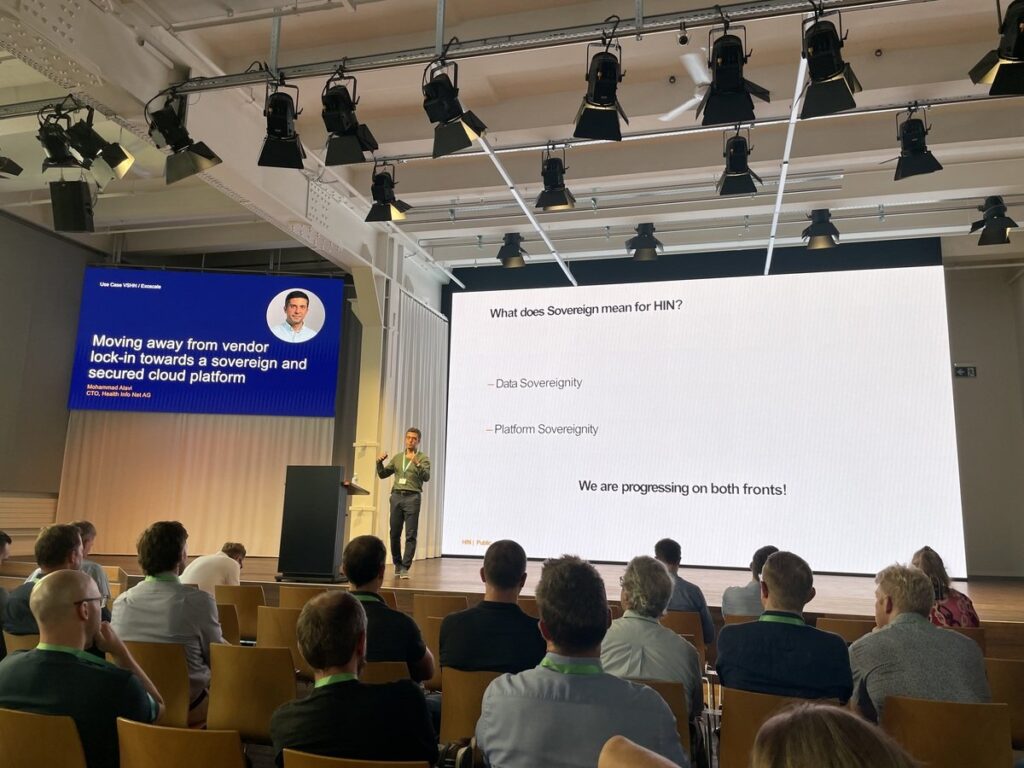
Contact us

Our team of experts is available for you. In case of emergency also 24/7.

Contact us
Events General

VSHN @ Smart Country Convention 2025 – Recap from Berlin

6. Oct 2025

The Smart Country Convention 2025 (#SCCON25) has come to an end – and what an inspiring three days it was. From September 30 to October 2, hub27 at Messe Berlin became the central meeting point for everyone driving the digital transformation of government and public administration in Germany and beyond.

SCCON25 in Numbers and Highlights

  • Thousands of participants from government, politics, research, and technology
  • Numerous keynotes, panels, and workshops on topics such as digital government, AI and cloud, cybersecurity, smart cities, mobility, energy and sustainability, digital inclusion, and international cooperation
  • International delegations from over 140 countries took part in the matchmaking program
  • Startup competitions, awards, and best practice showcases

Among the most important political and industry voices were:

  • Dr. Karsten Wildberger, Federal Minister for Digital Transformation and Government Modernisation
  • Karin Prien, Federal Minister for Education, Family, Seniors, Women and Youth
  • Andrea Nahles, Chairwoman of the Federal Employment Agency
  • Bernd Wagner, CEO of STACKIT (the sovereign cloud of the Schwarz Group)
  • Dr. Markus Noga, Chief Technology Officer (CTO) at IONOS
  • Philipp Amthor, Parliamentary State Secretary at the Federal Ministry for Digital and State Modernisation

Other ministers, political leaders, and technology experts helped shape the program and made SCCON25 a key milestone on Germany’s path toward a digital future.

Day 1: Opening, Smart City Index, and Political Impulses

The event was officially opened under the patronage of the new Federal Ministry for Digital Transformation and State Modernisation. In a video message, Dr. Karsten Wildberger emphasized:
“The Smart Country Convention has long been the hotspot for the digital state and our digital society – an innovation hub, think tank, and networking platform in one.”

A highlight of the first day was the presentation of the Smart City Index 2025, where Munich successfully defended its position as Germany’s leading digital city.

On the Plaza Stage, State Secretary Dr. Markus Richter and Bitkom CEO Dr. Bernhard Rohleder made it clear that digitalization has now reached the core of political strategy – it is not just about technology, but about the future viability of the state.

Day 2: Digital Government in Focus and Startup Energy

The second day focused on leadership, inclusion, and innovation:

  • Andrea Nahles opened with a keynote emphasizing that digital administration must be a leadership priority – not just a technical task for IT departments
  • Karin Prien called for stronger digital inclusion, highlighting the connection between public services, education, and trust in democracy
  • In the evening, the Smart Country Startup Award was presented – GovIntel won the competition, showing how agile innovation is essential for modernizing public administration

Day 3: Keynote and Outlook

The third day featured one of the most anticipated highlights:

  • At 13:30, Dr. Karsten Wildberger delivered his closing keynote outlining Germany’s digital priorities – from interoperable platforms to secure infrastructures and citizen-oriented services
  • Numerous workshops and sessions explored topics such as the Germany-Stack, AI in public administration, cybersecurity, and digital participation
  • During the international matchmaking sessions, more than 140 delegations engaged in targeted exchanges – a clear sign that digital government is a global topic

VSHN at SCCON25: GA-Lotse in the Spotlight

For VSHN, SCCON25 was the perfect opportunity to showcase our collaboration with the Public Health Authority of the City of Frankfurt am Main (Gesundheitsamt Frankfurt) and the open-source project GA-Lotse.

At the A1 Digital booth (Hall 25, Booth 100G), Aarno Aukia presented how GA-Lotse is helping to digitally transform the public health sector:

  • Created during the COVID-19 pandemic to meet the need for secure communication and scalable infrastructure
  • EU-funded and live since 2024 – already supporting several districts in the state of Hessen with modern, efficient digital services
  • Built on cloud-native infrastructure, zero-trust security, and DevOps practices provided by VSHN
  • Modular, sovereign, and open source – ensuring long-term reliability, data protection, and trust

👉 For more information about how VSHN supports the Frankfurt Health Department, read our success story.

Our presence at SCCON25 also highlighted the strength of our partnerships with A1 Digital and Exoscale, which enable us to deliver sovereign, cloud-native services for public institutions across Europe.

Key Takeaways from SCCON25

  • Digital transformation is a leadership responsibility – it must be driven from the top, not left to individual departments
  • Sovereign, open infrastructures are essential – especially for sensitive areas such as health and government
  • Startups are key partners – GovIntel’s success shows how agile innovation can strengthen the public sector
  • Education and inclusion go hand in hand – digital services must be accessible, trustworthy, and inclusive
  • International cooperation is becoming increasingly important – with over 140 delegations, it is clear that digital administration must be approached globally
  • Cities are the drivers of digital innovation – the Smart City Index shows where municipal transformation is already happening

Looking Ahead

SCCON25 was more than just a conference – it was a showcase of how Germany and Europe are shaping the digital state. For VSHN, it was a strong confirmation of our mission: to provide open, secure, cloud-native managed services that empower public institutions and citizens alike.

Our next steps:

  • Expanding GA-Lotse to additional regions and use cases
  • Strengthening partnerships with public authorities, governments, and technology providers
  • Applying the lessons learned to new public sector projects

A big thank you to everyone who visited us, joined Aarno’s talk, or connected with us at the booth. We are already looking forward to SCCON26 and to continuing the digital transformation together.

Contact VSHN

📬 Want to learn more about what we do or how we can support you?
Get in touch – we look forward to hearing from you.

Markus Speth

Marketing, Communications, People
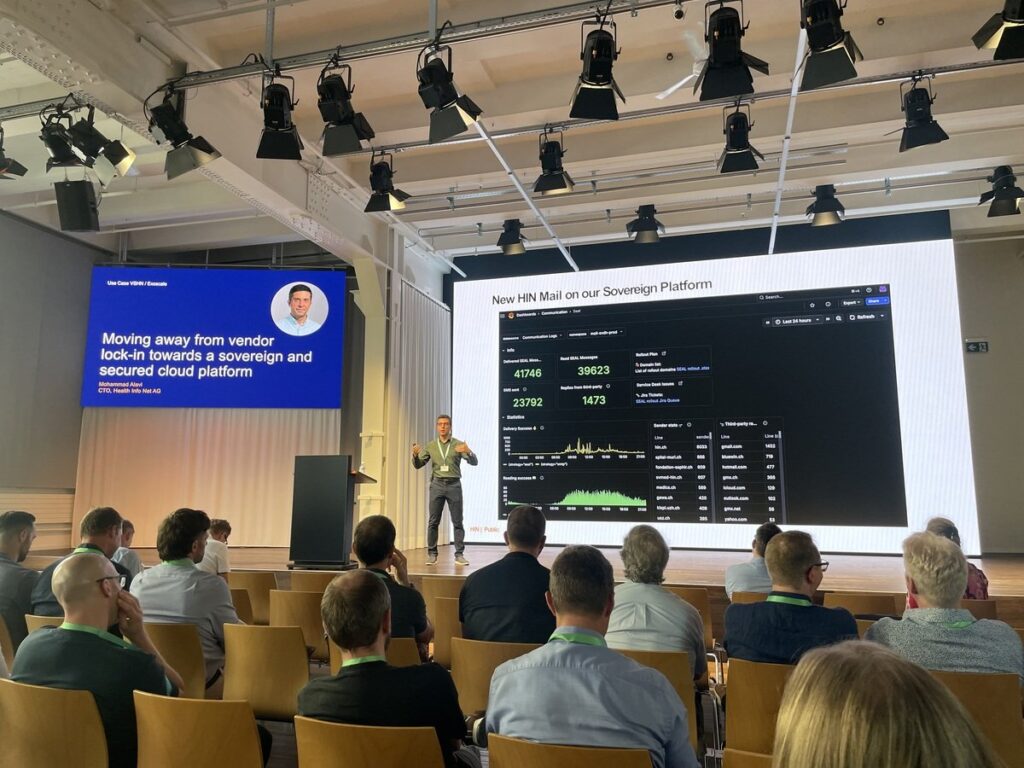
Contact us

Our team of experts is available for you. In case of emergency also 24/7.
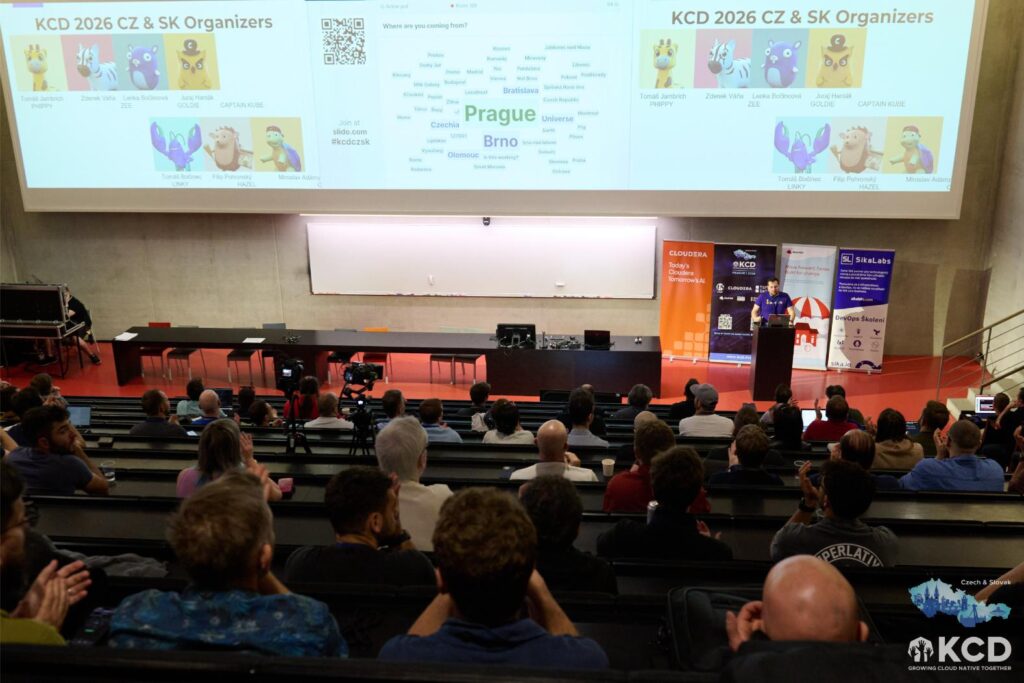
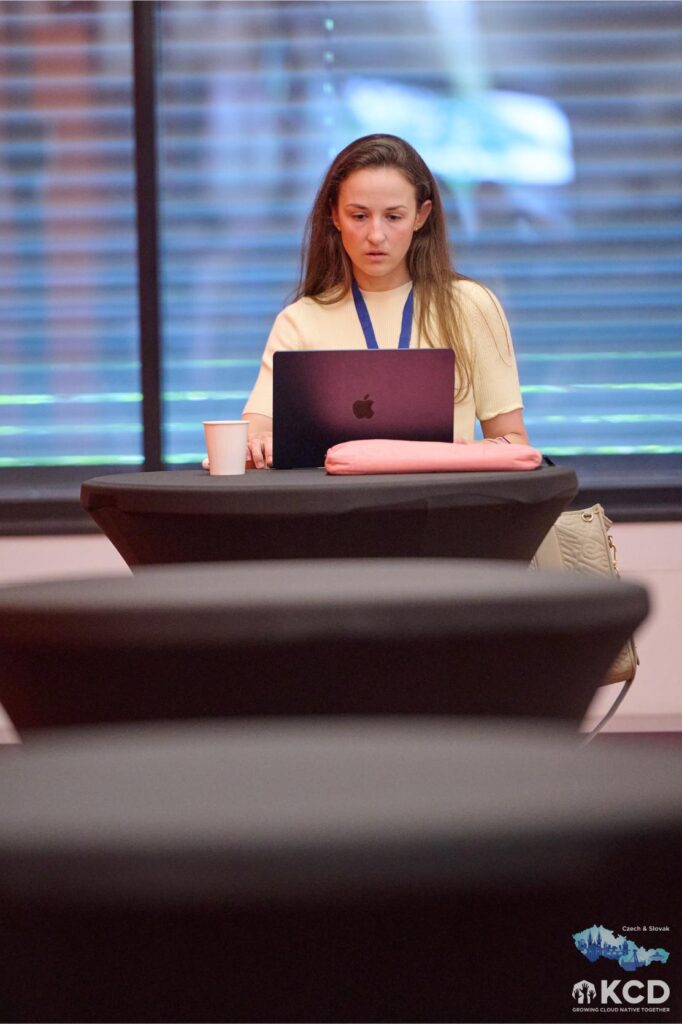
Contact us