
Cloud Native Computing Switzerland Meetup – March 2026 Recap


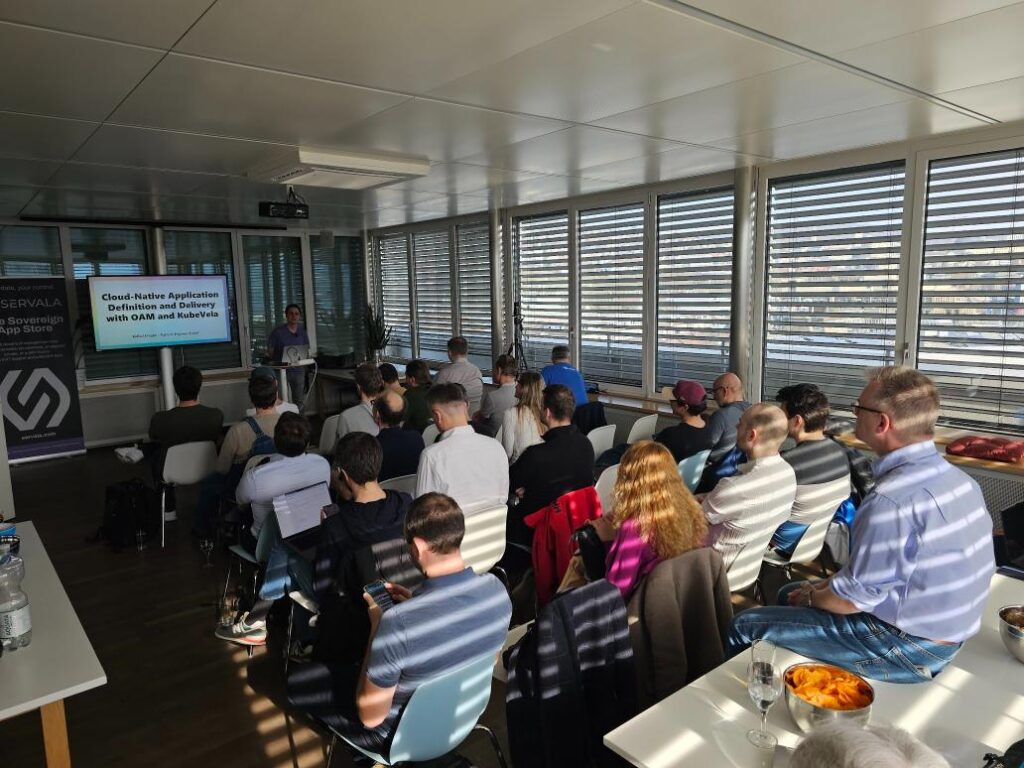
On March 10, the Cloud Native Computing Switzerland Meetup Community gathered again at the VSHN Tower in Zürich for an afternoon of technical talks, discussions, and community exchange.
With more than 3,000 members in the meetup group, the CNC Switzerland community continues to bring together platform engineers, DevOps practitioners, architects, and open-source enthusiasts from across the Swiss cloud-native ecosystem.
The March edition featured four talks covering topics from Kubernetes security and networking to platform engineering and MLOps.
Opening and Community Updates
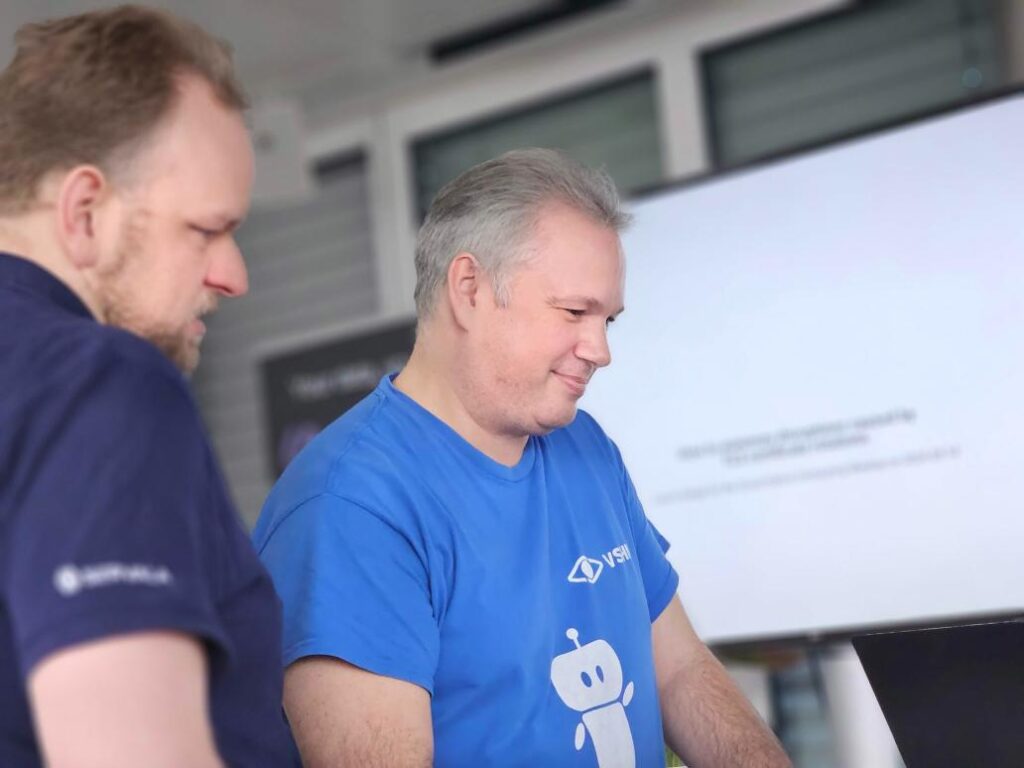
Aarno Aukia and Patrick Mathers – VSHN
The meetup kicked off with a short welcome and community update by the organizers. As always, the CNC Switzerland meetup follows a few important principles:
- All talks are technical and open-source focused
- No product or sales pitches
- Talks are held in English
- Speakers from diverse backgrounds are strongly encouraged
These principles help keep the meetup a true technical community event rather than a marketing stage.
TLS Hot Reload in Kubernetes
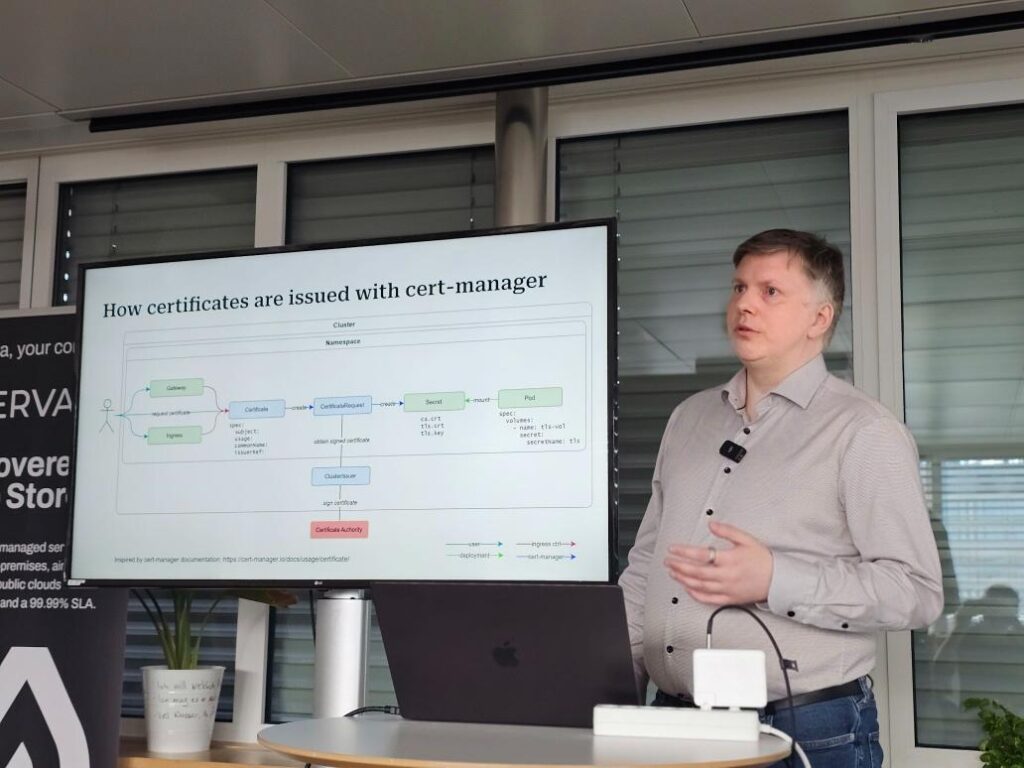
Janne Kataja – SIX
Janne Kataja from SIX explained how applications can implement hot reloading of TLS certificates, allowing certificates stored in Kubernetes Secrets to be updated without restarting pods.
Instead of forcing service restarts during certificate renewals – which can introduce downtime and operational risk – hot reload mechanisms detect changes in mounted secret volumes and reload certificates dynamically.
This approach enables:
- seamless certificate rotation
- higher availability
- the use of shorter-lived certificates for improved security
The talk demonstrated how relatively small architectural decisions can significantly improve reliability and operational resilience.
Application-Centric Platforms with OAM and KubeVela
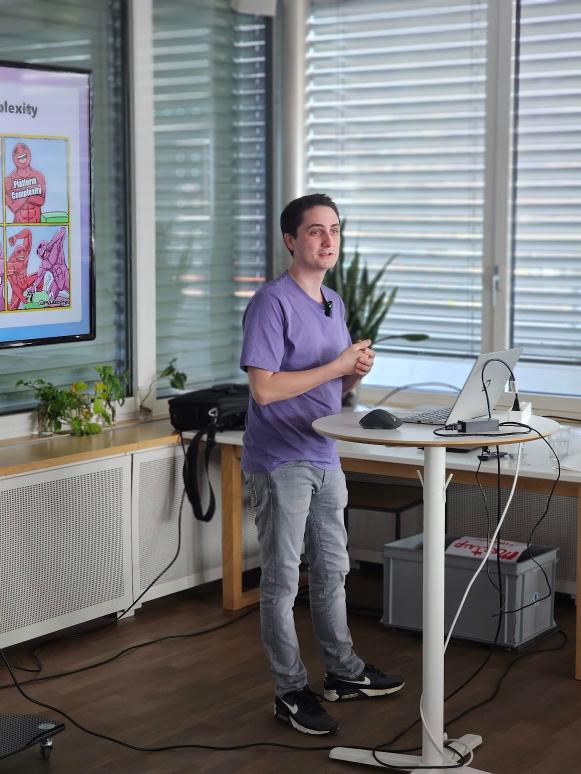
Raffael Klingler – AXA Schweiz
The second session explored a topic that is gaining traction across many organizations: platform engineering and internal developer platforms.
Raffael Klingler from AXA introduced the Open Application Model (OAM) and how it shifts the focus from Kubernetes infrastructure toward application-centric definitions.
Instead of writing complex Kubernetes manifests, developers define applications using modular building blocks. These definitions are then rendered into deployable infrastructure resources using KubeVela.
The talk showed how this approach allows organizations to:
- standardize application deployment patterns
- reduce Kubernetes complexity for developers
- integrate cloud services and GitOps workflows
As more companies build internal developer platforms, models like OAM illustrate how Kubernetes can become more accessible and developer-friendly.
DevOps for AI: Running ML in Production with Kubeflow
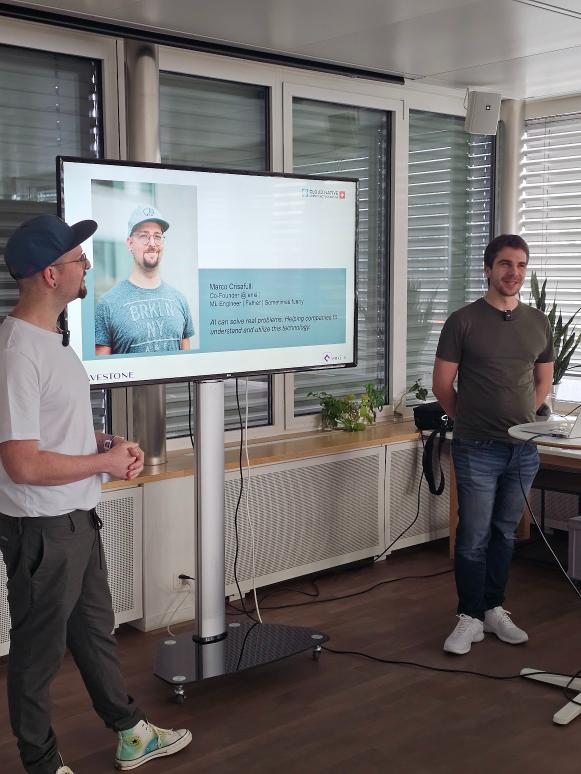
Fabrizio Lazzaretti (Wavestone) & Marco Crisafulli (enki)
AI is everywhere right now, but turning machine learning experiments into reliable production systems remains difficult.
Fabrizio Lazzaretti and Marco Crisafulli explored how MLOps practices and Kubeflow help bridge the gap between data science experimentation and production-grade systems.
The session demonstrated how Kubeflow enables:
- reproducible ML pipelines
- collaboration between teams
- automated training workflows
- integration with the broader CNCF ecosystem
Using a real end-to-end example, the speakers showed how organizations can move from ad-hoc AI experiments to repeatable, scalable ML platforms running on Kubernetes.
The talk highlighted a key insight: AI systems still need strong DevOps foundations.
Bye-bye Ingress-NGINX – Hello Gateway API
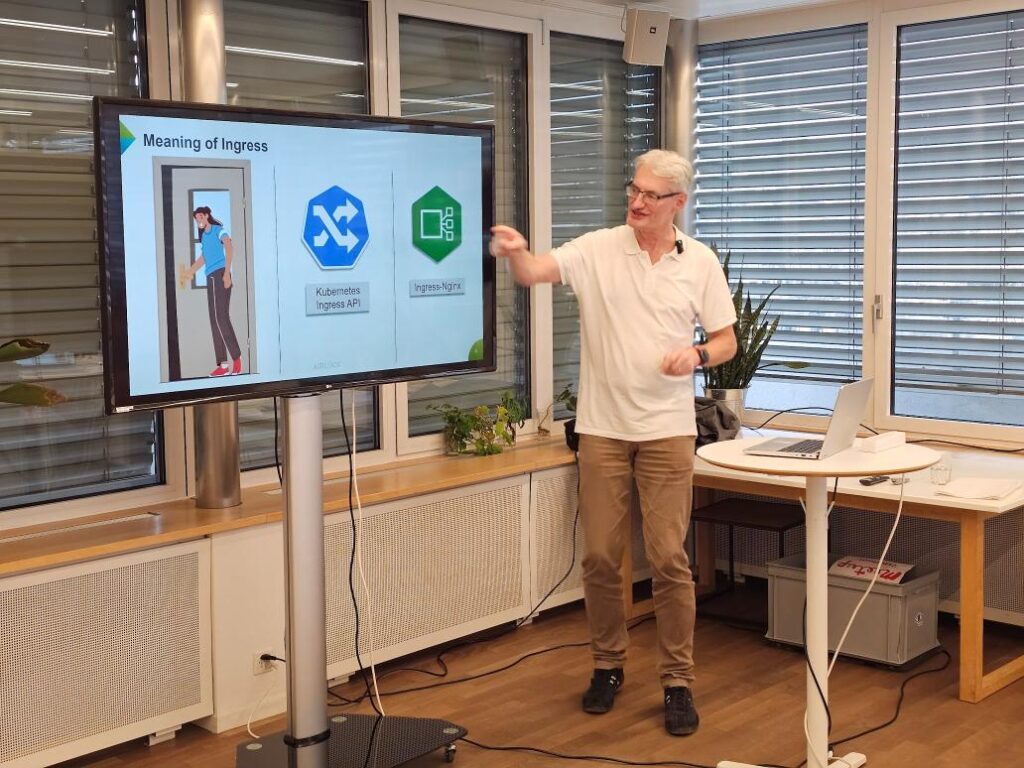
Urs Zurbuchen – Airlock
The final talk addressed a major architectural shift happening in the Kubernetes networking ecosystem.
Urs Zurbuchen from Airlock explained why the traditional Ingress model – often powered by the NGINX Ingress Controller – is reaching its limits.
Many Kubernetes users have experienced challenges such as:
- configuration complexity
- heavy reliance on annotations
- security issues in older controller implementations
The emerging Gateway API aims to address these limitations with a more structured and extensible networking model.
The talk walked through:
- the architectural improvements of Gateway API
- why it is becoming the future standard
- migration considerations for existing Kubernetes clusters
For many attendees, this session provided a helpful overview of where Kubernetes networking is heading next.
Networking and Apéro
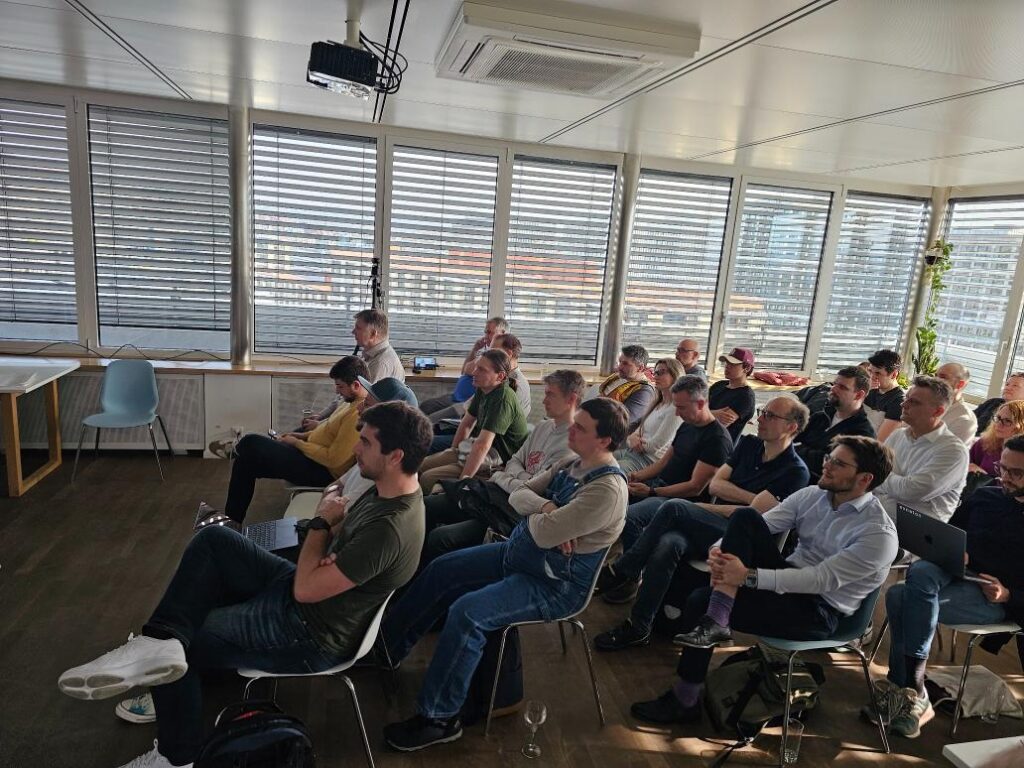
After the talks, participants stayed for networking and the traditional Swiss meetup apéro, continuing discussions about Kubernetes, platform engineering, and the rapidly evolving cloud-native ecosystem.
Meetups like these highlight the strength of the Swiss cloud-native community: engineers from different companies sharing real-world experiences, lessons learned, and open-source solutions.
Watch the Talks
The sessions from this meetup will be published on the VSHN TV YouTube channel.
Subscribe to stay notified when the recordings become available.
Join the Community
The Cloud Native Computing Switzerland Meetup welcomes engineers, architects, and developers interested in cloud-native technologies and open source.
If you would like to present a talk or share your project, submit your proposal here.
We look forward to seeing you at the next meetup!

Markus Speth
Marketing, Communications, People