
VSHN.timer

VSHN.timer #122: Modern Code


3. Jan. 2022

Welcome to 2022 and to another VSHN.timer! Every Monday, 5 links related to Kubernetes, OpenShift, CI / CD, and DevOps; all stuff coming out of our own chat system, making us think, laugh, or simply work better.

This week we’re going to start the new year talking about Go, Java 17, API design in Rust, good old C… and esoteric Python.

1. Remember Design Patterns? Visitors, Observers, Singletons, Factories… They used to be all the rage 25 years ago. These days we don’t talk about them that much, but it is interesting to see them projected in our Cloud Native world. Here’s an article showing sample implementations in Go (which will soon get generics) and with references to Kubernetes.

https://aly.arriqaaq.com/golang-design-patterns/

2. Java got a lot of heat in the last weeks due to the log4j vulnerability… but Java 17 (an LTS version!) was released last September with lots of interesting new features. Our friends at Red Hat take us on a trip to explore new Java 17 features using Quarkus, the supersonic subatomic framework for Cloud Native apps.

https://developers.redhat.com/articles/2021/12/14/explore-java-17-language-features-quarkus

3. Rust recently become the second language officially supported in the Linux Kernel and its importance is growing every day. But its type system can be daunting to new developers, and this is where this brilliant presentation by Will Crichton shines, showing the step-by-step construction of a simple API using traits and other Rust mechanisms.

https://www.youtube.com/watch?v=bnnacleqg6k

4. As I write these lines, we’re going through an oddly warm winter here in Zürich. Another sign that we must react fast and start choosing programming languages according to their efficiency. Unsurprisingly, C leads the pack of the most efficient programming languages, with Rust and Go close behind. On the other hand, Ruby, Perl, JavaScript, and Python are on the opposite side of the list. Ouch.

https://hackaday.com/2021/11/18/c-is-the-greenest-programming-language/

5. The VSHN.timer project of the week is Folders.py, an esoteric programming language that uses… folders instead of written code. Because Turing machines can be found in the most unusual places.

https://github.com/SinaKhalili/Folders.py

What programming language are you using for your microservices? Do you know other „esoteric“ programming languages? Would you like to share your tips and tricks with the community? Get in touch with us, and see you next week for another edition of VSHN.timer.

PS: would you like to receive VSHN.timer every Monday in your inbox? Sign up for our weekly VSHN.timer newsletter.

PS2: do you prefer reading VSHN.timer in your favorite RSS reader? Subscribe to this feed.

PS3: check out our previous VSHN.timer editions about programming: #18, #30, #33, #47, #50, #60, #77, #88, #101, and #103.

Aarno Aukia

Aarno ist Mitgründer der VSHN AG und als CTO für die technische Begeisterung zuständig.
Kontaktiere uns

Unser Expertenteam steht für dich bereit. Im Notfall auch 24/7.

Kontakt
VSHN.timer

VSHN.timer #121: Errare humanum est

13. Dez. 2021

Welcome to another VSHN.timer! Every Monday, 5 links related to Kubernetes, OpenShift, CI / CD, and DevOps; all stuff coming out of our own chat system, making us think, laugh, or simply work better.

This week we’re going to talk about a quote attributed to Seneca, and how to achieve eudaimonia, without hubris, but rather with humility.

Errare humanum est, sed perseverare diabolicum.

(Source)

1. In these times of zero-days on log4j, it is becoming harder and harder to keep our systems safe and sound. Thankfully, our collective experience brings some best practices to daylight. Mathew Duggan just shared a few common infrastructure mistakes he’s made during the years, just for us to learn from.

https://matduggan.com/mistakes/

2. The creators of the Jeli incident platform just published a comprehensive Post-Incident Guide, also available in PDF format, with a complete set of instructions for you to get the most learning out of a painful incident. An outstanding guide, and a must read.

https://www.jeli.io/howie-the-post-incident-guide/

3. Last September, Slack had an outage that impacted less than 1% of their users for around 24 hours. The root cause was an attempt to enable DNSSEC in their infrastructure. Slack Engineering explains it all in their blog.

https://slack.engineering/what-happened-during-slacks-dnssec-rollout/

4. You probably didn’t notice, but Amazon Web Services suffered a service disruption in their Northern Virginia region („us-east-1“) on Tuesday, December 7th, 2021. It impacted the availability and performance of EC2, API Gateway, EKS, and some other services. Their report provides more details.

https://aws.amazon.com/message/12721/

5. The VSHN.timer tool of the week is Diego Lima’s Kubernetes Best Practices 101, a growing guide of practical knowledge about running web services on our beloved container orchestrator.

https://github.com/diegolnasc/kubernetes-best-practices

How does your team deal with incidents and failures? Is your team working in a blame-aware environment? Do you have any Kubernetes best practices to share with the community? Get in touch with us, and see you next… year for another edition of VSHN.timer. That’s right! This is the last VSHN.timer of 2021; we’d like to thank you for your attention, your comments, your sharing on social media, and your suggestions! The VSHN.timer team wishes you all the best for 2022 🙂

PS: would you like to receive VSHN.timer every Monday in your inbox? Sign up for our weekly VSHN.timer newsletter.

PS2: do you prefer reading VSHN.timer in your favorite RSS reader? Subscribe to this feed.

PS3: check out our previous VSHN.timer editions about incidents and operations: #32, #41, #49, #66, #75, #89, and #107.

Aarno Aukia

Aarno ist Mitgründer der VSHN AG und als CTO für die technische Begeisterung zuständig.

Kontaktiere uns

Unser Expertenteam steht für dich bereit. Im Notfall auch 24/7.

Kontakt
VSHN.timer

VSHN.timer #120: Time To Learn

6. Dez. 2021

Welcome to another VSHN.timer! Every Monday, 5 links related to Kubernetes, OpenShift, CI / CD, and DevOps; all stuff coming out of our own chat system, making us think, laugh, or simply work better.

This week we’re going to talk about resources to learn something new every day, or to keep our knowledge fresh and updated.

1. The Linux Foundation’s Cyber Monday 2021 promotion ends today (December 6th, 2021) at 23:59 UTC. Lots of incredible discounts (up to 65%!) in bootcamps, certifications, courses, and bundles thereof. Don’t miss it!

https://training.linuxfoundation.org/cyber-monday-2021/

2. Are you using Kyverno, the Kubernetes native policy engine? We are, and we couldn’t be happier to learn that Nirmata (the company behind Kyverno) just launched the Kyverno Fundamentals Certification.

https://learn.nirmata.com/courses/kyverno-fundamentals-certification

3. Interested in learning more about DevSecOps? In that case, check out this awesome list of resources, whitepapers, tools, methodologies, and more, compiled by Marek Šottl.

https://github.com/sottlmarek/DevSecOps

4. Have you read Puppet’s State of DevOps Report 2021? Well, if you’re looking for a good TL;DR summary, here’s one for you by the kind folks of Weaveworks.

https://www.weave.works/highlights-2021-state-of-devops

5. Kustomize is a great way to DRY. But it can be a bit hard to remember all of its features and possibilities. Say no more… Oleg Sucharevich has just published the Kustomize Cheat Sheet you were looking for. (Pssst: he also published one for Linkerd and another for KIND!)

https://scribe.rip/@olegsucharevich/kubernetes-kustomize-cheat-sheet-8e2d31b74d8f

6. BONUS ITEM: If you’re new to Kubernetes or Rancher, why not join us in our upcoming webinar „Introduction to Kubernetes and Rancher“ jointly offered with our friends of SUSE? Happening next week, on Tuesday, December 14th, at 16:00 CET on Zoom. And it’s free!

https://www.vshn.ch/en/events/introduction-to-kubernetes-rancher/

What new technologies have you learnt recently? Have you passed any certifications this year? Would you like to suggest our readers some cool new topic to learn? Get in touch with us, and see you next week for another edition of VSHN.timer.

PS: would you like to receive VSHN.timer every Monday in your inbox? Sign up for our weekly VSHN.timer newsletter.

PS2: do you prefer reading VSHN.timer in your favorite RSS reader? Subscribe to this feed.

PS3: check out our previous VSHN.timer editions about education: #21, #38, #67, and #99.

Aarno Aukia

Aarno ist Mitgründer der VSHN AG und als CTO für die technische Begeisterung zuständig.

Kontaktiere uns

Unser Expertenteam steht für dich bereit. Im Notfall auch 24/7.

Kontakt
VSHN.timer

VSHN.timer #119: The Age of GitOps

29. Nov. 2021

Welcome to another VSHN.timer! Every Monday, 5 links related to Kubernetes, OpenShift, CI / CD, and DevOps; all stuff coming out of our own chat system, making us think, laugh, or simply work better.

This week we’re going to talk about how teams could adopt GitOps, and what tools can help them do that.

1. Should you adopt GitOps? The answer to that question is, as usual, a resounding it depends. Teams should consider GitOps only if their current culture and practices align well with it, not just for the hype!

https://thenewstack.io/wait-do-we-need-to-hold-up-on-gitops/

2. GitLab is a GitOps platform of choice for lots of companies. And OpenShift is the Kubernetes platform of choice of many of those same companies. So it’s great news to learn that the GitLab operator for Kubernetes and OpenShift is generally available now! By the way, Red Hat is also using GitLab for their own Linux kernel workflow, check the video below for more information.

https://about.gitlab.com/blog/2021/10/12/open-shift-ga/

3. Here’s a tutorial to learn how to use Argo CD deployments in Red Hat OpenShift, using GitHub tokens and the OpenShift GitOps Operator. A very common scenario, and a very handy resource.

https://cloud.redhat.com/blog/how-to-use-argocd-deployments-with-github-tokens

4. If you do GitOps with GitHub Actions (and who doesn’t, really?), you’re going to love act: a tool to run GitHub Actions locally. No more waiting for workflows to run: get feedback immediately!

https://github.com/nektos/act

5. There is no shortage of great Git clients out there, but lazygit has won a few users at VSHN lately; snappy, fast, and very, very useful. Check out this video with a 15 minute introduction to lazygit by its author!

https://github.com/jesseduffield/lazygit

Is your team doing GitOps? Which tools are you using? Would you like to share GitOps tips and tricks with the community? Get in touch with us, and see you next week for another edition of VSHN.timer.

PS: would you like to receive VSHN.timer every Monday in your inbox? Sign up for our weekly VSHN.timer newsletter.

PS2: do you prefer reading VSHN.timer in your favorite RSS reader? Subscribe to this feed.

PS3: check out our previous VSHN.timer editions about GitOps: #10, #48, #68, #83, and #98.

Aarno Aukia

Aarno ist Mitgründer der VSHN AG und als CTO für die technische Begeisterung zuständig.

Kontaktiere uns

Unser Expertenteam steht für dich bereit. Im Notfall auch 24/7.

Kontakt
VSHN.timer

VSHN.timer #118: Kubernetes The Easy Way

22. Nov. 2021

Welcome to another VSHN.timer! Every Monday, 5 links related to Kubernetes, OpenShift, CI / CD, and DevOps; all stuff coming out of our own chat system, making us think, laugh, or simply work better.

This week we’re going to talk about various services dramatically simplifying Kubernetes bootstrap and management.

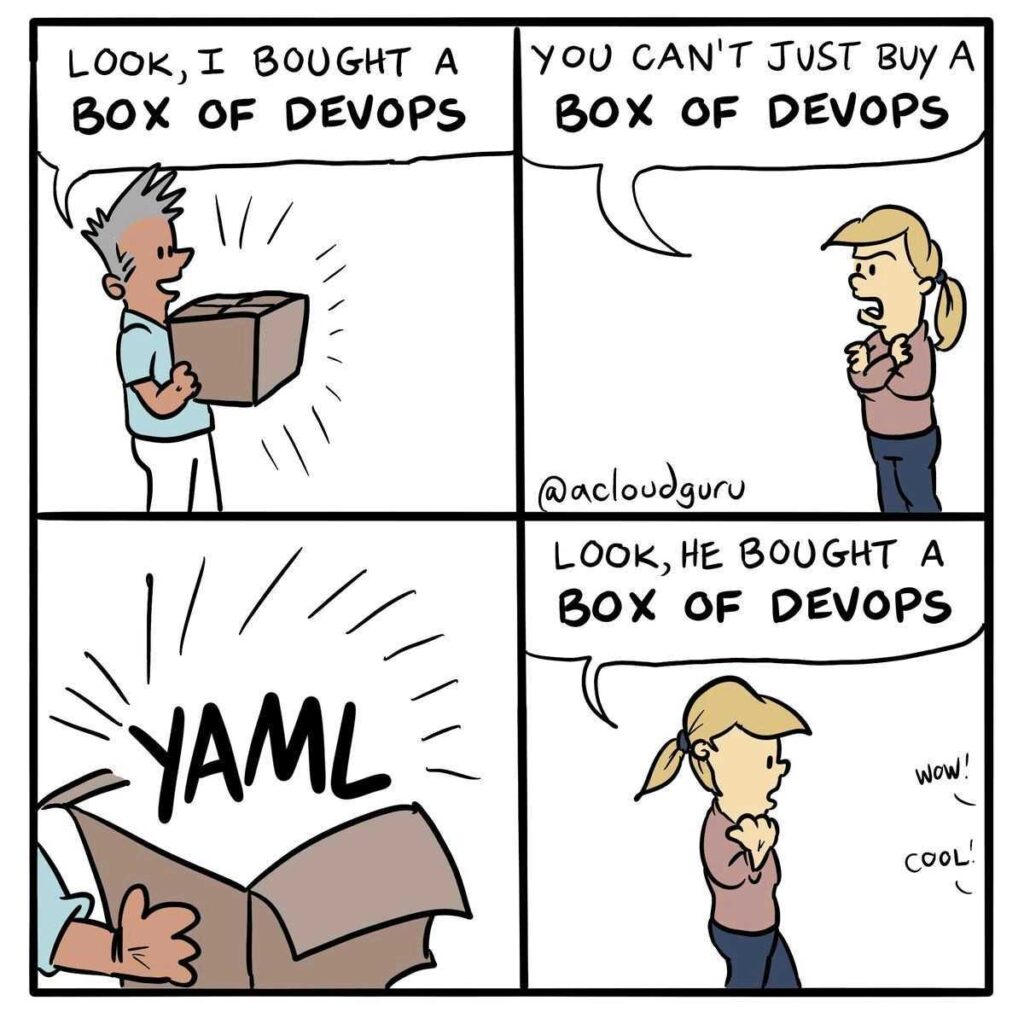
Source: https://www.reddit.com/r/kubernetes/comments/qlb5xd/yaml_strikes_again/

1. Long gone is the time when Kelsey Hightower explained us how to Kubernetes the Hard Way. Many cloud providers offer nowadays one-click solutions to create new clusters with ease and convenience. We already knew about GKE Autopilot or Exoscale’s SKS. And now Microsoft just announced Azure Container Apps, a serverless service to run containers at scale as easy as possible, built on top of the Azure Kubernetes Service.

https://techcommunity.microsoft.com/t5/apps-on-azure/introducing-azure-container-apps-a-serverless-container-service/ba-p/2867265

2. Das Schiff is Deutsche Telekom Technik’s engine for Kubernetes Clusters as a Service (CaaS) in any hyperscaler, VMs or bare metal.

https://github.com/telekom/das-schiff

3. Are you a Hetzner Cloud user? Then k-andy is for you: an open source Terraform module ready to install a high availability k3s cluster in a private network on Hetzner Cloud.

https://github.com/StarpTech/k-Andy

4. Here is another opinionated Terraform & Ansible template to install a k3s cluster at home, this time backed with Flux and SOPS. A favorite choice among IoT and Edge aficionados.

https://github.com/k8s-at-home/template-cluster-k3s

5. If all you need is a just a quick cluster in your laptop, for developing or testing a Cloud Native app, there are plenty of options: SUSE’s k3s, k0s, kind, Canonical’s MicroK8s, Minikube, Red Hat’s CRC… Just read this comparison and choose the best one for you.

https://blog.flant.com/small-local-kubernetes-comparison/

What is your favorite mechanism to quickly setup a Kubernetes cluster? Are you a k3s or a Minikube person? Would you like to share your own Terraform or Ansible templates with the community? Get in touch with us, and see you next week for another edition of VSHN.timer.

PS: would you like to receive VSHN.timer every Monday in your inbox? Sign up for our weekly VSHN.timer newsletter.

PS2: do you prefer reading VSHN.timer in your favorite RSS reader? Subscribe to this feed.

PS3: check out our previous VSHN.timer editions about Kubernetes: #4, #8, #11, #14, #16, #19, #23, #37, #46, #49, #59, #64, #74, #82, #97, #99, #102, and #109.

Aarno Aukia

Aarno ist Mitgründer der VSHN AG und als CTO für die technische Begeisterung zuständig.

Kontaktiere uns

Unser Expertenteam steht für dich bereit. Im Notfall auch 24/7.

Kontakt
VSHN.timer

VSHN.timer #117: Signatures and Vulnerabilities

15. Nov. 2021

Welcome to another VSHN.timer! Every Monday, 5 links related to Kubernetes, OpenShift, CI / CD, and DevOps; all stuff coming out of our own chat system, making us think, laugh, or simply work better.

This week we’re going to talk about how to properly secure our software with SSH signatures and best practices.

1. Here’s a not very well-known fact, which we now know thanks to Andrew Ayer: since OpenSSH 8.0 it is possible to sign arbitrary files of any kind using SSH, thus effectively replacing the widely derided and aging GPG mechanism used for the same purpose. And Git 2.34 will include this mechanism to sign commits.

https://www.agwa.name/blog/post/ssh_signatures

2. How to sign packages generated in GitHub Actions securely and without GPG? Christian Rebischke explains how thanks to a new recent feature just released in the cosign container signature and verification tool.

https://shibumi.dev/posts/keyless-signatures-with-github-actions/

3. Nowadays, when you can’t even be sure that your private browsing is private at all, software engineers must accelerate their training in security. Loren Kohnfelder’s is a veteran in the industry with over 50 years of experience, and his latest book, „Designing Secure Software“ has already been qualified as one of the best software security books ever written.

https://designingsecuresoftware.com/

4. Ever heard about Linus‘ Law? „Given enough eyeballs, all bugs are shallow“. Robert L. Glass vehemently called it a fallacy 20 years ago… and here’s (another) empirical confirmation: Nicholas Boucher and Ross Anderson from the University of Cambridge just presented their „Trojan Source“ paper, explaining a way to (mis)use Unicode control characters to embed malicious instructions in (at first look) completely harmless code.

https://trojansource.codes/

5. We are in the golden age of the ARM CPU architecture. From smartphones, to Raspberry Pis, to the latest and most hyped laptops, it’s everywhere; cheap, efficient, and fast. But this popularity also brings new unforeseen security risks; here’s a double-free vulnerability in the ARM architecture, including all the required information to reproduce it, and how it could be exploited.

https://github.com/stong/how-to-exploit-a-double-free

Do you scan your containers for vulnerabilities? What key management strategy does your team use? Would you like to share some tips and tricks with our readers? Get in touch with us, and see you next week for another edition of VSHN.timer.

PS: would you like to receive VSHN.timer every Monday in your inbox? Sign up for our weekly VSHN.timer newsletter.

PS2: do you prefer reading VSHN.timer in your favorite RSS reader? Subscribe to this feed.

PS3: check out our previous VSHN.timer editions about Security: #8, #17, #22, #27, #32, #44, #54, #62, #76, #84, #93, and #106.

Aarno Aukia

Aarno ist Mitgründer der VSHN AG und als CTO für die technische Begeisterung zuständig.

Kontaktiere uns

Unser Expertenteam steht für dich bereit. Im Notfall auch 24/7.

Kontakt
VSHN.timer

VSHN.timer #116: The Future of Company Culture

8. Nov. 2021

Welcome to another VSHN.timer! Every Monday, 5 links related to Kubernetes, OpenShift, CI / CD, and DevOps; all stuff coming out of our own chat system, making us think, laugh, or simply work better.

This week we’re going to talk about individuals and companies who challenge the status quo and dare to work differently.

1. In 1762, Jean-Jacques Rousseau (self-introduced as „citoyen de Genève“) published his epic treatise on political philosophy: „Du contrat social ou Principes du droit politique“, also known in English as The Social Contract. This hallmark book set the protection of common good as the basis for modern democracy in the following 250 years. But during this same period, most businesses have remained stubbornly middle-aged in their structures and group thinking. Companies of all sizes are today beginning to understand the long-term interest of evolving into more inclusive and participative structures. Although we’re still far away from a social contract solely based on employee sovereignty, the global pandemic has forced many companies to start considering deep internal changes. Such is the case of Polar Signals, whose decisions are explained in detail in their blog: fully asynchronous structures, open salary policies, paid time off, and even menstrual leave.

https://www.polarsignals.com/blog/posts/2021/10/26/on-building-company-culture/

2. Standup meetings are the most visible aspect of Agile–sadly, the only one for many organizations. The lock-downs used to fight the global pandemic have prompted teams all over the world to revise and redesign their usual daily ceremonies. Some teams adopted asynchronous standup meetings on a chat channel, while others like Honeycomb have created the „meandering team sync“ via Zoom instead.

https://www.honeycomb.io/blog/standup-meetings-are-dead/

3. Have you ever heard the term „Learned Helplessness“? It is defined as „a set of behaviors where we give up on escaping a painful situation, because our brain has gradually been taught to assume powerlessness in it.“ This phenomenon is widely credited as one of the leading aspects of the high rates of burnout, churn and turnover in the IT industry. The OKAY team blogged about effective mechanisms to avoid this situation from happening in your own organization.

4. In his worldwide best-selling book, „Start With Why“, British-American author Simon Sinek explains the ways people are inspired to change their environments, the first of which being the understanding of a sense of purpose, or put shorter, the „Why“. On the other side, G. K. Chesterton explained that reforms to a system should not be attempted before the underlying reasons for its existence are well understood. Matt Rickard weaves all of these thoughts together in the context of IT teams.

https://matt-rickard.com/chestertons-fence/

5. Another thing that started with „_why“ was, undoubtedly, the Ruby programming language. Readers of this blog who were around the 2000s, and who spent some time in the Ruby galaxy surely remember Jonathan Gillette, also known as why the lucky stiff or simply _why (yes, with the leading underscore). His texts, tutorials, and code have left a strong mark in the collective psyche of a whole generation of Ruby programmers, long after the disappearance of his online persona. GitHub’s ReadME Project  dedicated an article to this major figure in the history of the Ruby programming language, raising important questions about privacy, burnout, and mental health in the programming community.

https://github.com/readme/featured/why-the-lucky-stiff

Do you have a company handbook? Does your hierarchy block your teams from performing? How do you make sure your colleagues don’t burnout or leave your company? Would you like to share your own corporate culture stories with the community? Get in touch with us, and see you next week for another edition of VSHN.timer.

PS: would you like to receive VSHN.timer every Monday in your inbox? Sign up for our weekly VSHN.timer newsletter.

PS2: do you prefer reading VSHN.timer in your favorite RSS reader? Subscribe to this feed.

PS3: check out our previous VSHN.timer editions about PeopleOps: #7, #13, #15, #26, #35, #41, #52, #63, #85, and #92.

Aarno Aukia

Aarno ist Mitgründer der VSHN AG und als CTO für die technische Begeisterung zuständig.

Kontaktiere uns

Unser Expertenteam steht für dich bereit. Im Notfall auch 24/7.

Kontakt
VSHN.timer

VSHN.timer #115: PostgreSQL On Kubernetes

1. Nov. 2021

Welcome to another VSHN.timer! Every Monday, 5 links related to Kubernetes, OpenShift, CI / CD, and DevOps; all stuff coming out of our own chat system, making us think, laugh, or simply work better.

This week we’re going to talk about various mechanisms available to run PostgreSQL on Kubernetes.

1. PostgreSQL (in version 14 since just one month ago) is by far one of the most popular and powerful open source database engines out there. Many VSHN partners use it every day to store the world’s information, and it is our pleasure to help them run it in their Kubernetes clusters. The good news is that these days there is plenty of options to do that. Watch (or read) Álvaro Hernández, founder and CEO of OnGres, explaining all the reasons why you should be deploying PostgreSQL on Kubernetes, and how to configure it properly.

https://dok.community/blog/deploying-postgres-on-kubernetes/

2. PostgreSQL is widely praised for its stability, documentation, performance, and feature list. To such an extent, that new entrants in the database market make themselves as compatible as possible with it, in order to gain market share and developer acceptance. This is the case of CockroachDB, a 100% PostgreSQL-compatible and open source database system built with the Cloud in mind.

https://www.cockroachlabs.com/

3. To help DevOps engineers with their database needs, these days there are many Kubernetes operators available to simplify the installation, configuration, and management of PostgreSQL in a cluster. One of the most prominent is PGO from CrunchyData, an open source operator to create an out-of-the-box active-active, federated PostgreSQL cluster on Kubernetes; the operator supports GitOps workflows, high availability, and cluster cloning.

https://www.crunchydata.com/products/crunchy-postgresql-for-kubernetes/

4. Another solid, open source Kubernetes operator to get PostgreSQL up and running on your clusters is Kubegres by Reactive Tech, built around standard PostgreSQL features to provide backup, replication, failover, security, and portability. Learn more about it through this Postgres Conference 2021 talk.

https://www.kubegres.io/

5. The third PostgreSQL open source operator for Kubernetes of the week is StackGres by OnGres, providing automated backups, GitOps support, connection pooling, a fully-featured management console, and integration with various standard Cloud Native tools such as Envoy, Prometheus, and Grafana.

https://stackgres.io/

Are you deploying PostgreSQL on Kubernetes with operators? How many instances of PostgreSQL are you running in production? Would you like to share any PostgreSQL tips and tricks with the community? Get in touch with us, and see you next week for another edition of VSHN.timer.

PS: would you like to receive VSHN.timer every Monday in your inbox? Sign up for our weekly VSHN.timer newsletter.

PS2: do you prefer reading VSHN.timer in your favorite RSS reader? Subscribe to this feed.

PS3: check out our previous VSHN.timer edition about databases and storage: #111.

Aarno Aukia

Aarno ist Mitgründer der VSHN AG und als CTO für die technische Begeisterung zuständig.

Kontaktiere uns

Unser Expertenteam steht für dich bereit. Im Notfall auch 24/7.

Kontakt
VSHN.timer

VSHN.timer #114: New Releases

25. Okt. 2021

Welcome to another VSHN.timer! Every Monday, 5 links related to Kubernetes, OpenShift, CI / CD, and DevOps; all stuff coming out of our own chat system, making us think, laugh, or simply work better.

This week we’re going to talk about many new products recently announced in the Cloud Native space.

1. Red Hat announced last week the general availability of OpenShift 4.9, their flagship Kubernetes 1.22-based enterprise application platform. Among its many new features, stand out upgrades to Service Mesh, Pipelines, GitOps, and a new way to install OpenShift at the edge with Single Node OpenShift. And very importantly, beware of the new version lifecycle! All new minor releases are now supported for 18 months, and even-numbered releases (for example 4.8 or 4.10) will be designated „Extended Update Service“ or EUS.

https://cloud.redhat.com/blog/red-hat-openshift-4.9-is-now-generally-available

2. Last week Microsoft released vscode.dev, their browser-based version of Visual Studio Code. This is not a radically new idea, since services like github.dev, coder.com, gitpod.io and others have used the Visual Studio Code engine in their cloud applications in the past. But Microsoft goes a step further, offering local file viewing and editing directly from the browser, literally distributing a ready-to-use version of VSCode on the web. For security reasons, not all extensions are compatible with vscode.dev, but many already are.

https://code.visualstudio.com/blogs/2021/10/20/vscode-dev

3. Announced in February, JetBrains recently released Qodana as part of their Early Access program, gathering feedback from users and their community. Qodana is a new code quality platform for CI/CD, making automated code review results available to developers and project managers, and naturally integrated into their ecosystem of tools, including IntelliJ IDEA, the most popular Java IDE.

https://www.infoworld.com/article/3638052/jetbrains-unveils-qodana-code-quality-platform-for-cicd.html

4. CloudLinux announced the availability of KuberLogic, the open-source platform that deploys and manages self-healing PaaS on top of any Kubernetes cluster, allowing to run managed databases and popular applications deployed on-premises or on any cloud platform.

5. The VSHN.timer tool of the week is VictoriaMetrics, a new open source cost-effective and scalable monitoring solution and time series database, which can be used as a drop-in replacement for Prometheus or Graphite in Grafana, since it supports the same query APIs, and offering many improved functionalities.

https://victoriametrics.com/

Have you released a new version of your product recently? Would you like to announce it in VSHN.timer? Get in touch with us, and see you next week for another edition of VSHN.timer.

PS: would you like to receive VSHN.timer every Monday in your inbox? Sign up for our weekly VSHN.timer newsletter.

PS2: do you prefer reading VSHN.timer in your favorite RSS reader? Subscribe to this feed.

PS3: check out our previous VSHN.timer editions about OpenShift: #9, #28, #53, and #95; and about Prometheus and Grafana: #78.

Aarno Aukia

Aarno ist Mitgründer der VSHN AG und als CTO für die technische Begeisterung zuständig.

Kontaktiere uns

Unser Expertenteam steht für dich bereit. Im Notfall auch 24/7.

Kontakt
VSHN.timer

VSHN.timer #113: Raspberry Pi

18. Okt. 2021

Welcome to another VSHN.timer! Every Monday, 5 links related to Kubernetes, OpenShift, CI / CD, and DevOps; all stuff coming out of our own chat system, making us think, laugh, or simply work better.

This week we’re going to talk about the many cool things people are doing with Raspberry Pi boards.

1. Let’s start with something at the intersection of many things we love at VSHN: Raspberry Pis and SUSE Rancher K3s. Network Chuck has created an absolutely outstanding and funny video with all you need to know to get your own cluster up and running. It reminds us of our own APPUiOli cluster, the one we showed at KubeCon Barcelona 2019!

https://www.youtube.com/watch?v=X9fSMGkjtug

2. Once you have your Raspberry Pi cluster up and running, you are going to want to experiment and do more with it. Here’s an idea: how about scaling out your cluster to include AWS EC2 instances, using Gardener’s Machine Controller Manager?

3. Adam Greenwood-Byrne is a polymath, whose skills include music, management (as the CEO of RealVNC), and yes, also coding. During the pandemic last year he decided to start writing an operating system for the Raspberry Pi… and documenting the process in detail along the way. The resulting project is a great way to learn how operating systems work!

https://github.com/isometimes/rpi4-osdev

4. If you’d rather use an existing operating system in your Raspberry Pi instead of writing your own, here’s the Pyabr OS: the Python Cloud Operating System; a Linux distribution based on Debian 10, using Python as its default programming language, and bundled with many apps based on the PyQt framework.

5. The VSHN.timer project of the week is Air-Pi-Play, a set of shell scripts to turn a Raspberry Pi into an Airplay server, to enable screen mirroring on TVs, monitors and projectors.

https://github.com/rahul-thakoor/air-pi-play

Have you ever written your own operating system? What kind of things have you done with Raspberry Pi boards lately? Would you like to share your Raspberry Pi crazy project with us? Get in touch with us, and see you next week for another edition of VSHN.timer.

PS: would you like to receive VSHN.timer every Monday in your inbox? Sign up for our weekly VSHN.timer newsletter.

PS2: do you prefer reading VSHN.timer in your favorite RSS reader? Subscribe to this feed.

PS3: check out our previous VSHN.timer edition about Hardware: #80.

Aarno Aukia

Aarno ist Mitgründer der VSHN AG und als CTO für die technische Begeisterung zuständig.

Kontaktiere uns

Unser Expertenteam steht für dich bereit. Im Notfall auch 24/7.

Kontakt
VSHN.timer

VSHN.timer #112: Email Marketing

11. Okt. 2021

Welcome to another VSHN.timer! Every Monday, 5 links related to Kubernetes, OpenShift, CI / CD, and DevOps; all stuff coming out of our own chat system, making us think, laugh, or simply work better.

This week we have a special edition curated by Markus Speth, VSHN’s co-CEO and Partner, about the state of email marketing in 2021.

1. Email is one of the many marketing tools we use at VSHN every day; those of you subscribed to VSHN News or VSHN.timer know it very well! To keep up with the latest trends, we studied HubSpot’s „Not Another State of Marketing Report 2021“ in detail, showing data coming from more than 1500 marketers worldwide. And the results are in: email marketing is the third most important channel after social media and websites.

https://www.hubspot.com/state-of-marketing

2. More surprising statistics about email marketing by HubSpot: 20% of email campaigns aren’t optimized for mobile; email has a ROI of (hang on tight) 4200% (!); and there are 4 billion email users worldwide!

https://blog.hubspot.com/marketing/email-marketing-stats

3. Even more juicy statistics: segmented campaigns have 100% more clicks than non-segmented ones; the average open rate is quite consistent across industries and providers, around 20%; and email is a top 3 channel for business content.

https://kinsta.com/blog/email-marketing-statistics/

4. How can you optimize your email marketing campaigns to maximize their impact? This Forbes article contains some good tips: make your emails more personal, more interactive, and be privacy-friendly.

https://www.forbes.com/sites/forbescommunicationscouncil/2021/08/26/five-email-marketing-tips-that-fit-the-2021-communication-trends/

5. What will the future of email marketing look like? Artificial Intelligence, hyper-personalization, automation, interaction, and a strong focus on privacy are some of the future trends in the field.

https://nethunt.com/blog/email-marketing-trends/

What email marketing tools do you use? Are you subscribed to many newsletters? Which features do you expect in a marketing email? Would you like to share some tips and tricks with our readers? Get in touch with us, and see you next week for another edition of VSHN.timer.

PS: since you are interested enough in email marketing as to read this VSHN.timer in full, maybe we could convince you to receive VSHN.timer every Monday in your inbox? Sign up for our weekly VSHN.timer newsletter. We also have a free monthly VSHN News newsletter you might be interested in as well.

PS2: do you prefer reading VSHN.timer in your favorite RSS reader? Subscribe to this feed.

PS3: check out our previous VSHN.timer editions about Business: #15, #26, #35, #41, and #70.

Markus Speth

Marketing, Communications, People

Kontaktiere uns

Unser Expertenteam steht für dich bereit. Im Notfall auch 24/7.

Kontakt
VSHN.timer

VSHN.timer #111: Databases & Storage

4. Okt. 2021

Welcome to another VSHN.timer! Every Monday, 5 links related to Kubernetes, OpenShift, CI / CD, and DevOps; all stuff coming out of our own chat system, making us think, laugh, or simply work better.

This week we’re going to talk about the latest news and innovations in the field of cloud native storage and databases.

1. This is the most important news this week: Cloudflare announced R2, sadly not a friendly Astromech droid but rather „S3 minus one“, that is, S3-compatible object storage minus the egress fees. Ben Thompson from Stratechery analyzed R2 in detail and thinks it has the potential of making Cloudflare the fourth biggest cloud in the future.

https://stratechery.com/2021/cloudflares-disruption/

2. Exoscale recently announced the availability of SUSE Longhorn in their managed Scalable Kubernetes Service, making it as easy to add high performance storage to your clusters as typing kubectl apply. It even features automated backups to Exoscale’s own SOS (Simple Object Storage) service.

https://www.exoscale.com/syslog/longhorn-sks/

3. GitHub has grown from a single MySQL database in 2008… to a massive system infrastructure now serving over a whooping (hang on tight) 1’200’000 queries per second in average. This new architecture will enable them to grow even further into the future.

https://github.blog/2021-09-27-partitioning-githubs-relational-databases-scale/

4. PostgreSQL is by far one of the most powerful and popular (and open) database engines ever created. Last week version 14 was released with lots of new features: better query planning and execution, new range types, JSON data manipulation, and heightened password security.

https://www.postgresql.org/about/news/postgresql-14-released-2318/

5. The VSHN.timer tool of the week is SpiceDB, a Google Zanzibar-inspired database that stores, computes, and validates application permissions.

https://github.com/authzed/spicedb

What Kubernetes storage provider do you use? How do you partition your databases for performance? Would you like to share some tips and tricks with our readers? Get in touch with us, and see you next week for another edition of VSHN.timer.

PS: would you like to receive VSHN.timer every Monday in your inbox? Sign up for our weekly VSHN.timer newsletter.

PS2: do you prefer reading VSHN.timer in your favorite RSS reader? Subscribe to this feed.

Aarno Aukia

Aarno ist Mitgründer der VSHN AG und als CTO für die technische Begeisterung zuständig.

Kontaktiere uns

Unser Expertenteam steht für dich bereit. Im Notfall auch 24/7.

Kontakt
VSHN.timer

VSHN.timer #110: Continuous DevOps

27. Sep. 2021

Welcome to another VSHN.timer! Every Monday, 5 links related to Kubernetes, OpenShift, CI / CD, and DevOps; all stuff coming out of our own chat system, making us think, laugh, or simply work better.

This week we’re going to talk about tools and strategies to make DevOps teams happier and more productive.

1. There has been an explosion of new CI/CD tools specifically tailored to Kubernetes, and it can be quite difficult to choose one in particular. Spinnaker? Tekton? Argo CD? GitLab? Michael Foster and Ajmal Kohgadai of Red Hat go through all of these (and more) highlighting pros and cons.

https://cloud.redhat.com/blog/top-open-source-ci/cd-tools-for-kubernetes-to-know

2. Moving to the cloud is not just a matter of adding the „Kubernetes“ word in every PowerPoint slide. Many companies are hitting the CloudOps wall these days, because, as the author says, „“Crap on premises moved to the cloud is just crap in the cloud.” Ouch.

https://www.infoworld.com/article/3633170/what-to-do-when-you-hit-the-cloudops-wall.html

3. David Botelho and Rajarajan Pudupatti SJ from Fidelity Investments presented their cloud operations strategy last week, at a community event organized by the CNCF, called „Operationalizing 300+ K8 Clusters Across the Cloud“.

https://community.cncf.io/events/details/cncf-end-user-community-presents-cncf-end-user-lounge-operationalizing-300-k8-clusters-across-the-cloud/

4. A crucial step of any CI/CD pipeline is testing, but making sure cloud native applications are doing what they are supposed to do ain’t easy. Enter Playwright, a container- and CI/CD-friendly end-to-end testing framework for Python, JavaScript, Java and .NET applications made by Microsoft.

https://playwright.dev/python/

5. The VSHN.timer tool of the week is Woodpecker, a community fork of Drone CI; fully open source, based on containers, and built for multiple pipeline execution.

https://github.com/woodpecker-ci/woodpecker

How many Kubernetes clusters is your team currently managing? Have you tried Project Syn already? Would you like to share some new CI/CD tool with the community? Get in touch with us, and see you next week for another edition of VSHN.timer.

PS: would you like to receive VSHN.timer every Monday in your inbox? Sign up for our weekly VSHN.timer newsletter.

PS2: do you prefer reading VSHN.timer in your favorite RSS reader? Subscribe to this feed.

PS3: check out our previous VSHN.timer editions about DevOps: #5, #13, #29, #31, and #42.

Aarno Aukia

Aarno ist Mitgründer der VSHN AG und als CTO für die technische Begeisterung zuständig.

Kontaktiere uns

Unser Expertenteam steht für dich bereit. Im Notfall auch 24/7.

Kontakt
VSHN.timer

VSHN.timer #109: I Heard You Like Clusters

20. Sep. 2021

Welcome to another VSHN.timer! Every Monday, 5 links related to Kubernetes, OpenShift, CI / CD, and DevOps; all stuff coming out of our own chat system, making us think, laugh, or simply work better.

This week we’re going to talk about the next level of virtualization: the virtualization of virtualization itself.

1. We’ve been saying this for a long time; and lo and behold, Kubernetes clusters have officially become cattle by now. So much that, in fact, you can use vcluster to literally launch clusters inside other clusters. „It’s turtles all the way down“, they said. How many turtle levels can there be?

https://www.vcluster.com/

2. Keeping up with the „Kubernetes in Kubernetes“ trend, here’s KinK which as the name (KinDa) suggests, consists in running KinD into (what else?) Kubernetes clusters. Please be KinD to your clusters. And if you’re more interested in k3s than KinD, may we tempt you with a free webinar about k3s next week?

https://github.com/Trendyol/kink

3. If you are tired of running Kubernetes clusters into Kubernetes clusters, you can try to build a platform upon them; that’s what Syntasso Kratix does. Think of it as an internal PaaS for your own business, to ensure quick ans swift provisioning of cloud services to your internal teams.

https://www.syntasso.io/

4. Kubernetes in 2019 was inevitable; in 2021, it’s everywhere. Red Hat asked 202 CTOs and architects, and 94% of them are using Kubernetes in one way or another. Unfortunately, this also means that we’re going to see more and more Kubernetes-related security issues (like the recent one on Microsoft Azure) in the future.

https://cloud.redhat.com/blog/results-of-kubernetes-adoption-survey-show-its-everywhere

5. Security is not the only issue with Kubernetes; its power consumption patterns are a major threat for the planet. At a moment in which we all need to drastically and immediately reduce our carbon emissions, Kubernetes appears as an inappropriate choice. The community must work towards reducing its carbon footprint, and fast.

https://blog.container-solutions.com/kubernetes-is-doomed

6. BONUS ITEM! Here’s 16 things you didn’t know about Kube APIs and CRDs. And as the article says, #15 is, indeed, shocking.

https://evancordell.com/posts/kube-apis-crds/

How could we make Kubernetes more climate-change friendly? How many levels of Kubernetes have you embedded in your Kubernetes yet? Would you like to share another Kubernetes-in-Kubernetes service with the community? Get in touch with us, and see you next week for another edition of VSHN.timer.

PS: would you like to receive VSHN.timer every Monday in your inbox? Sign up for our weekly VSHN.timer newsletter.

PS2: do you prefer reading VSHN.timer in your favorite RSS reader? Subscribe to this feed.

PS3: check out our previous VSHN.timer editions about Kubernetes: #4, #8, #11, #14, #16, #19, #23, #37, #46, #49, #59, #64, #74, #82, #97, #99, and #102.

Aarno Aukia

Aarno ist Mitgründer der VSHN AG und als CTO für die technische Begeisterung zuständig.

Kontaktiere uns

Unser Expertenteam steht für dich bereit. Im Notfall auch 24/7.

Kontakt
VSHN.timer

VSHN.timer #108: Podman Forever

13. Sep. 2021

Welcome to another VSHN.timer! Every Monday, 5 links related to Kubernetes, OpenShift, CI / CD, and DevOps; all stuff coming out of our own chat system, making us think, laugh, or simply work better.

No, this week we’re not going to talk about yet another superhero movie, but rather about the new standard tool for building and running containers.

1. Early this year we mentioned that the competition between Docker and Podman was heating up. Well, lately the Podman team has accelerated its velocity to unprecedented levels, and released version 3.3, with a ton of new features that set it far ahead in the race.

https://github.com/containers/podman/releases/tag/v3.3.0

2. The recent announcement by Docker of a new subscription policy for Docker Desktop has triggered a massive increase of interest in Podman–and a certain amount of controversy and backlash, too. In a much more positive note, Markus Noble has wrote a very useful guide to help cloud native developers migrate from Docker to Podman.

3. Docker (the company) has lost a lot of buzz and inertia since 2013. What happened? Being in the eye of the Cloud Native hurricane was certainly not easy, and many decisions by their management hurt the company in unforeseen ways. This article by Scott Carey on InfoWorld tells the gripping story of the rise and fall of one of the hottest startups of the 2010s.

https://www.infoworld.com/article/3632142/how-docker-broke-in-half.html

4. You most probably have heard about EKS Anywhere already: the very same Kubernetes distribution that Amazon uses in EKS, but ready to install in your own infrastructure. The thing is, nobody wants to manage yet another Kubernetes cluster (hint: call us! *wink wink*), so you’d better read what Kohei Ota has to say about EKS Anywhere first. And then watch out, because Kubernetes can be expensive.

https://inductor.medium.com/you-see-eks-anywhere-is-ga-you-should-know-what-it-is-not-first-deb34aa0308b

5. This is a really cool idea: ttl.sh is an anonymous and ephemeral container image registry by Civo: just tag your image with the required time-to-live information, push, and it will be deleted automatically when the time’s up. And even better, you can use cosign with it, as explained here.

https://blog.ediri.io/ttlsh-and-cosign-signing-an-anonymous-and-ephemeral-docker-image-registry

Which container registry do you use? What do you think happened to Docker? Would you like to share Podman tips and tricks with the community? Get in touch with us, and see you next week for another edition of VSHN.timer.

PS: would you like to receive VSHN.timer every Monday in your inbox? Sign up for our weekly VSHN.timer newsletter.

PS2: do you prefer reading VSHN.timer in your favorite RSS reader? Subscribe to this feed.

PS3: check out our previous VSHN.timer editions about containers: #12, #17, #40, #51, #54, #71, and #81.

Aarno Aukia

Aarno ist Mitgründer der VSHN AG und als CTO für die technische Begeisterung zuständig.

Kontaktiere uns

Unser Expertenteam steht für dich bereit. Im Notfall auch 24/7.

Kontakt
VSHN.timer

VSHN.timer #107: Planning for Incidents and Operations

6. Sep. 2021

Welcome to another VSHN.timer! Every Monday, 5 links related to Kubernetes, OpenShift, CI / CD, and DevOps; all stuff coming out of our own chat system, making us think, laugh, or simply work better.

This week we’re going to talk about how to plan for operations, for both good times and bad times.

1. In the world of DevOps and SRE, incidents are not a matter of „if“, but rather of „when“. It is fundamental for teams to agree on a communication protocol, specifically tailored for all internal and external stakeholders, in which the most important milestone is the incident retrospective.

https://www.blameless.com/incident-response/how-to-communicate-incident-retrospectives-to-stakeholders

2. Properly identifying (and negotiating with) project stakeholders is an art that some product managers sadly don’t really know much about. Each stakeholder is different, and knowing which information to exchange with each one, when and how, is a fundamental skill that should be learnt properly.

https://hackernoon.com/the-product-manager-guide-to-identifying-and-managing-project-stakeholders-856a35bw

3. How do site reliability engineers plan for the resource usage of their Kubernetes clusters? Being greedy may lead to downtime, but being too generous can be really inefficient and expensive in the long run. There are many variables to take into account (CPU, storage, memory) and it can be really complex to find out the optimal values for each.

https://sysdig.com/blog/kubernetes-capacity-planning/

4. Resource planning for Red Hat OpenShift clusters can be simplified using Trimaran schedulers, featuring the TargetLoadPacking and LoadVariationRiskBalancing plugins based on the scheduler framework. This article on the Red Hat Hybrid Cloud explains how to use them.

https://cloud.redhat.com/blog/improving-the-resource-efficiency-for-openshift-clusters-via-trimaran-schedulers

5. The tool of the week is Uptime Kuma, a self-hosted web-based monitoring tool, easily installed as a Docker container, with dark and light modes, and with a live demo to test its capacities. What’s not to like?

https://github.com/louislam/uptime-kuma

What tools do you use for capacity planning of your clusters? How do you communicate incidents to your stakeholders? Would you like to share any tips and tricks with the community? Get in touch with us, and see you next week for another edition of VSHN.timer.

PS: would you like to receive VSHN.timer every Monday in your inbox? Sign up for our weekly VSHN.timer newsletter.

PS2: do you prefer reading VSHN.timer in your favorite RSS reader? Subscribe to this feed.

PS3: check out our previous VSHN.timer editions about incidents and operations: #32, #41, #49, #66, #75, and #89.

Aarno Aukia

Aarno ist Mitgründer der VSHN AG und als CTO für die technische Begeisterung zuständig.

Kontaktiere uns

Unser Expertenteam steht für dich bereit. Im Notfall auch 24/7.

Kontakt
VSHN.timer

VSHN.timer #106: Cloud Security Basics

30. Aug. 2021

Welcome to another VSHN.timer! Every Monday, 5 links related to Kubernetes, OpenShift, CI / CD, and DevOps; all stuff coming out of our own chat system, making us think, laugh, or simply work better.

This week we’re going to talk about resources to help everyone understand the importance of cloud security these days.

1. Cloud security has (sadly) become the most important topic in IT. From private companies to governments, all network systems can be exposed to attacks and subject to theft, ransom, privacy breaches, legal liabilities, and whatnot. Even if not cybersecurity experts, managers and CXOs must learn all they can about this subject, and this guide can be a good starting point.

https://www.informationweek.com/cloud/cloud-security-basics-cios-and-ctos-should-know/a/d-id/1341578

2. Kubernetes is one of the most important cloud platforms in the world today, but not all teams are prepared to handle DevSecOps tasks properly. Red Hat has prepared a DevSecOps Kubernetes Security Whitepaper for them, summarizing the most important aspects and strategies to follow.

https://www.redhat.com/en/resources/devsecops-kubernetes-security-whitepaper

3. Let’s Encrypt has radically democratized the access to security certificates on the web, to the point that most browsers these days warn users connecting through unencrypted HTTP connections. But just one company is not enough to secure the whole web, so here’s Scott Helme telling us about another option in this market.

https://scotthelme.co.uk/heres-another-free-ca-as-an-alternative-to-lets-encrypt/

4. The Square team has a lot to worry about security – after all, they handle electronic payments for thousands of merchants around the globe. As their engineering squads are moving their infrastructure to a serverless solution such as AWS Lambda, they figured a way to tackle the pesky problem of managing secrets, and they shared their sauce with us.

https://developer.squareup.com/blog/expanding-secrets-infrastructure-to-aws-lambda/

5. Remember NSA’s hardening guide for Kubernetes we mentioned in VSHN.timer #104? Well, somebody made a tool that automatically checks your cluster for conformity to those guidelines. No more excuses not to harden your infrastructure to government-approved levels.

https://github.com/armosec/kubescape

6. Bonus item: don’t miss the Security Awareness Day 2021 organized by our friends at SWITCH October 5th!

Does your management team have basic knowledge of cybersecurity? How do you manage your certificate infrastructure? Would you like to share tips and tricks about hardening Kubernetes clusters? Get in touch with us, and see you next week for another edition of VSHN.timer.

PS: would you like to receive VSHN.timer every Monday in your inbox? Sign up for our weekly VSHN.timer newsletter.

PS2: check out our previous VSHN.timer editions about security: #8, #17 #22, #27, #32, #44, #54, #62, #76, #84, and #93.

Aarno Aukia

Aarno ist Mitgründer der VSHN AG und als CTO für die technische Begeisterung zuständig.

Kontaktiere uns

Unser Expertenteam steht für dich bereit. Im Notfall auch 24/7.

Kontakt
VSHN.timer

VSHN.timer #105: Linux Going On 30

23. Aug. 2021

Welcome to another VSHN.timer! Every Monday, 5 links related to Kubernetes, OpenShift, CI / CD, and DevOps; all stuff coming out of our own chat system, making us think, laugh, or simply work better.

This week we’re going to celebrate the coming-of-age of the Linux Kernel, one of the biggest milestones in the history of computer technology.

1. In „13 Going on 30“ (2004) a 13 year old girl wakes up one morning and discovers she’s Jennifer Garner at 30. Linux didn’t evolve that fast or without hiccups, of course, but it did reach some unusual heights. In any case, Linux is 30 years old this week, and for one of its most important distributions it feels just like the first day: Debian 11 „bullseye“ was released last week.

https://bits.debian.org/2021/08/bullseye-released.html

2. Asahi Linux is a new distribution based on Arch targeting the new Apple M1-based Mac computers. Adapting Linux to work on Apple hardware is always a complex task, involving lots of reverse engineering; the team behind Asahi publishes regular updates about their progress, like the one for this month.

https://asahilinux.org/2021/08/progress-report-august-2021/

3. Episode 1265 of The New Stack Podcast featured Mark Shuttleworth from Canonical (the company behind Ubuntu) and Kelsey Hightower (of Kubernetes fame) to talk about Linux’s inflection point: whereby Linux grew from a hobby project to become the foundation of our modern world, through collaboration and evolution, and how this path shaped the Cloud Native space through Kubernetes.

https://thenewstack.io/kelsey-hightower-canonicals-mark-shuttleworth-on-the-linux-inflection-point/

4. We’ve already said that Unix has won. Since 1970, Unix has been the common denominator of the most important technologies of our age, from Docker to Android, RTEMS, Minix, Mac OS X, HP-UX, iOS, QNX, the various BSDs, to, yes, even Windows – at least according to Bill Gates himself when he told the story of Microsoft Xenix at the Unix Expo in 1996. SerenityOS isn’t Linux but it represents a new step in the Unix lineage, taking inspiration from the best possible ideas in the Linux and BSD spaces.

https://arstechnica.com/gadgets/2021/08/not-a-linux-distro-review-serenityos-is-a-unix-y-love-letter-to-the-90s/

5. The VSHN.timer project of the week is tilck, the Tiny Linux-Compatible Kernel, „an educational monolithic x86 kernel designed to be Linux-compatible at binary level.“ It reminds us of when Prof. Tanenbaum created Minix to teach operating system concepts, which inspired Linus Torvalds himself to create his own kernel. A great way to learn the basics of the operating system that runs most of our cloud native world. It even prints gimme gimme gimme when you read a man page at midnight. Pretty promise.

https://github.com/vvaltchev/tilck

Which is your favorite Linux distribution? Have you compiled your own kernel? Would you like to create your own operating system? Get in touch with us, and see you next week for another edition of VSHN.timer.

PS: would you like to receive VSHN.timer every Monday in your inbox? Sign up for our weekly VSHN.timer newsletter.

PS2: check out our previous VSHN.timer editions about Linux: #45, #55, #72, and #96.

Aarno Aukia

Aarno ist Mitgründer der VSHN AG und als CTO für die technische Begeisterung zuständig.

Kontaktiere uns

Unser Expertenteam steht für dich bereit. Im Notfall auch 24/7.

Kontakt
VSHN.timer

VSHN.timer #104: SLA, SRE, eBPF, QoS, and Other Acronyms

16. Aug. 2021

Welcome to another VSHN.timer! Every Monday, 5 links related to Kubernetes, OpenShift, CI / CD, and DevOps; all stuff coming out of our own chat system, making us think, laugh, or simply work better.

This week we’re going to talk about the most recent buzzwords trends in the field of Cloud Native app availability and reliability.

1. Remember when in 1999 the Pentagon classified the PowerMac G4 as a classified weapon and blocked Apple from exporting it? Times have changed, tech has evolved, and nowadays the NSA is worried about Kubernetes, to the point of publishing a hardening guide. Let’s keep the list of Kubernetes horror stories as short as possible.

2. When Facebook, Netflix, Microsoft, and Isovalent come together and start a foundation under the umbrella of the Linux Foundation, you know that something important is brewing: eBPF, a new concept we’re probably going to hear a lot about in the next decade. Our friends at Puzzle ITC are organizing a fantastic event next Monday about eBPF and Cilium with Priyanka Sharma & Liz Rice from the CNCF, and Thomas Graf from Isovalent. Won’t miss this one.

https://www.puzzle.ch/en/cncf-cilium-ebpf-event-with-priyanka-sharma-liz-rice-and-thomas-graf

3. How to make sure your service remains available when you have millions of users? The engineering team at WeTransfer wanted to enable Single Sign-On across all of their products using Auth0, but without disrupting their 80 million users. And they did it!

https://wetransfer.com/blog/story/migrating-millions-of-users-to-auth0-without-downtime

4. DevOps, SRE, Platform Engineering, are concepts often used together in job descriptions, but it isn’t always clear how they relate to (or differ from) one another. Ivan Velichko expanded on these thoughts in his blog, highlighting major characteristics and common misunderstandings from a personal perspective.

https://iximiuz.com/en/posts/devops-sre-and-platform-engineering/

5. Speaking about SLAs, here’s a nice reminder by Matt Rickard about the basic service reliability math any of us should know about. Actually, his whole blog is awesome and you should subscribe to it right away.

https://matt-rickard.com/service-reliability-math-that-every-engineer-should-know/

What guidelines do you follow to protect your clusters? Does your job match the descriptions of DevOps, SRE, or Platform Engineering? Would you like to share some Kubernetes QoS tips and tricks with the community? Get in touch with us, and see you next week for another edition of VSHN.timer.

PS: would you like to receive VSHN.timer every Monday in your inbox? Sign up for our weekly VSHN.timer newsletter.

PS2: check out our previous VSHN.timer editions about quality and reliability: #6, #34, #43, and #66.

Aarno Aukia

Aarno ist Mitgründer der VSHN AG und als CTO für die technische Begeisterung zuständig.

Kontaktiere uns

Unser Expertenteam steht für dich bereit. Im Notfall auch 24/7.

Kontakt
VSHN.timer

VSHN.timer #103: Debugging Cloud Native Apps

9. Aug. 2021

Welcome to another VSHN.timer! Every Monday, 5 links related to Kubernetes, OpenShift, CI / CD, and DevOps; all stuff coming out of our own chat system, making us think, laugh, or simply work better.

This week we’re going to talk about techniques to make sure our pods are doing the right thing.

1. Microsoft recently released Bridge to Kubernetes, a system to simplify the debugging of microservices directly from your favorite IDE. For those interested in learning more about it, Thorsten Hans wrote an extensive article explaining everything you need to know, including its limitations and the current status of the project.

https://www.thorsten-hans.com/debugging-apps-in-kubernetes-with-bridge/

2. Developing cloud native apps means installing many runtimes, libraries, languages, and frameworks. Getting those environments configured properly can slow down new developers, and even cause bugs and misunderstandings. A common solution for that is Vagrant, but now GitLab can be integrated with Gitpod, and new team members can start contributing code with one click. Michael Friedrich and Marcel van Remmerden tell us all about it.

https://about.gitlab.com/blog/2021/07/19/teams-gitpod-integration-gitlab-speed-up-development/

3. Without any doubt, git checkout has been one of the most confusing commands since, well, ever. Want to undo changes? git checkout --. Want to create a new branch and switch to it? git checkout -b. Whaaaaaa? But that changes right now, thanks to the addition of git restore and git switch. Learn all about it in this article by Dragos Barosan.

https://www.banterly.net/2021/07/31/new-in-git-switch-and-restore/

4. The results of the 2021 Stack Overflow Developer Survey are out, and we learn that Git, Docker, and Kubernetes are both the four most loved and the four most wanted entries in the „Other tools“ category. Surprised? We aren’t. Happy? Of course! At VSHN we are laser sharp focused on these three.

https://insights.stackoverflow.com/survey/2021

5. Ever wondered when did the whole „tabs vs. spaces“ affair get started? Well, according to Dave Thomas (of Pragmatic Programmers fame) it was more than 50 years ago. He tells us the whole story, and TL;DR: it had to do with paper tape.

https://medium.com/@pragdave/weird-programming-facts-1-3fe47d82a7fd

Do you do tabs, or do you do spaces? Or are you just an EditorConfig person instead? How do you debug your Cloud Native apps deployed in Kubernetes? Would you like to share some tips and tricks with the community? Get in touch with us, and see you next week for another edition of VSHN.timer.

PS: would you like to receive VSHN.timer every Monday in your inbox? Sign up for our weekly VSHN.timer newsletter.

PS2: check out our previous VSHN.timer editions about programming cloud native apps: #18, #30#33#47#50#60#77, and #88.

Aarno Aukia

Aarno ist Mitgründer der VSHN AG und als CTO für die technische Begeisterung zuständig.

Kontaktiere uns

Unser Expertenteam steht für dich bereit. Im Notfall auch 24/7.

Kontakt