VSHN is proud to announce a partnership with Crossplane
Zurich, Nov 21, 2019: VSHN is proud to announce a strategic partnership with Crossplane.io for Project Syn – VSHNs next generation Managed Services framework.
Cloud Agnostic with Crossplane
VSHN has always been cloud agnostic and will further enhance this paradigm by partnering with Crossplane – „The open source multicloud control plane“. By leveraging Crossplane, the user of Project Syn can specify the backend services needed in a completely cloud-independent way. Provisioning of these services happens fully automated, handled by the tooling in the most optimal way. As an example: when a MySQL service is requested, Crossplane would provision a cloud service if the cloud provides it or deploys it inside the Kubernetes cluster leveraging a service operator. This way the user doesn’t have to care about the implementation and can fully focus on the application. Project Syn is designed to run on all Kubernetes distributions and clouds. It’s prepared to support all the specific features of any given cloud and Kubernetes distribution by abstracting the specifics. This means Project Syn will run on OpenShift with APPUiO.ch, Rancher Kubernetes and all managed Kubernetes offerings. Support for even more Kubernetes flavors and clouds are added on demand. Plans exist to support single node Kubernetes Clusters using Rancher k3s.
Why Crossplane?
Tobias Brunner, Head of DevOps & Partner of VSHN – The DevOps Company:
“After several weeks of evaluation, we’re excited to be using Crossplane as a cornerstone in our next-gen hosted DevOps product. Crossplane is an extensible open-source platform that adds declarative cloud service provisioning and management to the Kubernetes API with excellent support for GitOps-style continuous deployments for cloud-native apps that is at the heart of the next-gen offering of VSHN.”
About Crossplane
Welcome to Crossplane! Crossplane is an open source multicloud control plane to manage your cloud-native applications and infrastructure across environments, clusters, regions and clouds. It enables provisioning and full-lifecycle management of applications and managed services from your choice of cloud using kubectl. Crossplane can be installed into an existing Kubernetes cluster to add managed service provisioning or deployed as a dedicated control plane for multi-cluster management and workload scheduling. Crossplane enables the community to build and publish Stacks to add more clouds and cloud services to Crossplane with support for out-of-tree extensibility and independent release schedules. Crossplane includes Stacks for GCP, AWS, and Azure today.
About VSHN – The DevOps Company
VSHN (pronounced ˈvɪʒn like “vision”) is Switzerland’s leading DevOps, Docker, Kubernetes, Openshift and 24/7 cloud operations partner. VSHN was founded with the intention to fundamentally shake up the hosting market. As a lean startup, we have focused on operating IT platforms through automation, agility and a continuous improvement process. Completely location-independent and without our own hardware, we operate extensive applications according to the DevOps principle agilely and 24/7 on every infrastructure, so that software developers can concentrate on their business and IT operations are relieved.
Markus Speth
Marketing, Communications, People
Latest news
Events
General
Recap Cloud Native Computing Meetup September 2026
Announcing Project Syn – The Next Generation Managed Services
20. Nov 2019
VSHN announces Project Syn
VSHN is proud to announce Project Syn, the next generation Open Source managed services framework for DevOps and application operations on any infrastructure based on Kubernetes.
Project Syn is a pre-integrated set of tools to provision, update, backup, observe and react/alert production applications on Kubernetes and in the cloud. It supports DevOps through full self-service and automation using containers, Kubernetes and GitOps. And best of all: it is Open Source.
Project Syn combines tools and processes to make the best out of containers, Kubernetes and Cloud Services
VSHNs mission is to automate all aspects of software operations to help software developers to run their applications on any infrastructure. Since 2014, we have been using Puppet and Ansible to automate monitoring, backups, logs, metrics, service checks and alerts. Project Syn is the next generation of application operations tooling packaged as containers and orchestrated on any Kubernetes service. Project Syn provides an opinionated set of integrated tools and processes on any Kubernetes service and cloud infrastructure provider:
GitOps and infrastructure as code: declare the application environment requirements in Git and let the tooling take care of creation/changes
Observability and insights: service checks, metrics, logs, thresholds, alert rules and paging
Service provisioning: declare backends and other service dependencies as portable Kubernetes Objects (CRD) and let the tooling create the infrastructure-specific service (e.g. database service, S3 storage service, etc) with best-practice default configuration
Backup: regularly back up all user data from each service and persistent volume
Application container deployment automatically integrating the topics above
Work on any Kubernetes service and cloud provider
The Project Syn tooling is a fundamental part in your DevOps journey and provides you with production quality Ops.
Cloud Agnostic with Crossplane
VSHN has always been cloud agnostic and will further enhance this paradigm by partnering with Crossplane – “The open source multicloud control plane”. By leveraging Crossplane, the user of Project Syn can specify the backend services needed in a completely cloud-independent way. Provisioning of these services happens fully automated, handled by the tooling in the most optimal way. As an example: when a MySQL service is requested, Crossplane would provision a cloud service if the cloud provides it or deploys it inside the Kubernetes cluster leveraging a service operator. This way the user doesn’t have to care about the implementation and can fully focus on the application. Project Syn is designed to run on all Kubernetes distributions and clouds. It’s prepared to support all the specific features of any given cloud and Kubernetes distribution by abstracting the specifics. This means Project Syn will run on OpenShift with APPUiO.ch, Rancher Kubernetes and all managed Kubernetes offerings. Support for even more Kubernetes flavors and clouds are added on demand. Plans exist to support single node Kubernetes Clusters using Rancher k3s.
Details of Project Syn
Project Syn will become an Open Source project in the near future. It consists of several components, working together to bring the necessary features for running applications in production on Kubernetes, acting as an operations framework. Multiple Kubernetes distributions are supported and it can be installed on an already existing Kubernetes clusters or it can even provision a new one. Taking care of what is running inside a Kubernetes clusters (including the Kubernetes cluster itself) is in the heart of Syn.
Production readiness
Syn is made for production. It brings all aspects needed to run an application in production like monitoring of all important services and backup of data.
Self-service
All parts of Syn are engineered for self-service. Define what you need – declarative in code – and the platform does it for you. Be that provisioning of services, inside or outside of the cluster, configuration consistent backup incl. monitoring or setting the matching monitoring and alerting rules, the platform automatically takes care of it.
Developer happiness
By being able to work with the platform without external dependencies, the developer can express the needs for the application in code (e.g. “a Postgres database is needed”) and do this individually.
Service provisioning
Provisioning services like databases outside of the cluster (e.g. in the cloud) or inside the cluster is completely automated by Project Syn, leveraging the endless possibilities of Crossplane. It is a key part of the platform and fully integrated with all the important production readiness features. Crossplane abstracts the specifics of the service to be provisioned. As a user of the platform you just tell Crossplane what you want. e.g. a MySQL server, and Crossplane then takes care to deploy the best matching service, depending on which cloud it runs. On AWS, Crossplane would provision an RDS instance, on a cloud without a managed database offering, it would provision an in-cluster MySQL instance managed by a matching database operator, installed and configured by the Project Syn platform. The reconciliation process of Crossplane ensures that the provisioned services are configured as intended all the time and will take measures should the configuration drift apart.
Best-practices configuration
Project Syn makes use of best-practices configuration, learned from running Kubernetes and applications on top of it in production since many years, and applies them continuously. As the best-practices evolve over time, they are integrated as they are learned.
Data protection
Data safety is key. Project Syn makes sure to continuously backup the important data on a filesystem level and also on an application consistent level. All data is stored encrypted at rest and in transit by leveraging possibilities of modern application offerings.
Security
No secrets are stored in plain text, they all live in protected key stores. By applying best-practices configuration we ensure secure configuration by default of all components. Only TLS secured connections are used.
Configuration auditing
All configuration is stored in Git and applied using the GitOps pattern. This allows to have full auditability and history of the full configuration. By signing the generated configuration data we ensure that only trusted configuration is applied to the cluster. In-cluster configuration reconciliation ensures that the configuration is up-to-date all the time and matches the intended state.
Regular maintenance
Project Syn components are regularly maintained in a fully automated way. This is to ensure that latest patches are installed and no vulnerable components are part of the system.
Decentralization
A key part of Project Syn is a decentralized approach. All parts are designed to work without relying on a central management service.
Open Source
One of the goals of Project Syn is to make use of existing and fantastic Open Source applications and glue them together to form a unity. To name a few – the most important ones:
Kapitan
Jsonnet
Crossplane
Argo CD
Prometheus – Alertmanager
Grafana
Loki
Vault
Alerta
Renovate
All Project Syn components specifically written for tying all these tools together will become Open Source as well. Contributions from Project Syn are continuously brought upstream to support these tools.
Project Syn as Managed Service by VSHN
Project Syn is an Open Source project and can be used by anyone for free. VSHN in addition offers Project Syn as a managed service. Taking care of the Project Syn platform with engineering, 24/7 operations and maintenance is key part of the offering. By adding additional services VSHN ensures that the platform can be trusted to run business-critical application workload.
Alert handling
Reacting to alerts and handle them according to a specified SLA, including 24/7 operations and continuous improvement of alert rules based on a day-to-day experience
Expert pool
The Project Syn experts at VSHN are available to help the user of the platform
Developer support
Supporting the users of the platform by actively participating as part of the development team enables the user to get the best out of the platform. We provide the Ops part in the DevOps chain.
SLA
Specific SLAs are available for applications running on the Project Syn platform
Best-practice curation
Delivering of best practice configuration learned by operating many Project Syn enabled clusters in production all over the world
Container image curation
Only VSHN tested and approved images are running on the platform which ensures stability and security
Regular maintenance
VSHN carries out regular maintenance on all involved components by keeping them up-to-date to latest bugfix and security updates
Active project Syn development
Customer needs are actively developed by VSHN engineers and brought into the Project Syn platform
Assisting services
Assisting Project Syn platform services are provided, like:
Customer portal with self-service capability and deep insights
Service desk
Image registry with curated and tested images
Inventory
and more
Early Access for Project Syn
The foundation for Project Syn is already prepared. We are actively looking for early access users of the platform, helping to test it and shape the future of Project Syn. If you are interested in getting a glimpse at our next generation managed services platform, please fill in the form below and let us know. [hatchbuck form=”Contactform-vshn-ch”]
Tobias Brunner
Tobias Brunner is working since over 20 years in IT and more than 15 years with Internet technology. New technology has to be tried and written about.
Latest news
Events
General
Recap Cloud Native Computing Meetup September 2026
VSHN is 5 years old. As we reached this symbolic milestone, we looked backwards and realized that one of our greatest assets, right after our incredible team, was our culture. The VSHN culture encompasses all of our values, and our day-to-day practices. It is what we think, and how we think about it. It is what makes us different, and hopefully, what makes us work a bit better every day. As much as it defines our behavior and values, having such a rich culture can also be a hindrance; particularly when new VSHNeers join the team. It can be complicated, sometimes even overwhelming, to figure out all of the ins and outs of our ways of working and collaborating. Not only from a technical point of view, but also from a human one. It is for that reason that we assembled and condensed most of our culture into the VSHN Handbook, which we now proudly reveal to the world. The VSHN handbook contains most of the information required to know us in detail; how we recruit new VSHNeers, how we work in squads, and even how our salary system works. Besides being available as a website, the VSHN Handbook is also available in PDF, EPUB3, Kindle and even as a man page! For those curious about how it’s made, we have used the excellent Antora documentation generator, based on the not less impressive Asciidoctor toolchain. Feel free to read, download and share, and let us know your opinion in the form below!
Aarno Aukia
Aarno is Co-Founder of VSHN AG and provides technical enthusiasm as a Service as CTO.
Latest news
Events
General
Recap Cloud Native Computing Meetup September 2026
Last Thursday, it was Swiss national future day, we had Adriano visiting us. Adriano had an entire day to get to know our, well, considerably challenging work environment.
Adriano’s personal resumé
“It was a very nice day at VSHN. I learned to program and it was really cool! I learned a lot of stuff on the computer. For example, about programming I did learn things I had never heard of before. I learned to manage HTML, CSS and JavaScript. I’ve seen how programmers work. It was really nice to work at VSHN. It was a beautiful Swiss Future Day.”
Adriano also learned to install virtual machines all by himself, manually from scratch and fully automated using Vagrant. You can view his day programme on the VSHN GitLab account at https://gitlab.com/vshn/one-day-at-vshn We’re happy that Adriano had a good time. We also enjoyed to have YOU with us, Adriano! We’re looking forward to next year! (Hopefully with a few more girls then, because DevOps is for girls & boys alike!)
Aarno Aukia
Aarno is Co-Founder of VSHN AG and provides technical enthusiasm as a Service as CTO.
Latest news
Events
General
Recap Cloud Native Computing Meetup September 2026
Fintech & Insurtech 2019: Open Source in Banking & Interview Acrevis Bank
11. Nov 2019
Am Beispiel von Kubernetes ist das ganz leicht zu veranschaulichen: Kubernetes ist eine Open-Source-Plattform zur Automatisierung der Bereitstellung, Skalierung und Verwaltung von Container-Applikationen und der De-facto-Standard in der Cloud-Orchestrierung. Kubernetes (“K8s”) hat ein riesiges und schnell wachsendes Ökosystem und unterstützt eine Reihe von Container-Tools, wie etwa Docker. Die Orchestrierung mittels Kubernetes wird von führenden Cloud-Plattformen wie Amazon AWS, Microsoft Azure, IBM Bluemix und anderen unterstützt. Kubernetes ist also eine Plattform mit unzähligen Erweiterungsmöglichkeiten und kein fertiges Produkt ab der Stange.
Ohne die Unterstützung und Kooperation all dieser Unternehmen und der freiwilligen Zusammenarbeit von Entwicklern auf der ganzen Welt wäre diese Leistung kaum möglich oder gar nicht erst vorstellbar.
Warum Open Source im Banking & Finance-Umfeld?
Warum aber sollte sich eine traditionelle Bank für Open Source entscheiden? Bleibt mit Open Source nicht die Sicherheit auf der Strecke? Mit Open Source habe ich ja keinerlei Garantien und erhalte im Notfall keinen Support! So oder ähnlich lauten oft die Aussagen, die gegen Open Source ins Feld geführt werden. Aber neben den Kostenaspekten gibt es eine Vielzahl von Argumenten, die für den Einsatz von Open Source auch im Banking- oder Insurance-Umfeld oder anderen regulierten Branchen sprechen.
Einer der wichtigsten Vorteile ist ohne Zweifel die Geschwindigkeit. Die Wichtigkeit der Geschwindigkeit und Flexibilität, der Möglichkeit des schnellen Reagierens auf Markt- und Kundenanforderungen, ist nicht nur für Fintech- oder Insurtech-Start-ups entscheidend, sondern insbesondere auch für traditionelle Banken und Versicherungen. Im Niedrigzinsumfeld und angesichts der stark wachsenden digitalen Konkurrenz müssen sich Traditionshäuser laufend neu erfinden, um den Anschluss nicht zu verpassen. Aber was ist mit der Sicherheit?
Mehr Augen – mehr Sicherheit
Aus den folgenden Gesichtspunkten wird die Security in Open-Source-Projekten gewöhnlich als höher eingestuft, als in proprietärer Individualsoftware:
Eine Sicherheitslücke wird von einer Community mit unzähligen Entwicklern in der Regel schneller erkannt.
Sicherheitslücken werden schneller behoben beziehungsweise gepatched, da der Quellcode frei zugänglich ist.
Zudem gibt es viele IT-Unternehmen, die das Testen, Hardening und Supporten verschiedener Open-Source-Technologien übernehmen und die Software sozusagen “veredeln”. Red Hat macht dies beispielsweise mit Openshift, der Kubernetes-Distribution mit zusätzlichen Features und Support für Unternehmen.
Open Source im Jahr 2019
Open Source ist ein milliardenschwerer Markt. Das beweist nicht zuletzt die Übernahme von Red Hat durch IBM: 34 Milliarden US-Dollar für ein Unternehmen, dass sich auf Open-Source-Software spezialisiert hat. Oder der Wandel, den Microsoft durchlebt hat: 2001 hatte der damalige CEO Steve Ballmer Linux noch als “Krebs” bezeichnet und Open-Source-Nutzer als “Bande kommunistischer Diebe”. Seither hat sich Microsoft mehr und mehr gegenüber Open Source geöffnet und gehört heute zu den grössten Unterstützern von Open Source, was sich sowohl positiv auf das Image wie auch auf den Aktienkurs von Microsoft ausgewirkt hat.
Zusammenfassend kann man durchaus behaupten, dass Open Source aus keiner Industrie oder Branche mehr wegzudenken ist. Die Nutzung von Open Source wie auch die Contributions nehmen immer weiter zu, insbesondere auch innerhalb stark regulierter Branchen oder Behörden und Ämtern, wie am Beispiel des Bundes mit dem “Leitfaden Open-Source-Software in der Bundesverwaltung” zu sehen ist.
DevOps, Cloud Native und Open Source
Eine moderne IT muss flexibel und schnell auf sich ändernde Anforderungen reagieren, ohne dabei den Sicherheitsaspekt zu vernachlässigen. Softwareentwicklung und Betrieb müssen zusammenarbeiten, um agil und anpassungsfähig zu sein. DevOps, Cloud Native und Open-Source-Software sind die Enabler einer modernen IT.
Wie sich die Regionalbank Acrevis durch Open Source neu erfindet
Mona Brühlmann, Leiterin Digitalisierung bei der Acrevis Bank
Article by Markus Speth, CMO, VSHN – The DevOps Company and David Kilchenmann, Key Account Manager, Puzzle ITC.
Open Source in the banking world
Open Source has become indispensable in many areas. One of the most important advantages of Open Source software is the gained speed and flexibility, which are essential not only for Fintechs, but also for traditional banks. A strong community is the backbone of successful Open Source projects, which in most cases are now considered to be more future-proof and cost-efficient than paid software or proprietary developments. Many open source projects such as Linux, Git, MySQL, Docker and, most recently, Kubernetes would hardly be conceivable without the Open Source concept.
The example of Kubernetes is very easy to illustrate: Kubernetes is an Open Source platform for automating the deployment, scaling and management of container applications and the de facto standard in cloud orchestration. Kubernetes (“K8s”) has a vast and rapidly growing ecosystem and supports a number of container tools, such as Docker. Kubernetes orchestration is supported by leading cloud platforms such as Amazon AWS, Microsoft Azure, IBM Bluemix and others. That means Kubernetes is a platform with countless expansion possibilities and not a ready-made product off the shelf. Without the support and cooperation of all these companies and the voluntary cooperation of developers all over the world, such an accomplishment would hardly be possible or even unimaginable.
Why Open Source in Banking & Finance?
But why should a traditional bank opt for Open Source? Doesn’t security fall by the wayside with Open Source? With Open Source I have no guarantees whatsoever and receive no support in an emergency! These or similar statements are often made against Open Source. But in addition to the cost aspects, there are a number of arguments in favour of using Open Source in the banking or insurance environment or other regulated industries. Without a doubt, one of the most important advantages is speed. The importance of speed and flexibility, the ability to react quickly to market and customer requirements, is not only crucial for Fintech or Insurtech start-ups, but also for traditional banks and insurance companies. In the low-interest environment and in the face of rapidly growing digital competition, traditional companies must constantly reinvent themselves in order not to miss the boat. But what about security?
More eyes – more security
For the following reasons, security in open source projects is usually classified as higher than in proprietary individual software:
a security vulnerability is usually detected more quickly by a community of countless developers.
vulnerabilities are fixed or patched faster because the source code is freely accessible.
In addition, there are many IT companies that test, harden and support various open source technologies and “refine” the software, so to speak. Red Hat does this for example with OpenShift, the Kubernetes distribution with additional features and enterprise support.
Open Source in 2019
Open Source is a market worth billions. This is proven not at least by the takeover of Red Hat by IBM: 34 billion US dollars for a company that specializes in Open Source software. Or the change Microsoft has undergone: in 2001, former CEO Steve Ballmer described Linux as “cancer” and Open Source users as a “gang of communist thieves”. Since then, Microsoft has become more and more open to Open Source and is now one of the largest supporters and contributors to Open Source, which has had a positive impact on both Microsoft’s image and share price.
In summary, it can be said that open source has become an integral part of every industry. The use of Open Source as well as the contributions continue to increase, in particular also within strongly regulated industries or authorities and offices, as can be seen in the example of the Swiss federal government with the “Guideline Open Source Software in the Federal Administration”.
DevOps, Cloud Native and Open Source
A modern IT must react flexibly and quickly to changing requirements without neglecting the security aspect. Software development and operations must work together to be agile and adaptable. DevOps, Cloud Native and Open Source software are the enablers of modern IT.
How the regional bank Acrevis reinvents itself through Open Source
Mona Brühlmann, Head of Digitalization at Acrevis Bank
Thanks to open standards, Acrevis is prepared for the changes in the digital world – because nothing is more secure than change. Mona Brühlmann, Head of Digitization at Acrevis Bank, explains why Acrevis relies on Open Source. Interview: Marc Landis
In which application areas does Acrevis use Open Source software?
Mona Brühlmann: Acrevis uses Open Source for all customer-oriented digital offers such as onboarding, online mortgage or new customer portal. For the new digitization platform, we rely 100 percent on Open Source. Be it the security layer with Modsecurity and Keycloak, the delivery layer with Gitlab CI and Jenkins, the core of the platform with Red Hat AMQ or the foundation of the solution, the container platform “APPUiO”, based on Red Hat OpenShift. In the future, more and more software will be deployed on the APPUiO platform, including more and more Open Source software.
What were the challenges in building the digitization platform?
Our idea was to start small with the platform and grow with the requirements. Among the challenges were well-known ones such as costs and timelines, coordination with the various suppliers and among the individual suppliers. In addition, short decision paths, adherence to compliance requirements, differentiation from existing IT solutions and internal communication were also important to us. State-of-the-art interfaces were to be provided for the users of the platform to accelerate the connection of new Fintech start-ups to the bank. As a service provider or supplier to a bank, new features must be made available quickly and suppliers must be able to use them independently of other suppliers. The release cycle of several months should be eliminated and new features should be able to be used at any time. For the technical know-how in this area as well as for the implementation and operation, we were searching for a partner who we found with “APPUiO”. The two IT experts from Puzzle ITC and VSHN supported us in various areas, from compliance clarifications to set-up and operation of the container platform.
Why did you choose Open Source?
Operating costs were an important factor, but not the only one. It was especially important to us not to create dependencies on suppliers. Every supplier already uses Open Source components today, but this is often not communicated to the customer. The trend in IT is towards Open Source. In addition, Open Source components in the digitization platform are much more stable and faster than proprietary technologies.
To what extent are there still reservations about Open Source in the banking world today?
Banks are still looking for the supposedly secure way and are often unwilling to find the courage for something new. Compliance and security are often cited as reasons. Another major barrier is the fact that behind many Open Source projects there is a community and not a company that checks and applies security patches or offers appropriate support. However, technology companies such as Red Hat, which provide guarantees for Open Source technologies, are exactly filling this gap. The reservations of the banking world are certainly partly understandable, but if you take a closer look at Open Source, you will very quickly see that Open Source is also the future for banks.
Here you can find the complete article in the Netzmedien special publication Fintech & Insurtech 2019.
VSHN and Open Source
You can find our understanding of Open Source here.
Markus Speth
Marketing, Communications, People
Latest news
Events
General
Recap Cloud Native Computing Meetup September 2026
We can hardly believe that it has been 5 years since we founded VSHN. Our first 5 years were fantastic and it is hard to find words for the experiences we made during that time. Just this much can be said: We say thank you 1000 times to all partners, customers, and all others who have accompanied us on the way so far and look forward to the future and the next 5 years!
Coffee, cake & happy VSHNeers 🎂😊
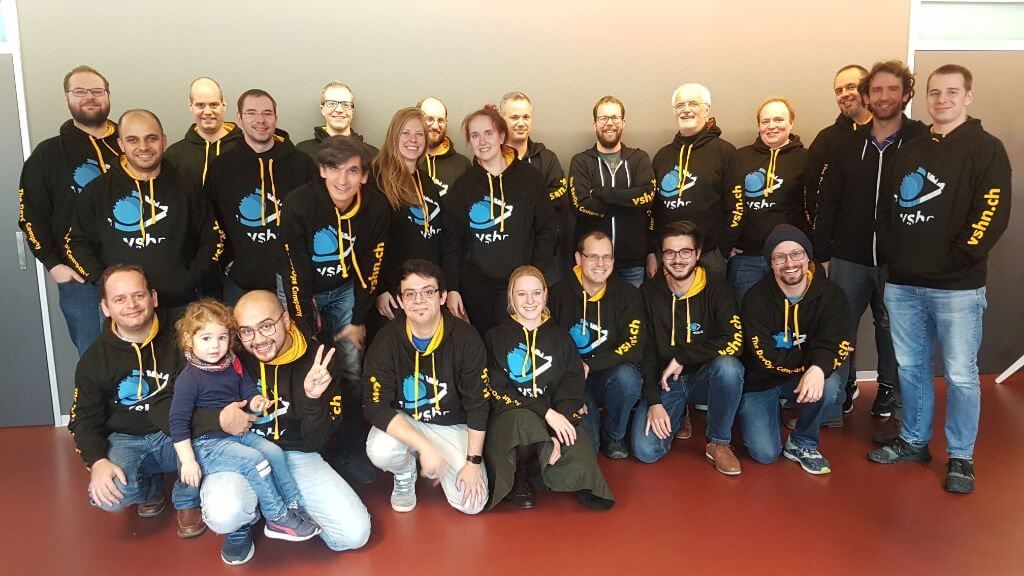
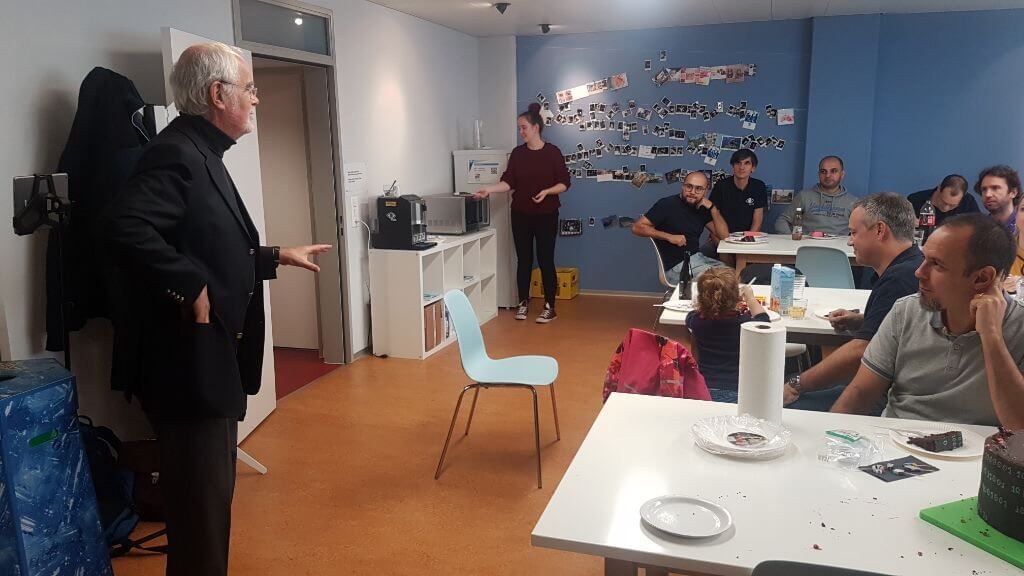
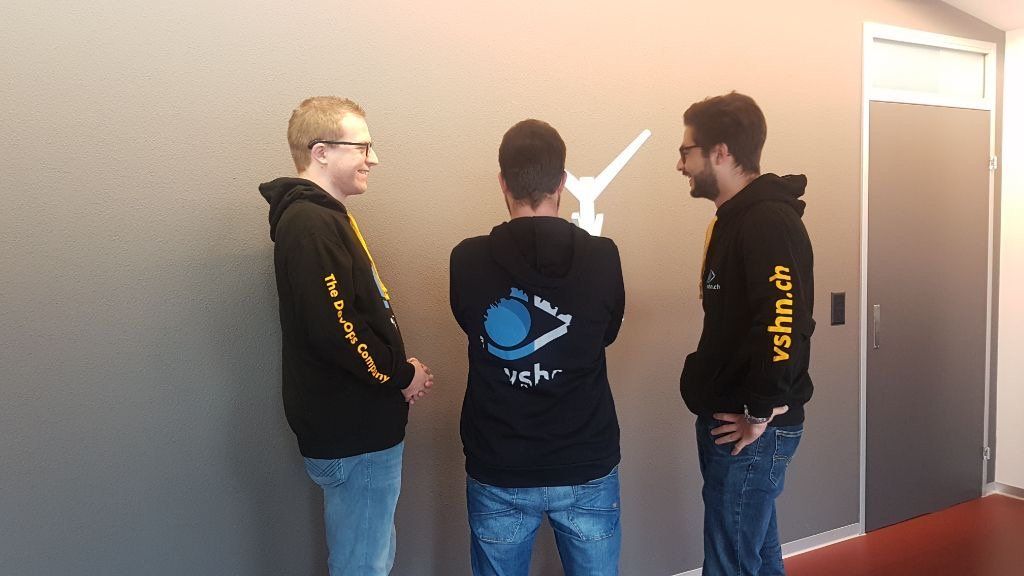
We celebrated our fifth anniversary in the VSHN office with delicious cake, a speech by our Chairman Bruce, and new hoodies for every VSHNeer!
VSHN sponsors VIS (The official Association of Computer Science Students at the ETH Zurich)
VSHN supports VIS
Some of our VSHNeers are former ETH students and try to maintain contact with the students through various alumni associations. For example, VSHN supports VIS – the Association of Computer Science Students at ETH Zurich – by sponsoring various events.
Recently an information evening took place in our office, where interested students could ask us about our daily work. The motto: “Good things & bad things: difficulties and fun facts about IT now and then”.
We were very happy about the active participation and look forward to the next time.
About the VIS
The official Association of Computer Science Students at the ETH Zurich (VIS) was founded in 1984 and is a student association of the Association of Students at the ETH (VSETH). The VIS represents students in political issues concerning the university through a Teaching Committee (UK), a Department Conference (DK), a Members’ Council (MR) and Semester Speaker for the first and second year.The organization supports its students with an exam collection and two free coffees per day. In order to balance the everyday life of students, the VIS offers a wide range of cultural events and a large number of committees.
Markus Speth
Marketing, Communications, People
Latest news
Events
General
Recap Cloud Native Computing Meetup September 2026
VSHN sponsors Hack'n'Lead – the first Swiss hackathon for women
24. Sep 2019
VSHN is Bronze Sponsor of Hack’n’Lead
We are very happy to support women++ and the hackathon Hack’n’Lead as Bronze Sponsors. Hack’n’Lead is the first women-friendly hackathon in Switzerland and aims to promote diversity in IT and to inspire women to pursue careers and computer science.
Details Hack’n’Lead
The first women-friendly hackathon in Switzerland
Careum Auditorium Zurich
2nd – 3rd November 2019
For a weekend, women and men come together to learn, be inspired and become part of a growing tech community and develop real products.
Hack’n’Lead brings together tech and business experts with the goal of increasing the diversity of technologies.
More information can be found on women++ and to register for Hack’n’Lead click here.
Markus Speth
Marketing, Communications, People
Latest news
Events
General
Recap Cloud Native Computing Meetup September 2026
This summer Red Hat released OpenShift 4. At first glance, the new major version is a continuous development of OpenShift 3 with relatively manageable changes for the user. But if you look under the hood, you will quickly see a completely revised OpenShift. The blogpost of Benjamin Affolter on the APPUiO blog examines the changes of OpenShift 4 and describes them in detail.
With the following article we would like to take a look behind the scenes of our Managed OpenShift offering and explain what we have to do to be able to offer our Managed Service with OpenShift 4.
Advantages of OpenShift 4
Red Hat promises the following improvements with version 4 of OpenShift:
New Installer
Fully automated operations, maintenance and configuration using Operators
Integration of Operator Hub
Current versions of Kubernetes
To fully understand the benefits and also the implications, we need to take a step back and take a look at OpenShift 3.
Managed OpenShift 3 – what’s included?
For better understanding, you can find a short overview of what our Managed OpenShift 3 service includes so far (not exhaustive):
Architecture engineering and setup of the OpenShift Cluster on almost any infrastructure (Cloud, On-Premise)
Monitoring of all cluster-relevant components to ensure operation
Regular backup of the cluster configuration incl. ensuring the integrity of the backup
Weekly maintenance of all systems, application of software patches and configuration improvements on all clusters
Automation of all work with Ansible (configuration, maintenance, updates, upgrades, installation, sanity checks and much more)
Integration into our central customer portal for an overview of the status of the cluster and other functions
Extensive dashboards in Grafana
Close cooperation with Red Hat Support for solving bugs in OpenShift, among others
Maintenance of various internal lab clusters to test changes to productive clusters
Provision of persistent storage using Gluster
Management and maintenance of the operating system Red Hat Enterprise Linux for the OpenShift masters and nodes
Training of system engineers to run OpenShift
All these listed points have been developed since the very first version of OpenShift 3 and are developed daily by our VSHNeers.
Status Quo VSHN Systems
From a technical point of view, our current system landscape looks something like this (brief overview):
Puppet for the local operating system management of all VMs (system configuration, maintenance of the defined state) and inventory of all systems and services.
Icinga2 for monitoring all operating system parameters within the VM, but also very extensive checks of all OpenShift cluster components. Icinga2 is configured and orchestrated by Puppet.
Ansible for installation and configuration of OpenShift, for regular maintenance and for much more
BURP for consistent data backups incl. cluster configuration, configured and orchestrated by Puppet
Gluster for persistent storage, managed by Ansible
Over the years, countless Ansible Playbooks have accumulated and all our knowledge and automation has gone into these Playbooks. We maintain our own fork from the official OpenShift Ansible Repository to be able to react quickly to any bugs. We regularly keep this fork up to date with upstream. Puppet not only takes care of the local operating system configuration, but also controls many important components such as the monitoring and backup system. In addition, the PuppetDB provides us with an up-to-date inventory of all systems managed by us, including detailed version information of the installed components. This is also integrated in our customer portal and is used for automatic billing of our managed services. The monitoring plugins we developed for Icinga2 cover almost every problem we have discovered with OpenShift and notify us if there is anything wrong with the cluster or one of its components. Our system documentation and OpenShift operation guide include several dozen Wiki articles.
Managed OpenShift 4 – what is there to do for VSHN?
From a system engineering point of view, OpenShift 4 is a completely new product. For VSHN this means that we have to completely redevelop a large part of the above points. A few examples:
The installation and configuration of OpenShift 4 is no longer based on Ansible, but on a separate installer (which uses Terraform in the background) and the configuration is done by In-Cluster Operators. Our Ansible Playbooks for OpenShift 3 can for the most part no longer be used for OpenShift 4.
The operating system is no longer Red Hat Enterprise Linux, but Red Hat CoreOS, which behaves completely different. Puppet cannot be used anymore and as described above we have to find other ways to inventory, orchestrate and bill the surrounding systems.
Our monitoring plugins for Icinga2 are no longer compatible with OpenShift 4 and the monitoring concept with Icinga2 no longer fits the platform’s revised architecture. For us this means a new development of our monitoring concept.
The backup system BURP can no longer be used in its current form, a new backup system has to be developed.
This is not an exhaustive list, there are many more details in our system landscape that need to be adapted.
The path to production
For us as a Managed Service Provider, stability and scalability are the most important points which are non-negotiable. This means that we have to take the necessary time to learn all the changes and peculiarities for a productive operation of OpenShift 4. The adaptation and development of the necessary tools and processes for the operation of dozens of clusters requires a lot of time and engineering effort. However, we started early and have already gained some experience with OpenShift 4. The experience gives us great confidence that OpenShift 4 can deliver on its promises of greatly simplified operation. The current version OpenShift 4.1 also has some limitations. Here is a small selection of what we noticed:
No support for proxies
AWS and VMware are the only supported IaaS providers with OpenShift 4.1 (current version at the time of this article)
Installation on unsupported and non-cloud platforms is very fragile
Container storage only via CSI
Many IaaS providers are not yet ready for OpenShift 4, but we are in close contact with our IaaS & Cloud partners like cloudscale.ch, Exoscale, Swisscom and AWS, to ensure compatibility so that we can continue to offer a smooth operation with OpenShift 4. OpenShift 4.1 reminds us partly of the early days of OpenShift 3, when it took some time until OpenShift 3 was ready for production. But we are very confident that the open issues can be solved and we are looking forward to the 4th generation of Red Hat OpenShift!
With APPUiO.ch we have created a Swiss Container Platform based on Red Hat OpenShift on which we offer Managed Services as a PaaS solution (Platform-as-a-Service) on any infrastructure: public, dedicated, private and on-premises. Based on proven Open Source concepts like Docker and Kubernetes you develop, operate and scale an application according to your needs. With APPUiO, your applications can run on public clouds as well as in-house. The platform was originally developed in 2015 by the two IT specialists Puzzle ITC and VSHN AG for the professionalization of their internal IT. Today, APPUiO is used productively by many customers and is supported by a strong community.
How can we help?
With our experience in operating OpenShift clusters around the world, we offer managed OpenShift clusters on almost any public, private or on-premise cloud. We are happy to help with evaluation, integration and operation and support with our many years of Kubernetes experience. Contact us, subscribe to our newsletter and follow us on Twitter (@vshn_ch and @APPUiO) to keep up with the latest news and have a look at our Services. We look forward to your feedback!
Tobias Brunner
Tobias Brunner is working since over 20 years in IT and more than 15 years with Internet technology. New technology has to be tried and written about.
Latest news
Events
General
Recap Cloud Native Computing Meetup September 2026
VSHN is a finalist at the Swiss Digital Economy Award
18. Sep 2019
VSHN is a finalist at the Swiss Digital Economy Award category Highest Digital Quality
Zurich, September 18 2019
VSHN has made it into the 23 finalists of the Digital Economy Award 2019.
VSHN has made it into the 23 finalists of the Digital Economy Award 2019. After an exciting application phase and pitches in front of juries of experts from the Swiss digital economy, we are delighted that VSHN – The DevOps Company made it into the 23 finalists. The Digital Economy Award is awarded in four categories to both start-ups and established companies. The winners will be announced on November 28 2019.
Jury statement Highest Digital Quality
VSHN – THE DEVOPS COMPANY SHORT DESCRIPTION VSHN is the leading Swiss service provider for DevOps, Docker, Kubernetes, OpenShift and 24/7 Cloud Operations. VSHN helps software developers run applications agile and 24/7 on any infrastructure and relieve IT operations. THE JURY STATEMENT The jury recognizes that VSHN’s highly focused business model provides a managed service for software developers that runs 24/7 on any infrastructure and relieves IT operations. In a clearly defined service segment, a new benchmark is set with the highest quality and strong global growth from Switzerland. VSHN has sustainably established a DNA consisting of a service seminar set paired with a very collaborative management model and is therefore an important enabler for the Swiss digital economy. A continuous further development of the organization focuses on automation in order to provide the service even faster and more completely. Speed, focus and quality are at the highest level and have impressed the jury.
The finalists of the Swiss Digital Economy Award 2019
And these are the finalists: The Next Global Hot Thing:
Archilyse
Fixposition
Protonmail
Sonect
Digital Innovation of the Year:
Aionav Systems
Approovd
Carbon Delta
Seervision
Side Effects
Digital Transformation:
Bank Vontobel
BVD Druck+Verlag
Confiseur Bachmann
Five up Community
HEKS
Jungfraubahnen Management
Sozialversicherung Aargau
Verein iGovPortal.ch
Veriset
Highest Digital Quality:
SBB Informatik
VSHN – The DevOps Company
Aduno Gruppe
ti&m
Five up Community
On 25 October, an exclusive event for the finalists and other interested parties will take place at the Radisson Blu near Zurich Airport as an after-show for the swissICT Symposium.
Digital Economy Award ceremony on 28 November 2019
On November 28 2019, the awards ceremony for the Digital Economy Award will take place in the Hallenstadion Zurich. The awards will be presented in a festive awards show and background information on the winners will be provided. We are particularly pleased that Federal Councillor Guy Parmelin has confirmed his participation. For the first time in the history of the event (including the predecessor awards) we are receiving the highest attendance from Bern. Dr. Daniel Risch, Minister of Economic Affairs and Deputy Head of Government of the Principality of Liechtenstein, will also attend the ceremony. The award ceremony will be accompanied by interesting and highly topical thematic inputs and a gala dinner. Single tickets can be ordered under the following link. Tickets can be ordered directly on the Digital Economy Awards website.
Markus Speth
Marketing, Communications, People
Latest news
Events
General
Recap Cloud Native Computing Meetup September 2026
VSHN and Puzzle ITC support acrevis Bank with future-oriented technology platform for further digitalization projects
9. Sep 2019
acrevis Bank creates future-oriented technology platform for further digitalization projects
With the development of its own technology platform, acrevis Bank AG of Eastern Switzerland has succeeded in laying the foundation for its further digitalization projects. The platform enables acrevis to react agile, flexible and quickly to customer and market needs. VSHN and Puzzle thus support acrevis in the ongoing digitalization of its business area in order to react to the growing customer needs and market requirements.
Official press release of acrevis Bank from Monday, September 09, 2019
acrevis Bank erstellt zukunftsweisende Technologieplattform
Der Ostschweizer acrevis Bank AG ist es mit der Entwicklung einer eigenen Technologie-Plattform gelungen, die Basis für ihre weiteren Digitalisierungsvorhaben zu legen. Die Plattform ermöglicht es acrevis, agil, flexibel und schnell auf Kunden- und Marktbedürfnisse reagieren zu können.
Die neue acrevis Technologie-Plattform vereint modernste Technologie und innovatives, fortschrittliches Gedankengut. Dank der erfolgreichen Zusammenarbeit mit den IT-Dienstleistern Puzzle ITC und VSHN konnten innerhalb von sieben Monaten für die acrevis Bank AG optimale Voraussetzungen für die Zukunft geschaffen werden.
Die Two-Speed Architektur der Plattform erleichtert es acrevis, die mit Niederlassungen vom Bodensee bis zum Zürichsee vertreten ist, künftige komplexe Anforderungen der Digitalisierung zu meistern. Besonders vorteilhaft ist es, dass die Technologie-Plattform erlaubt, bewährte Strukturen zu bewahren und gleichzeitig für Neues gewappnet zu sein: Die moderne Lösung verbindet beide Welten, so dass neue Tools entstehen können, ohne den Machern der bereits vorhandenen Systeme im Weg zu stehen.
Christian Gentsch, Leiter des Bereiches Logistik und Mitglied der Geschäftsleitung der acrevis Bank sowie Geschäftsführer der Finanz-Logistik AG: «Wer hätte es uns zugetraut, dass wir, als regional tätige Bank, zusammen mit Puzzle ITC und VSHN, ein Projekt dieser Grösse in solch kurzem Zeitraum erfolgreich realisieren könnten? Die Plattform deckt nicht nur alle dem heutigen Standard entsprechenden Kriterien ab, sie verfügt zusätzlich über neue, innovative Ansätze und ebnet den Weg zu unserem Ziel, zukünftige Digitalisierungsprojekte schnell, unkompliziert und kostengünstig realisieren zu können.»
Die VSHN AG ist das Bindeglied zwischen Business, Software-Entwicklung und IT-Betrieb. Als führender Schweizer Partner für DevOps, Docker, Kubernetes, OpenShift und 24/7 Cloud Operations unterstützt VSHN Software-Entwickler dabei, Applikationen agil und 24/7 auf beliebiger Infrastruktur zu betreiben und den IT-Betrieb zu entlasten. Seit 2014 betreuen wir für 350 Kunden & Partner über 1’500 Server in 20 verschiedenen Clouds sowie bei Kunden on-premises und überwachen mehr als 80’000 Services. VSHN ist ISO 27001 zertifiziert und arbeitet nach den strengen FINMA-Richtlinien, um die Sicherheit und Vertraulichkeit von Kundendaten jederzeit sicherzustellen. VSHN ist der erste Kubernetes Certified Service Provider (KCSP) in der Schweiz und wurde als Rising Star Switzerland 2019 in der ISG Provider Lens ausgezeichnet. Mehr Informationen: www.vshn.ch
Puzzle ITC deckt als innovativer IT-Dienstleister den ganzen Lebenszyklus von geschäftskritischen Anwendungen und Infrastrukturen ab. Dabei wird konsequent auf Open Source Technologien sowie modernste Methoden und Werkzeuge gesetzt. Seit 1999 wuchs das Start-Up zum erfolgreichen Software- und Technologie KMU mit über 120 Mitarbeitenden in Bern, Basel, Zürich und Tübingen (DE). Heute arbeitet ein interdisziplinäres und qualifiziertes Team an Projekten in den Bereichen: Beratung, Applikationen, Delivery, Infrastruktur und eigenen Open Source Lösungen. Mehr Informationen: www.puzzle.ch
Die acrevis Bank AG ist 2011 aus dem Zusammenschluss der Bank CA St.Gallen AG und der swissregiobank AG entstanden. Als führende Regionalbank zwischen Bodensee und Zürichsee positioniert sich acrevis durch eine systematische Abdeckung des Marktgebiets und segmentspezifische Angebote. Die Kernkompetenzen liegen in der Finanzierung privater Immobilien, in der Anlageberatung, in der Vermögensverwaltung sowie im kommerziellen Geschäft mit KMU, Gewerbe und Selbstständig- erwerbenden. Mehr Informationen: www.acrevis.ch
Puzzle ITC deckt als innovativer IT-Dienstleister den ganzen Lebenszyklus von geschäftskritischen Anwendungen und Infrastrukturen ab. Dabei wird konsequent auf Open Source Technologien sowie modernste Methoden und Werkzeuge gesetzt. Seit 1999 wuchs das Start-Up zum erfolgreichen Software- und Technologie KMU mit über 120 Mitarbeitenden in Bern, Basel, Zürich und Tübingen (DE). Heute arbeitet ein interdisziplinäres und qualifiziertes Team an Projekten in den Bereichen: Beratung, Applikationen, Delivery, Infrastruktur und eigenen Open Source Lösungen. Mehr Informationen: www.puzzle.ch
Die VSHN AG ist das Bindeglied zwischen Business, Software-Entwicklung und IT-Betrieb. Als führender Schweizer Partner für DevOps, Docker, Kubernetes, OpenShift und 24/7 Cloud Operations unterstützt VSHN Software-Entwickler dabei, Applikationen agil und 24/7 auf beliebiger Infrastruktur zu betreiben und den IT-Betrieb zu entlasten. Seit 2014 betreuen wir für 350 Kunden & Partner über 1’500 Server in 20 verschiedenen Clouds sowie bei Kunden on-premises und überwachen mehr als 80’000 Services. VSHN ist ISO 27001 zertifiziert und arbeitet nach den strengen FINMA-Richtlinien, um die Sicherheit und Vertraulichkeit von Kundendaten jederzeit sicherzustellen. VSHN ist der erste Kubernetes Certified Service Provider (KCSP) in der Schweiz und wurde als Rising Star Switzerland 2019 in der ISG Provider Lens ausgezeichnet. Mehr Informationen: www.vshn.ch
Are Swiss companies DevOps ready? Also this year we want to determine the current state of DevOps. With this study we want to investigate how you and your company understand DevOps and whether you already work according to DevOps principles. The current state of DevOps, reasons for and against an introduction of the DevOps philosophy and where the development is headed will be determined. We will compare the results with the ones from last year to be able to draw conclusions and see trends directly.
Survey
The survey is open until November 15, 2019 and may of course be shared, forwarded and retweeted with others. You only need about 10 minutes. Click here for the survey and enjoy!
Three years after our first check on DevOps in Switzerland, it is time to take a closer look at the current state and the adoption of DevOps in 2019. Therefore, we are conducting a study on the state of DevOps in Switzerland.
We will send each survey participant a (of course anonymised) report ‘DevOps in Switzerland’ upon request, in which we compare this year’s results with those of last year, in order to be able to derive trends and better understand the development of DevOps. Therefore you will be asked for your email address at the end of the survey.
Help us determine the current state of DevOps in Switzerland!
What is DevOps?
DevOps is not a rigid term and is often understood differently. By hiring a DevOps Engineer, a company does not automatically become a DevOps organization. DevOps is also not to be equated with the use of certain tools or software. DevOps cannot be “bought” and DevOps is not a detached team within the organization. The cultural aspect should also not be underestimated – the corporate culture is the most important reason for a functioning DevOps organization. The idea behind DevOps is that people work together in harmony and use processes and techniques to continuously benefit the end customer. If you would like to learn more about DevOps, take a look at our Netzwoche post „DevOps in der Praxis“ or have a look on our Slides from our DevOps Workshop, which we held at topsoft 2019.
Our understanding of DevOps
DevOps is a common term, but unfortunately as vague as ‘Cloud’: Although everyone knows that he wants it or needs it and yet it is not something that you can just order and get delivered the next day. Our understanding of DevOps is the interdisciplinary collaboration between developers and operations of software in order to use applications quickly and systematically. Our article “What is DevOps – what does VSHN do?” explains our understanding of DevOps.
What do you think of DevOps? How do you apply DevOps in your company?
Take part in our study and tell us about your experience with DevOps and what role DevOps plays in your business.
We are already very excited about the results and especially the trends compared to 2018. Thank you in advance for your participation!
Markus Speth
Marketing, Communications, People
Latest news
Events
General
Recap Cloud Native Computing Meetup September 2026
The third Swiss Digital Day takes place on Tuesday, 3 September 2019. This year, more than 300 free talks, speaking opportunities, stage shows, startup pitches, expos and courses will be offered at over 12 locations throughout Switzerland. Speakers will include numerous top-class guests from Federal Councillors and CEOs from the various areas of digitisation.
The patronage and presence of Ueli Maurer, President of the Swiss Confederation and Federal Councillor Guy Parmelin as well as the keynote speech of Federal Councillor Simonetta Sommaruga reinforce the importance of Digital Day. This year, the national event, initiated by digitalswitzerland, is dedicated to the topic of ‘lifelong learning’. The official programme of the Digital Day can be found below: https://www.digitaltag.swiss/
About the Digital Day
“Digital Day was launched in 2017 by digitalswitzerland. Since then, Digital Day has pursued the goal of making digitalisation a tangible experience, highlighting its opportunities and challenges and encouraging an in-depth discussion on this topic. digitalswitzerland is a Swiss-wide, multi-stakeholder initiative created from the shared vision of its over 150 members to strengthen Switzerland’s position as a leading innovation hub. By engaging government, business, academia and the public, we create a platform to lead Switzerland forward.” We at VSHN are of course very pleased that the Digital Day will bring digital topics into focus and make them “touchable and perceptible” for everyone. What do you think about Digital Day? We are looking forward to your feedback!
Markus Speth
Marketing, Communications, People
Latest news
Events
General
Recap Cloud Native Computing Meetup September 2026
topsoft 2019 is one of the most important Swiss IT trade fairs for systems, technologies and know-how for future-oriented companies. Together with our partners Batix, Webgate and Migros, VSHN exhibited at topsoft 2019.
topsoft at Umwelt Arena Spreitenbach
topsoft 2019 took place from 28 to 29 August in the Umwelt Arena in Spreitenbach and became the meeting place for the Swiss IT industry. Presentations, workshops and a large exhibition area provided variety and a great setting, bringing together trade visitors, influencers and decision-makers from Switzerland and abroad.
The VSHNeers on-site obviously had a lot of fun. 🙂
VSHN Workshop: Advantages of DevOps in practice
Our VSHNeers Matthias Indermühle and Markus Speth held a workshop on “Advantages of DevOps in Practice” on Wed. 28. August 2019: “How a lived DevOps culture improves cooperation and puts customer benefits in the foreground. In a world where software is becoming increasingly important, the success of a company increasingly depends on how quickly software can be developed and deployed. DevOps stands for a new culture and approach in the collaboration of previously separate departments. Development (software development) and Operations (IT operations) are pulling in the same direction to increase software quality and availability and thus to increase customer satisfaction”. https://www.topsoft.ch/lineup/vorteile-von-devops-in-der-praxis/
Slides of our DevOps Workshop
For those of you who couldn’t participate, here are our slides to watch (in German):
And if you feel like it, you can of course also take part in our DevOps Workshop Quiz:
🙂
APPUiO Voucher Code
APPUiO Voucher Code for topsoft is: topsoft19 You can easily redeem the code on appuio.ch and receive 2048 MiB RAM / 1100 mC for 30 days for free (from the date of redemption).
Feedback and more about DevOps
As always, we are looking forward to any feedback and to seeing you again at a future event! If you want to learn more about DevOps, check out the Netzwoche article “DevOps in der Praxis”. Your VSHNeers
Markus Speth
Marketing, Communications, People
Latest news
Events
General
Recap Cloud Native Computing Meetup September 2026
Hi Microsoft Cloud and Azure Regions Zurich & Geneva!
28. Aug 2019
Microsoft Cloud Switzerland
Now the time has come: the Microsoft Cloud Switzerland with its Azure Regions Zurich and Geneva has officially gone live. With two data center locations in Zurich and Geneva, the importance of Switzerland as a business location is emphasized and geo-redundancy is ensured at the same time. This step demonstrates the importance of local data storage for many Swiss companies. A large number of Azure Services and Office 365 from the Swiss Microsoft Cloud are planned to be offered. Among the first customers to use the Swiss Azure Cloud are SwissRE, UBS and Swisscom. We are looking forward to welcoming another Hyperscaler in Switzerland and of course to many exciting joint projects! 🙂 A warm welcome!
VSHN at the award ceremony for the Rising Star award Cloud Transformation/Operation Services & XaaS from ISG in Berlin
28. Jun 2019
VSHN receives Rising Star award
VSHN – The DevOps Company receives the award Rising Star of the ISG Provider Lens Switzerland 2019 study at the award ceremony night in Spreespeicher Berlin. We are of course very happy that we were able to place ourselves so successfully in the study alongside many well-known global players from the IT world. The VSHNeers Patrick Mathers (CEO) and Markus Speth (CMO) receive the Rising Star from ISG Director Heiko Henkes and are very pleased about the award.
Heiko Henkes statement about VSHN:
“We have been watching VSHN for several years now and our extensive research in 2019 has come to the conclusion that VSHN can be regarded as Unicorn and one of the most innovative IT service providers in the area of Cloud Transformation/Operation Services & XaaS. As an absolute expert in Managed Services and the operation of modern Container Platforms such as OpenShift and Kubernetes, VSHN supports many companies in an agile and innovative way both in Switzerland as well as internationally with their digital transformation and the implementation of a holistic DevOps strategy. VSHN relieves software developers in their daily work like no other company in Switzerland and despite the size of the company, VSHN is able to manage and scale large and complex projects thanks to sophisticated management & automation.”
Such kind words are of course very nice and at the same time underline our daily work and strategic orientation.
Importance of the award for VSHN
What does the Rising Star award mean for VSHN? On the one hand, the study confirms us in our daily work and in our strategy not to do everything ourselves, but to focus on the operation of modern hosting platforms and future technologies such as Docker, OpenShift and Kubernetes, to automate and to cooperate with partners. On the other hand, the study results also confirm that Switzerland is a multi-cloud country and DevOps is “the way to go”. For this reason, we are extremely happy about the award as Rising Star and see it as a confirmation of our previous path and at the same time as an incentive to become even better in the future.
Berlin is always worth a visit, of course all the more so if you are receiving a prize. Following a few impressions of the ISG Provider Lens Award Ceremony Night 2019 at the Spreespeicher in Berlin on Wed. June 26 2019.
ISG annually awards the Rising Star to the product challenger with the highest potential for the future, which convinces in particular by its promising product portfolio and promising roadmap, focusing on key market trends and customer value. ISG defines the selection criteria of the Rising Star as follows:
“Rising Stars are mostly product challengers with high future potential. When receiving the “Rising Star” award, such companies have a promising portfolio, including the required roadmap and an adequate focus on key market trends and customer requirements. Also, the “Rising Star” has an excellent management and understanding of the local market. This award is only given to vendors or service providers that have made extreme progress towards their goals within the last 12 months and are on a good way to reach the leader quadrant within the next 12-24 months, due to their above-average impact and innovative strength.”
About ISG Provider Lens
In the Provider Lens, the market research company ISG rates Swiss cloud providers for the attractiveness of their product portfolio and their competitive strength. ISG is one of the leading market research and consulting companies in the information technology segment, helping more than 700 clients worldwide to achieve operational excellence. Customers have the proven expertise in innovative technology solutions, the industry’s most comprehensive database, and more than 50 years of experience and global leadership in an international information and consulting firm. ISG is based in Stamford, Connecticut with 21 locations worldwide and supports its customers in Germany, Switzerland and Austria through its locations in Frankfurt a. M., Kassel and Zurich.
About VSHN – The DevOps Company
VSHN is the leading Swiss partner for DevOps, Docker, Kubernetes, OpenShift and 24/7 Cloud Operations. VSHN helps software developers run their applications agile and 24/7 on any infrastructure while relieving the burden on IT operations. Since 2014, we are managing more than 1500 servers in 20 different clouds as well as on-premises at customer locations with a total of more than 80’000 services for 300 different customers and partners. We are ISO 27001 certified and work to the strict FINMA guidelines to ensure the security and confidentiality of customer information at all times. Take a look at our services and learn more about our services and how we can possibly support you. Subscribe to our newsletter and follow us on Twitter (@vshn_ch and @APPUiO) and don’t miss any news. Follow @VSHN_ch Follow @APPUiO
This article was published on May 8th 2019 in Netzwoche 08/2019 – author: Markus Speth.
DevOps stands for a new culture and approach in the collaboration of traditionally separated departments. Development (software development) and Operations (IT operations) are pulling together to increase software quality and availability and thus customer satisfaction. In a world where software is becoming increasingly important, the success of a business depends more and more on how quickly software can be developed and deployed. Technology is evolving rapidly, is accessible to everyone, and international development teams are on call waiting to get the next assignment – so how can you stand out from the competition? The decisive factor today is how well a company knows its target group and how it satisfies customer needs better and faster than the competition through rapid iteration. DevOps can be an enabler for this.
What is DevOps?
DevOps is a dazzling term, but often just as vague as “cloud” or “container”. Everybody understands something different, and in some cases, DevOps is already used inflationary or only for marketing purposes. However, the majority agree that DevOps has arrived in the mainstream. Fundamentally, DevOps is an artificial word made out of “development”, i.e. software development, and “operations”, i.e. IT operations or system administration. DevOps stands symbolically for a new culture of collaborative departments that historically have pursued rather different goals: software development must be agile, creative and at the cutting edge of technological development in order to be able to constantly deliver new features. In contrast, IT operations is geared towards stability, security and reliability. DevOps now tries to unite exactly this apparent contradiction between agility and stability. As a logical further development of agile software development, DevOps aims to include the entire value chain in an interdisciplinary way. DevOps should break up existing silo thinking.
DevOps affects all sectors and is not limited to software development. Many traditional industries today support their core business with software: no matter if banks, insurance companies, retail or industrial sector – digitization does not stop at any industry. If the customer is happy, so is the team, the individual employee and ultimately the company. In the end, everyone benefits from DevOps.
A DevOps culture that focuses on collaboration and automation not only ensures consistency and predictability and faster code delivery while increasing code quality. Problem solving also benefits from DevOps. Bugs and failures are not prevented by DevOps, but with a collaborative and solution-oriented DevOps team and a mature level of automation, troubleshooting and problem solving becomes many times more efficient and faster, reducing the cost of a failure. DevOps stands for the lean concept of Continuous Improvement and a conscious and active feedback culture. Mistakes may be made in order to continuously improve cooperation and processes. The software development and IT operations departments are jointly responsible for the application.
DevOps in practice
In practice, a functioning DevOps organization is characterized by frequent and fast release cycles, automated deployments (including automatic rollbacks if required), continuous integration and automated testing. The ideal picture is a fully automated pipeline without the need for manual intervention. It is also important that the management gives the teams the authority to make decisions autonomously without having to wait for a “go”. A practical example is self-service: The developer can create a development or test environment him or herself if required, without having to wait for the IT administration. The biggest obstacle to team collaboration is often the deadlocked approach and the “power of habit”. In such cases, it takes a lot of persuasion and time before a DevOps culture can become a commonplace. One only has to imagine how a company must also change culturally so that it can evolve from a few software releases per year to daily or even hourly releases through the use of continuous delivery. Software delivery cycles are getting shorter and shorter through Continuous Integration / Continuous Delivery (CI/CD) as production pipelines can increasingly be scaled through microservices and cloud native environments. Ideally, errors are detected before they go into production. The earlier an error is found and corrected in the chain, the cheaper it is to correct it. DevOps principles and automation make this possible, for example by using several test environments. Today’s most successful product companies like Netflix deploy their applications several hundred to thousand times a day. Failures cannot be prevented, but can be scheduled in to continuously learn from them. Netflix has significantly increased the stability and robustness of its service through the use of chaos engineering, i.e. the deliberate and accidental termination of servers and processes in production as well. Server failure is taken for granted and built into the DNA of the service. Without a mature and comprehensive DevOps mentality throughout the entire organization, it would be impossible to deliver software at this speed and quality. Software companies are also on the rise in Switzerland, which are constantly improving their applications and placing their customers in the foreground through a lived DevOps practice. For example, Sherpany with their software for management and board meetings or Amazee.io, who have developed Lagoon, a modern docker build and deployment system for Kubernetes and OpenShift.
Conclusion
In contrast to Agile, DevOps goes beyond the development part and focuses on the entire value chain: DevOps teams are responsible for a product throughout its entire lifecycle. DevOps helps to scale while remaining flexible and offers a number of quantifiable benefits such as shorter development cycles, increased deployment frequency and faster time-to-market. But DevOps is not just there to accelerate software development by increasing the level of automation and efficiency and agility. DevOps can be an enabler of an organization’s cultural change and improve overall collaboration, work climate and motivation. DevOps stands for collaboration, flexibility, agility and concentration on a joint business success: satisfied users, market-driven products and long-term motivated and loyal employees.
Want to learn more about DevOps?
We have conducted a study of the state of DevOps in Switzerland which will be published soon. If you or your organization would like to learn more about DevOps and would like to find out whether there is still room for improvement in your current application architecture, VSHN offers a DevOps workshop to find out.
Markus Speth
Marketing, Communications, People
Latest news
Events
General
Recap Cloud Native Computing Meetup September 2026
Cloud-to-Cloud Migration: Aarno contributed a technical article in iX Magazine
1. Apr 2019
iX Magazine article: Cloud-to-Cloud Migration
Our CTO Aarno Aukia has contributed an article in iX Magazine 4/2019 on cloud-to-cloud migration.
The challenge of Cloud-to-Cloud Migration
There are many reasons to change the cloud provider or the cloud model. But migration is not an easy task. There are different migration options based on the underlying data.
For different reasons, it may be necessary to change the cloud model or provider.
There are different migration methods depending on the nature of the application being migrated.
The use of open source products such as Docker and Kubernetes allows faster migration and vendor independence.
Mastering the Migration
By Aarno Aukia, published in iX Magazine 04/2019. The question is no longer if, but which services should be used from a cloud and when, and which systems, services and applications are best suited for this purpose. By outsourcing infrastructure and operating services, companies can concentrate on their core competencies such as software development or core business processes. In addition to the personnel capacities freed up in the core areas, they also benefit from the agile provision of services through self-service, automation and pay-per-use. In order to survive in this dynamic world and to meet the expectations of application development and software operations, software development and operations today must work together according to DevOps principles and have a common goal in mind: customer benefit. Before a company decides on a suitable cloud for its data and applications, it should be clear what the implications of the choice are. How can the use of open source in a company avoid vendor lock-in in the cloud? Which locations can the cloud provider offer? Is the preferred location included? Does the cloud provider offer all the technologies that are important? How big and reliable is the provider? And what happens if the provider no longer operates the cloud? Will the company be able to access its data without much effort? When it comes to selecting a public or private cloud, it is usually the case that a public cloud offers more flexibility in terms of greater scalability, more functions and a larger selection of peripheral systems. Going private cloud is interesting for industries with high security requirements where environments need to be physically separated. But a private cloud can also be the cheaper alternative to the public cloud in the long term, especially if the required resources are more or less precisely determined in advance and no major performance peaks are to be expected as with the Christmas business. For this reason, many large companies today use a multi-cloud strategy: depending on requirements, budget and long-term perspective, a public and/or private cloud is used. The motives for choosing a cloud provider are different. Many users can access AWS, Google Cloud or Microsoft Azure via inexpensive offers or test accesses. Others choose an alternative or regional provider because they value a nearby location and personal contact. Whatever the original decision, whether it was price, reliability, ease of access, security requirements or compatibility, the starting point may have changed in the meantime. Perhaps the architecture of the application or business requirements has changed in such a way that a change of vendor is necessary. Or the cloud provider’s decision requires it to look for alternatives.
Read more
Read the full article in iX Magazine 04/2019 (in German).
About iX – Magazine for professional information technology
IX – Magazine for professional Information technology is a computer magazine founded in 1988 and published in German. According to its own description the name derives from the operating system Unix. The edition is published by Heise-Zeitschriften-Verlag. It has about 170 pages and is published monthly. The target group are professional administrators and programmers. In contrast to its sister journal c’t, the iX is mainly aimed at professional readers. The advertising slogan “Not everyone understands – which is also better” tries to sharpen this demarcation by forming an elite group of readers.
Markus Speth
Marketing, Communications, People
Latest news
Events
General
Recap Cloud Native Computing Meetup September 2026
UPDATE: The winner was drawn and informed by us – congratulations!
KubeCon and CloudNativeCon from May 20 – 23 2019 in Barcelona
The flagship conference of the Cloud Native Computing Foundation will gather users and technology savvy people from leading open source and cloud communities from May 20 to 23, 2019 in Barcelona, Spain. Be part of the Kubernetes, Prometheus, OpenTracing, Fluentd, gRPC, containerd, rkt, CNI, Envoy, Jaeger, Notary, TUF, Vitess, CoreDNS, NATS, Linkerd, Helm, Harbor and etcd community and meet with like-minded people four days long, to promote the know-how and further development of cloud computing. The conference continues to record strong growth: In 2019, more than 6’000 participants are expected to attend KubeCon and CloudNativeCon Europe in Barcelona.
Interested in Tapas and Kubernetes?
We are giving away 2 tickets for you and your companion: attend the KubeCon / CloudNativeCon Europe 2019 together and enjoy a few exciting days in Barcelona!
What do you have to do?
Share this article until Monday, February 4th 2019, 12.00am on Twitter, Facebook, Instagram or LinkedIn and tag the person you’d like to take with you. From all comments and shares we will draw the lucky winner. Good luck and hopefully see you soon in Barcelona! 🙂 Arrival and accommodation in Barcelona has to be organized by yourself. VSHNeers are excluded from the contest. The winner will be notified by us.
VSHN is official sponsor of KubeCon and CloudNativeCon
VSHN supports acrevis bank on their way to digitalization
23. Jan 2019
Zurich, January 21, 2019 – Together with our partner Puzzle ITC, VSHN AG is building an OpenShift-based technology platform for the Eastern Swiss regional bank acrevis. The technology platform consists of business, integration, security and delivery layers and enables acrevis to implement a two-speed IT. VSHN and Puzzle thus support acrevis in the ongoing digitalization of its business area in order to react to the growing customer needs and market requirements.
VSHN and Puzzle ITC support acrevis bank on its way to digitization
After an intensive evaluation and detailing phase, acrevis decided on a partnership with VSHN and Puzzle ITC for the implementation, realization and operation of IT platforms. Together we will develop a technology platform, which enables acrevis to use two-speed IT. In addition, it distinguishes the regional bank as an active player in the ongoing digitalization of the financial sector. Michael Steiner, CEO of acrevis Bank: “We are starting small and want to grow consistently and jointly with the needs of our customers and the bank”. The modern platform will provide acrevis with a future-oriented foundation for further digitization initiatives and combine security, stability and flexibility. It also enables acrevis to react quickly, easily and efficiently to customer wishes and new market requirements and to integrate them into the existing system landscape. Thanks to the scalability of the new technology platform, future digitization projects can be realized more quickly, easily and cost-effectively. acrevis is an exciting customer for VSHN and Puzzle ITC in the banking sector. We are very pleased to be able to support acrevis in its pursuit of an offensive digital strategy and look forward to a successful cooperation.
The individual needs stand in the foreground
The technology platform is based on the OpenShift-based APPUiO Swiss Container Platform and represents a classic two-speed integration architecture consisting of the two areas “Steady” and “Speed”. The stable and less agile backend systems (Steady area) are preceded by modern and agile components (Speed area). This architecture forms the basis for reacting flexibly and quickly to changes in applications and services that use data and services from the backend systems. In addition, the new platform provides a standardized environment for future applications and services, enabling them to benefit from the prepared environment in terms of operation, security and deployment. Thus, the new platform enables an optimal response to individual customer needs and new market requirements.
About Puzzle ITC
As an innovative IT service provider, Puzzle ITC covers the entire life cycle of business-critical applications and infrastructures. We consistently rely on open source technologies as well as state-of-the-art methods and tools. Since 1999, the start-up has grown into a successful software and technology SME with over 120 employees in Bern, Zurich and Tübingen (DE). Today, an interdisciplinary and qualified team works on projects in these areas: consulting, applications, delivery, infrastructure and own open source solutions. More information: www.puzzle.ch
About VSHN AG
VSHN AG is the leading Swiss partner for DevOps, Docker, Kubernetes, OpenShift and 24/7 Cloud Operations. VSHN helps software developers to run their applications agile and 24/7 on any infrastructure and to relieve IT operations. Since 2014, we have been supporting over 1000 servers in 20 different clouds for 300 different customers & partners as well as on-premises for customers with a total of more than 70000 services. VSHN is ISO 27001 certified and works according to the strict FINMA guidelines to ensure the security and confidentiality of customer data at all times. VSHN is the first Kubernetes Certified Service Provider (KCSP) in Switzerland. More information: www.vshn.ch
About acrevis Bank AG
acrevis Bank AG was created in 2011 from the merger of Bank CA St.Gallen AG and swissregiobank AG. As the leading regional bank between Lake Constance and Lake Zurich, acrevis positions itself through systematic coverage of the market area and segment-specific offerings. Its core competencies lie in the financing of private real estate, investment advice, asset management and commercial business with SMEs, trade and self-employed persons.