Liene at Open Source in Finance Forum London 2026


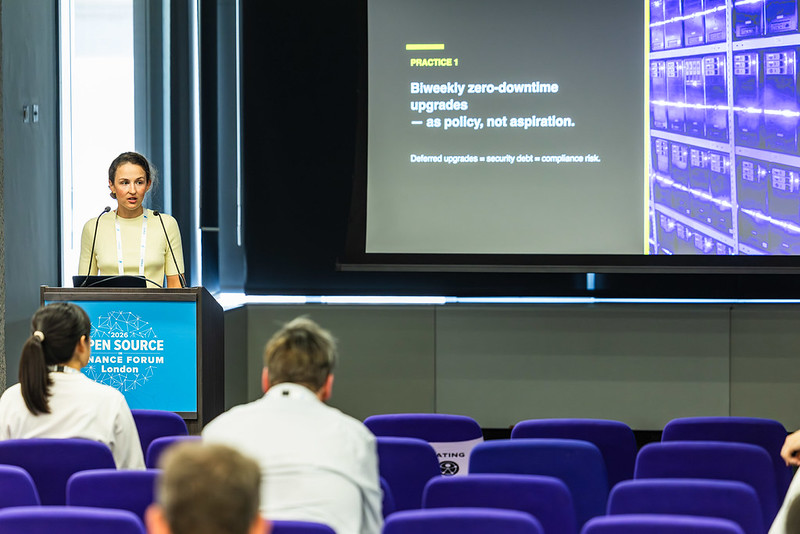
At the Open Source in Finance Forum London 2026, I took the stage to share lessons from operating a regulated digital asset platform on open, cloud-native infrastructure. The talk was part of the Fluxnova & Platform Automation track and ran on Thursday, June 25, 2026.
The talk
Operating Digital Asset Platforms on Open Infrastructure: Lessons From Regulated Production
Digital asset platforms operate under demanding conditions: strict security requirements, high availability expectations, and increasing regulatory scrutiny. At the same time, engineering teams need to retain the flexibility to evolve their systems as the digital asset ecosystem keeps developing. This was a real-life use case: what worked for us, and what didn’t.
You can find the full slide deck here.
The full recording of the talk is available here.
Two worlds that don’t normally talk to each other
I opened by explaining why I’m the one telling this story. I’ve lived the same tension from two different angles: highly regulated healthcare on one side, fluid open-source ecosystems on the other. Digital asset platforms sit exactly at that intersection – regulated discipline meets open-source speed.
Why digital assets are a different operational challenge
Three pressures make this space harder than typical cloud-native infrastructure:
- Digital assets are bearer instruments – downtime doesn’t just mean a bad SLA, it means real money at risk.
- The regulatory ground keeps moving: FINMA today in Switzerland, MiCA rolling out across Europe.
- The asset universe itself keeps expanding – from crypto to tokenized securities to NFTs to CBDCs – and the platform has to evolve without breaking what’s already live.
As one of our partners, Taurus, put it: “We run on OpenShift, they run on OpenShift – we speak the same language.”
Three patterns we see across regulated financial infrastructure
Pattern 1: Stable core, agile edge. The clearest example is acrevis Bank, where a proven, regulated core banking system (Finnova) stays untouched, while a cloud-native layer on APPUiO/OpenShift, built with Lagoon, iterates fast at the edge – connected through a VPN/API gateway. This isn’t a Strangler Fig pattern. The interface between the two layers is exactly where governance lives. A digital asset platform is, by design, an agile edge – which is why Taurus’s 30+ bank customers all connect digital-asset capability at the edge of a stable core.
Pattern 2: Delegate platform ops, own your core. Everyone focuses on their own layer: banks focus on their business, Finnova focuses on banking software, VSHN focuses on platform operations. After Taurus moved to managed OpenShift, they were operating across 30+ institutions, 9 countries, and 3 continents, with several reclaimed FTEs redirected from platform maintenance to product and global expansion. Delegating platform ops also concentrates the compliance burden onto whoever can carry it best – which is why VSHN holds ISO 27001 and ISAE 3402 Type 2, and operates under FINMA guidelines.
Pattern 3: Evolutionary migration, not big bang. Taurus didn’t start with a fully managed enterprise platform – they grew into it in three deliberate stages: vanilla Kubernetes in 2018, then OKD (community OpenShift), and today, managed Red Hat OpenShift on VSHN. Each step was right for that stage of their growth. The lesson: you don’t need the full managed stack on day one, but you do need to design the handoff path from the start.
Operational practices that make financial-grade infra real
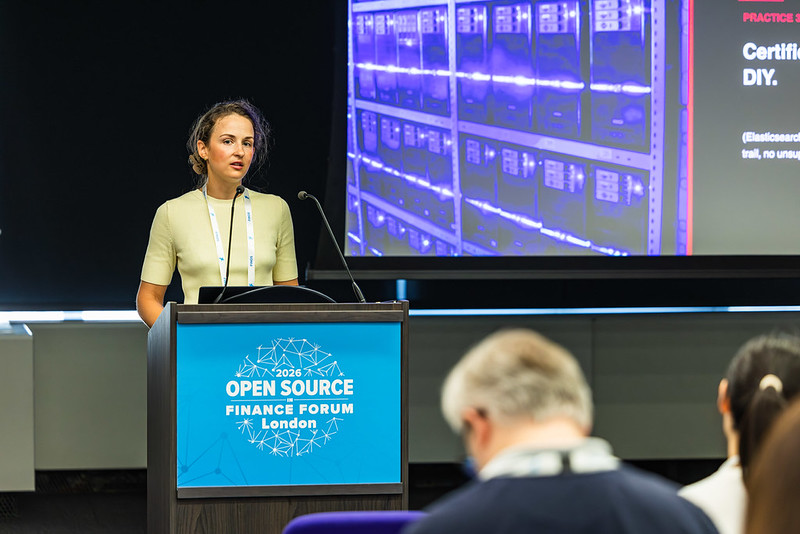
A few practices came up as non-negotiable in this space: biweekly zero-downtime upgrades as policy, not aspiration – because deferred upgrades quietly become security debt and compliance risk. Self-healing infrastructure isn’t just about reliability, it’s a compliance primitive. And certified operators beat DIY, even for something as well-understood as Elasticsearch – using ECK gives you a clean audit trail with no unsupported modifications.
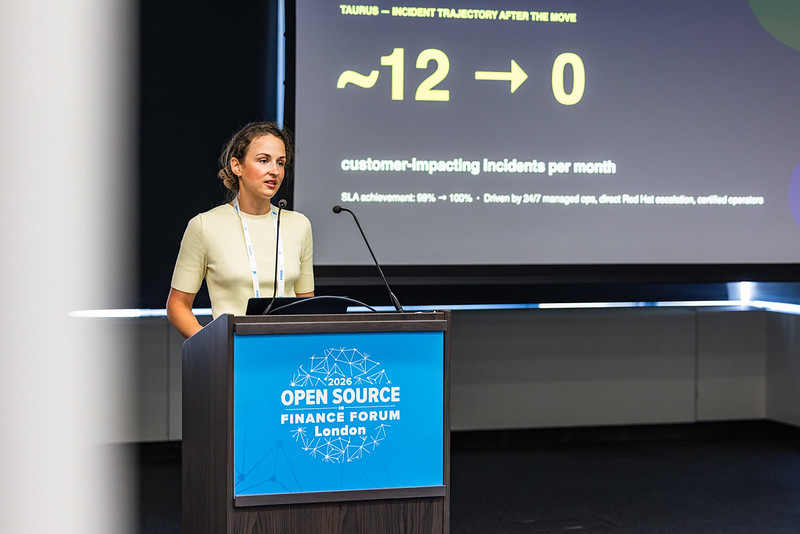
The results speak for themselves: after the move, Taurus went from around 12 customer-impacting incidents per month to zero, with SLA achievement moving from 99% to 100%, driven by 24/7 managed ops, direct Red Hat escalation, and certified operators.
The honest part: what didn’t work
True to VSHN form, I didn’t stop at the success story. A few open questions I’d probe harder with hindsight: did the OKD-to-managed-OpenShift migration happen too late, and what did that interim period actually cost? How do you keep consistency at global scale when multi-geography compliance means different partners in different regions? How do you balance a stable biweekly platform cadence against an ecosystem that moves faster than most enterprise software cycles? And what should an RFP really screen for beyond technical specs – agility, escalation paths, and a willingness to co-design rather than just execute?
Highlights from the forum
A few things stood out over the two days in London beyond my own talk.
Platforms matter, whatever the industry. Whether you’re running infrastructure for finance, healthcare, or somewhere else entirely, the underlying challenges don’t really change. Security, availability, compliance, and the need to move fast without breaking production – these are the same conversations regardless of the label on the regulator’s letterhead.
Open source adoption in regulated industries is accelerating. A few years ago, “open source” and “regulated production” felt like they belonged in different rooms. Not anymore. Banks once feared open source; now their most critical infrastructure runs on it. The appetite for open, auditable, vendor-independent infrastructure in finance is growing quickly, and the questions from the audience reflected that shift – people aren’t asking if anymore, they’re asking how.
AI was everywhere, but it wasn’t everything. Unsurprisingly, AI featured heavily across the sessions. But the forum was a good reminder that solid tooling and honest conversations between people are still what actually gets regulated infrastructure into production. AI can help, but it doesn’t replace the groundwork.
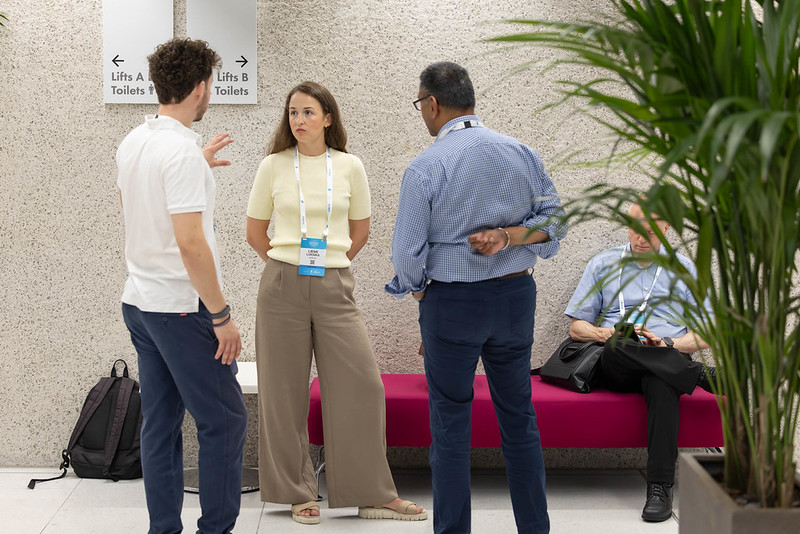
Thank you, London
Thanks to the Linux Foundation and the Open Source in Finance Forum orgnisers for putting together two days of sharp, practical conversation. It’s encouraging to see how seriously the finance sector is now engaging with open source and cloud-native approaches for genuinely critical infrastructure.
Financial-grade open infrastructure isn’t about replacing what works – it’s about building the right fast layer alongside it, and handing the platform to people who live and breathe it. If you’re operating regulated platforms and thinking about how open infrastructure fits into that picture, let’s talk.

Liene Luksika
Product Manager