Cloud Native Computing Switzerland Meetup May 2026 Recap


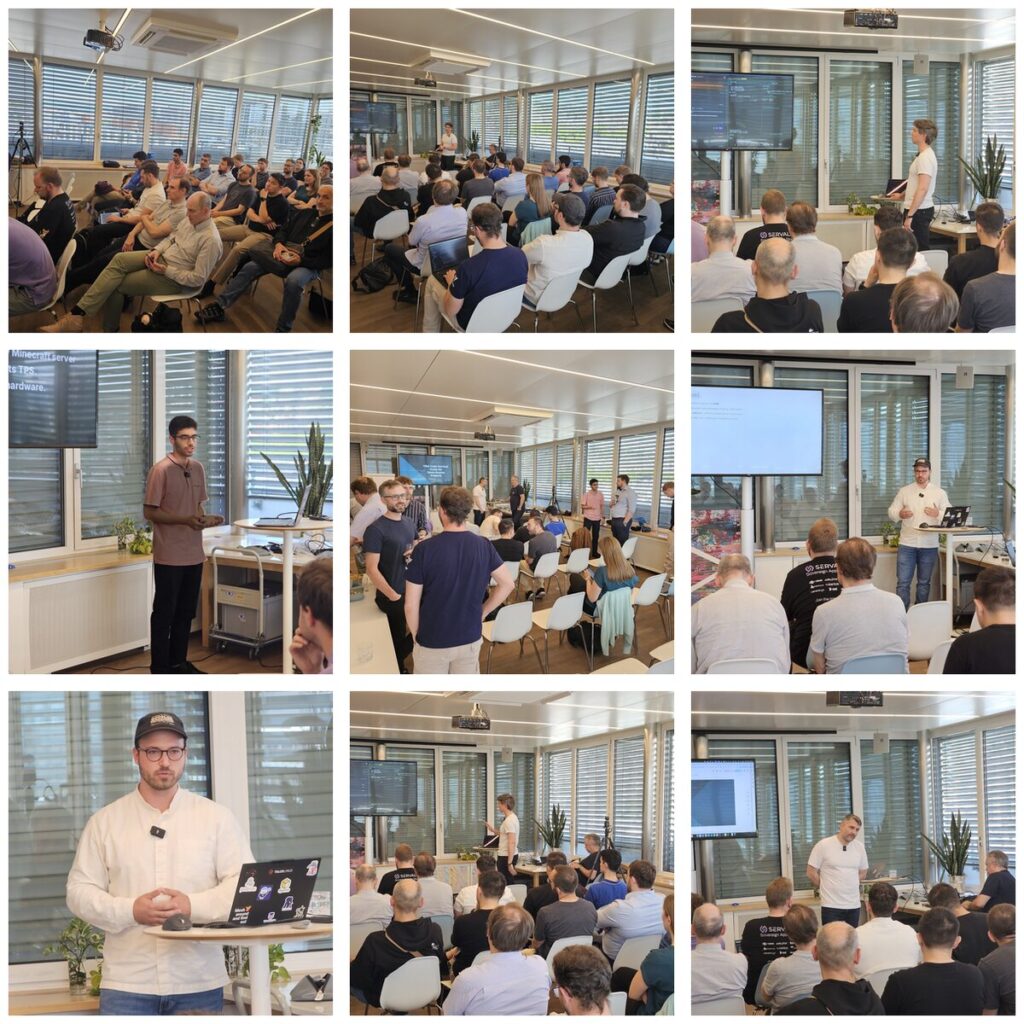
On May 21, 2026 the Cloud Native Computing Switzerland Meetup Community gathered once again at the VSHN Tower in Zürich for an afternoon of technical talks, discussions, and community exchange.
With more than 3’000 members in the meetup group, the CNC Switzerland community continues to bring together platform engineers, DevOps practitioners, architects, and open-source enthusiasts from across the Swiss cloud-native ecosystem.
The May edition featured four talks covering topics from Kubernetes-native deployment orchestration and Rust-based control planes to open-source project governance in the age of AI and cluster autoscaling for non-mainstream clouds.
Opening and community updates
The meetup kicked off with a short welcome and community update by the organizers. As always, the CNC Switzerland meetup follows a few important principles:
- All talks are technical and open-source focused
- No product or sales pitches
- Talks are held in English
- Speakers from diverse backgrounds are strongly encouraged
These principles help keep the meetup a true technical community event rather than a marketing stage.
Kuberik: Safe, hands-off deployments for Kubernetes
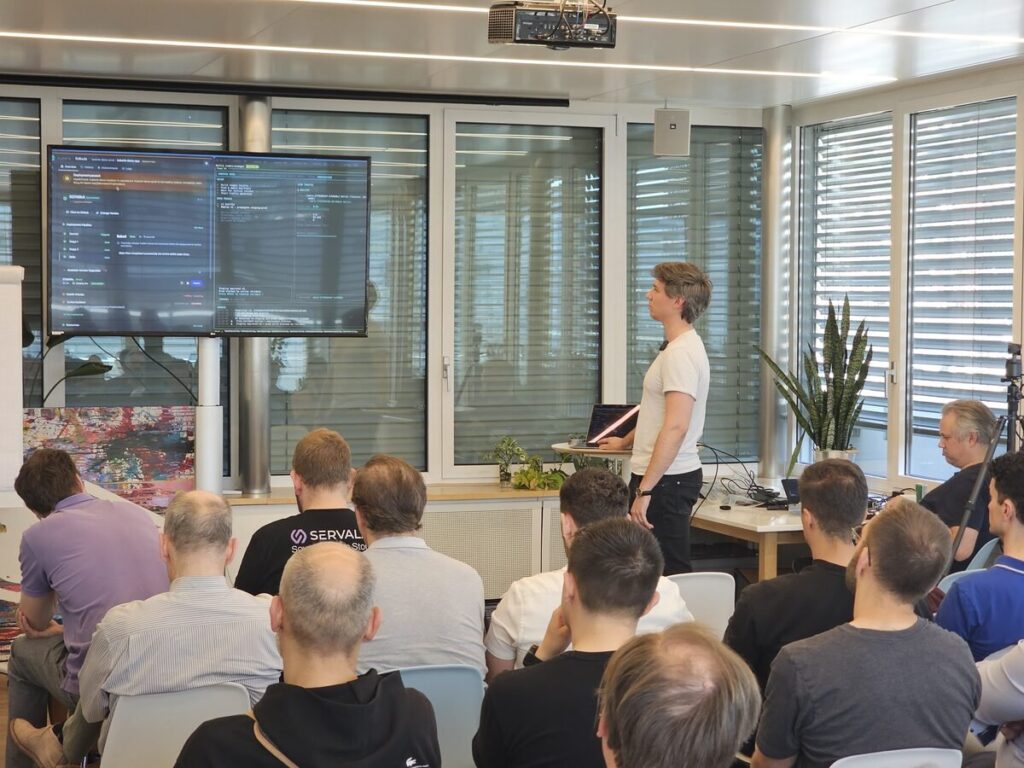
Luka Rumora
Luka Rumora opened the technical programme with a look at what continuous delivery on Kubernetes still gets wrong. Most teams, he argued, end up in one of two places: GitOps setups that stop at applying manifests, or brittle CI pipelines held together with bash and glue. Neither delivers true end-to-end delivery.
The ingredients of a good deployment pipeline are well known – canaries, health checks, smoke tests, promotions, rollback – but Kubernetes lacks a native, reusable way to compose them. Existing tools like Argo Rollouts, Flagger, and Kargo each solve a piece of the puzzle, but not the whole pipeline.
Kuberik aims to fill that gap. It orchestrates the full journey from release to production – detecting, gating, rolling out, verifying, and promoting – using opinionated, pluggable Kubernetes resources that integrate cleanly with existing GitOps setups.
The talk highlighted how a more composable, Kubernetes-native approach to CD can:
- replace step-based pipelines with reusable resources
- bring canaries, verification, and rollback under one model
- integrate with the GitOps tooling teams already run
Download slides
Kubernetes without the operator: A Minecraft panel with Rust and kube-rs
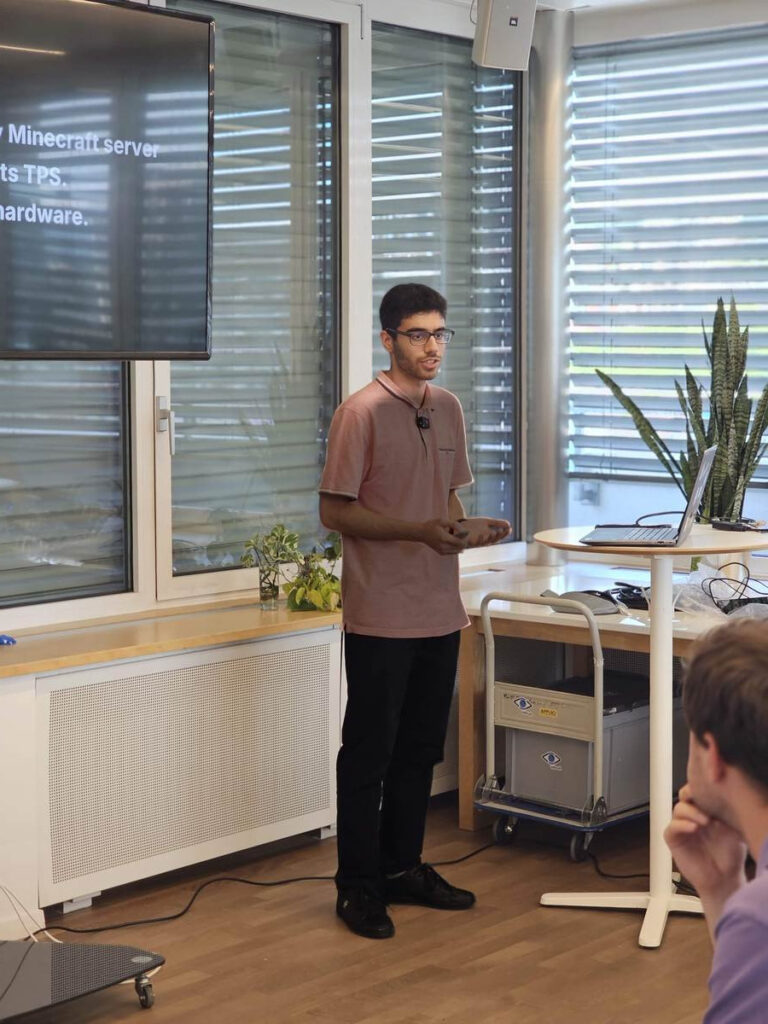
Hadi Cherkaoui – CM Informatik AG
Hadi Cherkaoui, a 17-year-old Plattformentwickler apprentice at CM Informatik AG, brought a refreshingly contrarian take on a pattern many in the room build their daily work around: the operator.
The project Anvil is a Kubernetes-native Minecraft server panel written in Rust. It creates one StatefulSet, PVC, and Service per server through direct kube-rs calls – with no CRD and no controller. The Kubernetes API itself serves as the runtime state store, and every user action is a direct API call.
The argument behind the design was just as interesting as the implementation: the operator pattern is sometimes the wrong tool. Controllers earn their complexity when there is autonomous state to reconcile. When there isn’t, they become ceremony. Anvil is a worked example of the imperative alternative, running on a home lab k0s cluster.
Key takeaways from the talk:
- not every Kubernetes-native application needs a controller
- direct API calls can be a perfectly valid pattern
- Rust and kube-rs make for an ergonomic combination
- homelab projects remain a great place to challenge defaults
Vibe code survival guide for open-source
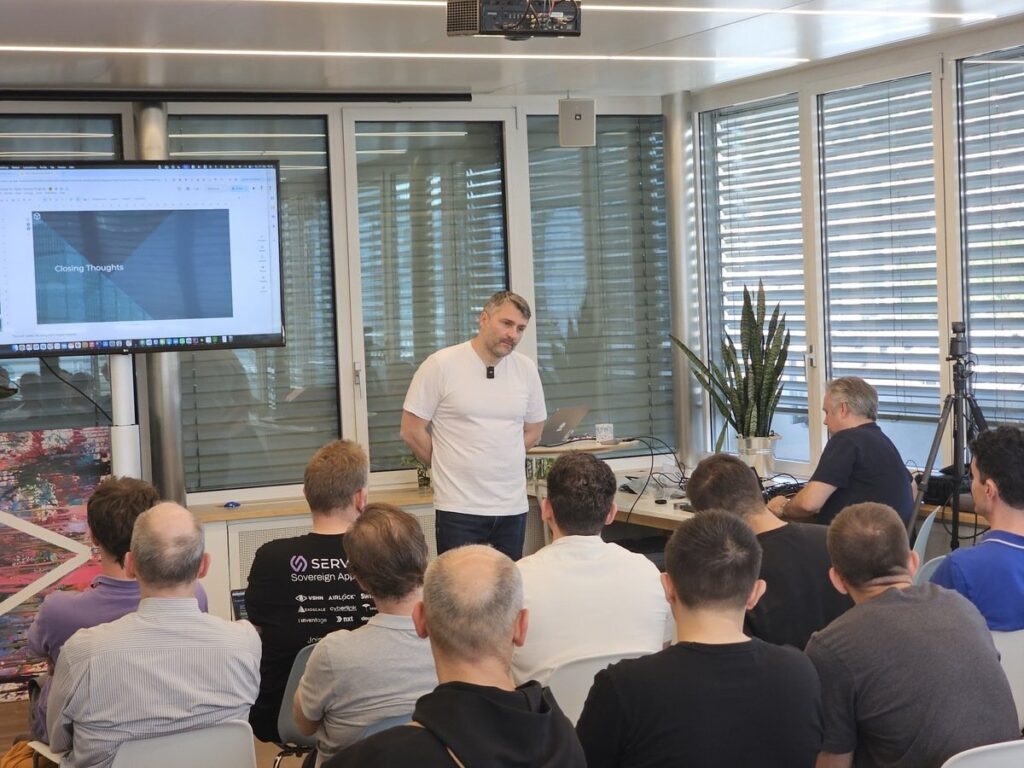
Vadim Bauer – 8gears
Vadim Bauer, maintainer of the CNCF project Harbor, tackled a topic that is rapidly becoming one of the hardest in open source: how to keep a project coherent when AI-assisted contributions arrive faster than maintainers can review them.
Banning AI contributions outright, he argued, isn’t the answer – but neither is letting the volume erode a project’s direction. Drawing on experience from Harbor and Harbor Satellite, Vadim shared the playbook his team is building to stay sane:
- define a clear project direction so contributors, human or AI-assisted, know what is in scope
- set explicit acceptance criteria and guardrails
- use AI on the maintainer side to triage, review, and filter incoming contributions
- decide as a project what is core, what is an extension, and what is out of scope
The session was an honest look at what works, what fails, and how open-source projects can rethink contribution, community, and project boundaries in the age of vibe coding.
Writing a Kubernetes Cluster Autoscaler provider with externalgrpc
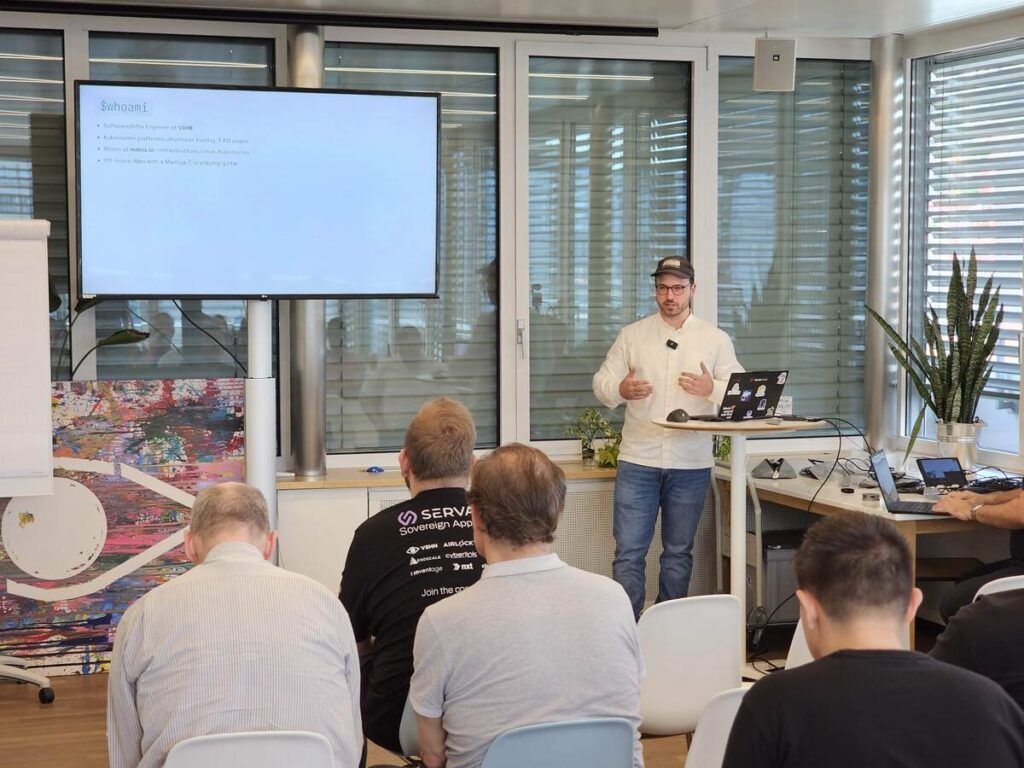
Marco De Luca – VSHN
The final talk closed out the afternoon with a deep technical walkthrough from VSHN’s own Marco De Luca. At mdnix.io, he writes about infrastructure, Linux, Kubernetes, and the things he builds along the way.
The Kubernetes Cluster Autoscaler decides when to scale, but it doesn’t know how to create a VM – that’s the cloud provider’s job. The upstream tree covers mostly the big clouds, which leaves regional and specialised providers out in the cold. With externalgrpc, you can plug virtually any cloud into the autoscaler over gRPC.
Marco walked the audience through:
- how the Cluster Autoscaler works under the hood and where the cloud provider fits in
- implementing an out-of-tree gRPC provider for a Swiss IaaS platform
- the design choices and parts of the contract that really matter
- the gotchas you only discover by reading the autoscaler source
By the end of the talk, attendees had a solid mental model of how to attach autoscaling to any cloud that isn’t on the upstream list – a topic particularly relevant for the Swiss ecosystem, where sovereign and regional cloud providers play an important role.
Download slides
Marco wrote a follow-up blog post about this topic if you want to dive deeper!
Networking and apéro
After the talks, participants stayed for networking and the traditional Swiss meetup apéro, continuing discussions about Kubernetes-native delivery, Rust, open-source governance, and autoscaling.
Meetups like these highlight the strength of the Swiss cloud-native community: engineers from different companies sharing real-world experiences, lessons learned, and open-source solutions.
Watch the talks
The sessions from this meetup will be published on the VSHN TV YouTube channel.
Subscribe to stay notified when the recordings become available.
Join the community
The Cloud Native Computing Switzerland Meetup welcomes engineers, architects, and developers interested in cloud-native technologies and open source.
If you would like to present a talk or share your project or sponsor the meetup location and apéro, submit your proposal here.
We look forward to seeing you at the next CNC meetup in September!

Markus Speth
Marketing, Communications, People