
A day with open source legends: Technical Roadshow MariaDB & VSHN with Michael “Monty” Widenius & Anders Karlsson


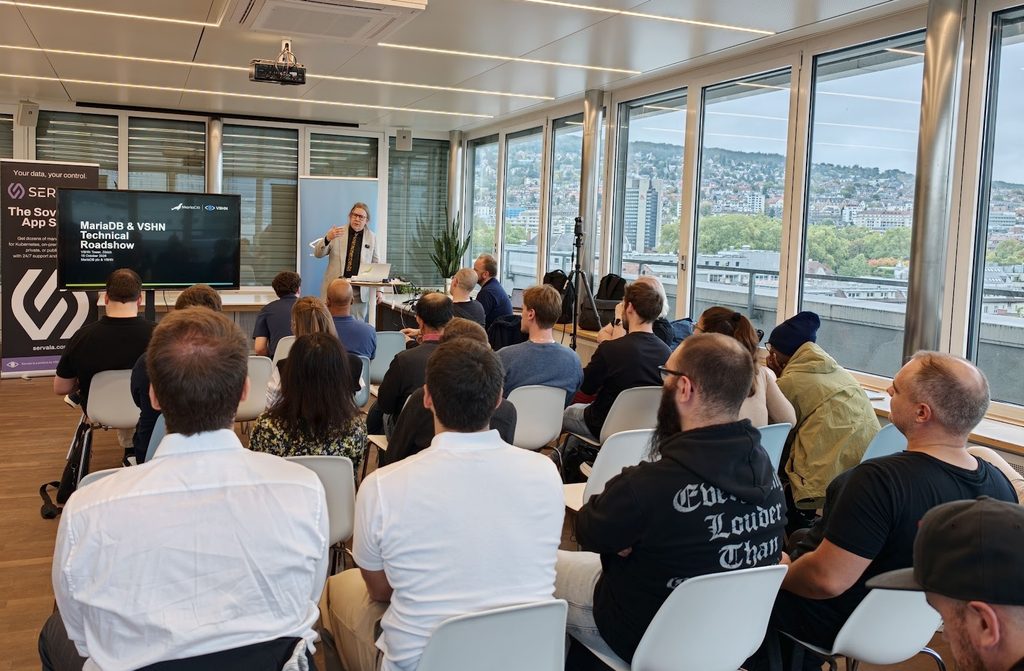
A fully booked VSHN Tower, Monty Widenius telling the MySQL and MariaDB story first-hand, Anders Karlsson with live demos and computer history, and a roadmap so exciting that the whole room pulled out their phones to take pictures. Some events just stick with you – our Technical Roadshow MariaDB & VSHN on Monday, October 19th, 2026 was one of them.
The room was full of people who came with real questions, and our speakers turned three and a half hours of database talk into one of the most entertaining afternoons we’ve had in the VSHN Tower. Almost everyone stayed until the very end – and then stayed a little longer for the apéro. That says more than any feedback form could.
Live demos with “Dr. Database”
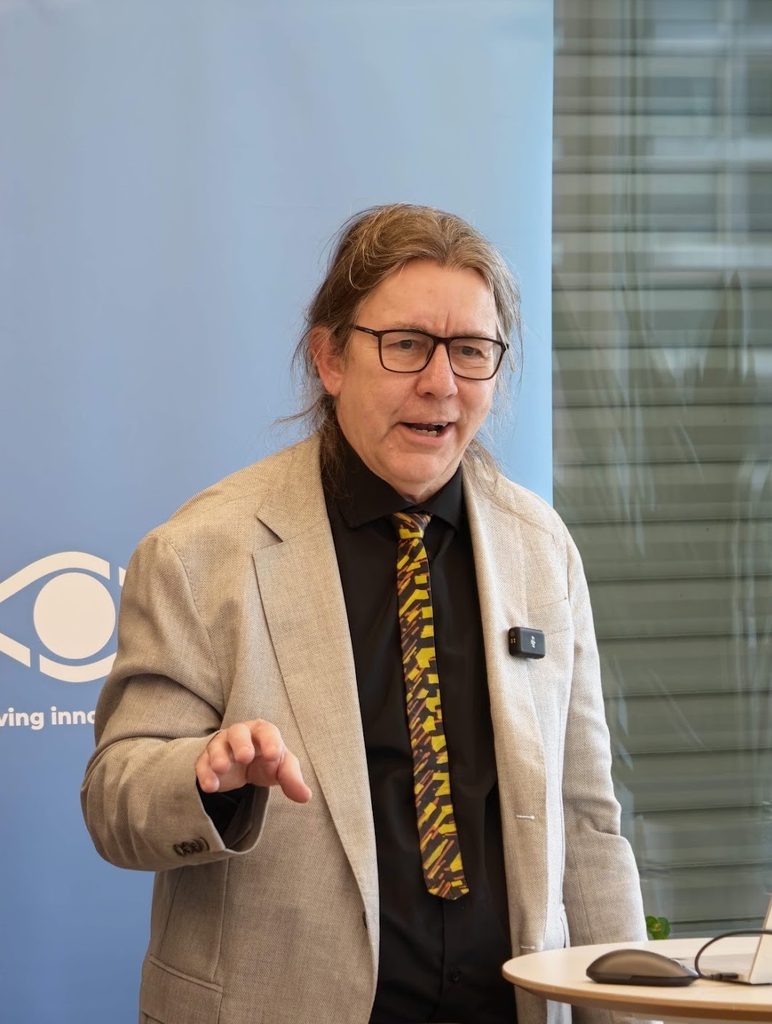
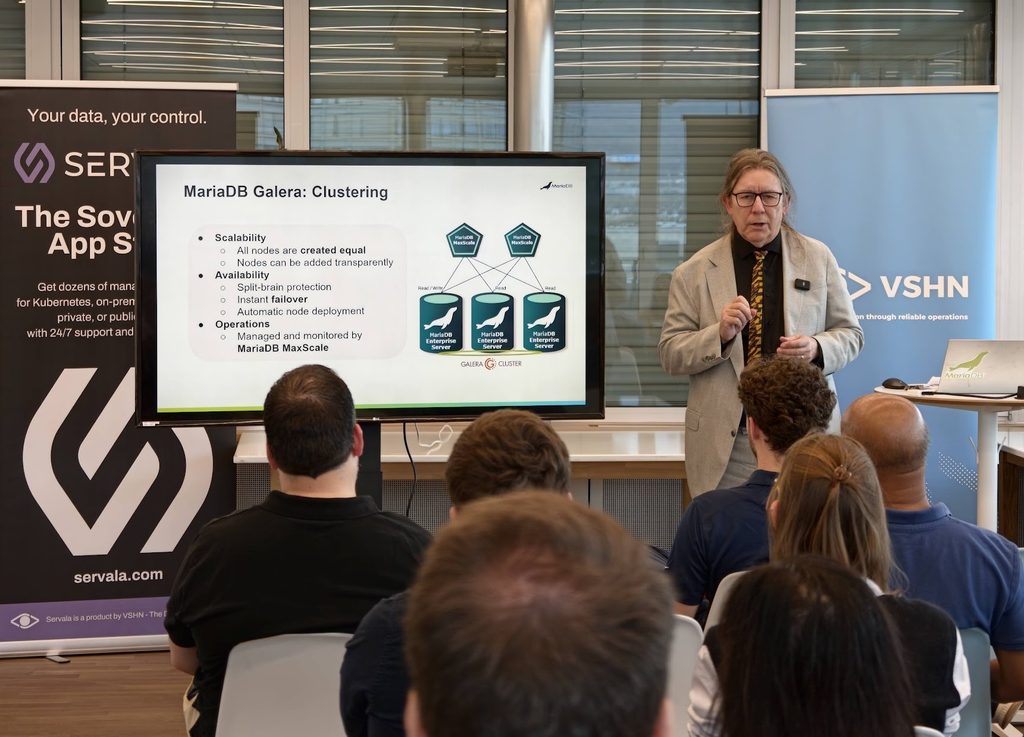
Anders Karlsson, Solutions Engineer at MariaDB and “Dr. Database” to many, kicked things off with two live demos. First up: a MariaDB Galera Cluster with MaxScale in front of it. MaxScale is the SQL-aware proxy that sits between application and database – it splits reads and writes, handles failover transparently and even replays in-flight transactions, so the application doesn’t notice when a node goes down.
In the second demo, Anders showed MariaDB Cloud and the AI side of MariaDB: native vector search, RAG pipelines and MCP for AI agents. Vector search has been built into MariaDB since 11.8 – no extension to install, embeddings stored right next to the rows they describe, and semantic search in plain SQL. The benchmark numbers were impressive too: two to three times the queries per second of pgvector at the same recall, and an index built in under 15 minutes instead of several hours.
Anders is not just a database expert, he’s also deeply fascinated by computer history – and a great storyteller. One of our favorite moments was his story about IBM betting the future of the entire company on a single computer. It worked out – and that’s the only reason we all know the name IBM today. If it hadn’t, IBM would probably be a footnote in a history book.
AI for databases, on Swiss clouds
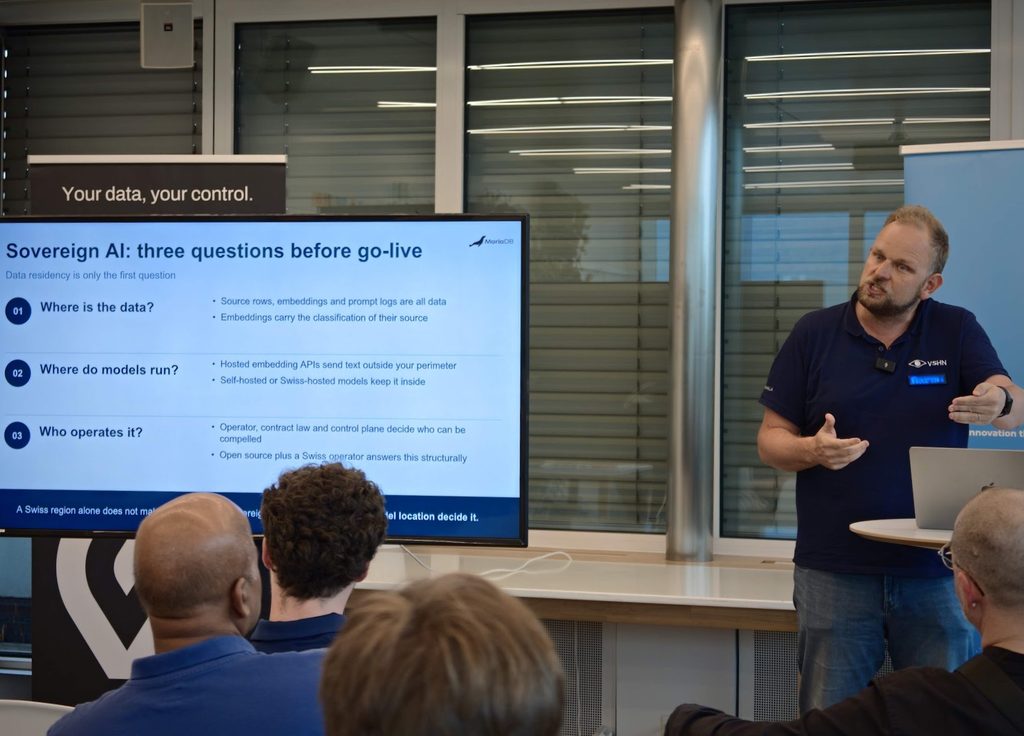
After the break, Aarno Aukia looked at AI from the operator’s perspective. When AI agents start talking to databases, two very different things happen: agents connect to your existing databases with query patterns nobody ever reviewed, and agents start provisioning databases of their own – which nobody ordered, nobody patches and nobody backs up. With VSHN’s Application Catalog, a database is simply a Kubernetes object, so RBAC, quotas and namespaces become the policy – in your cluster, on your Swiss cloud, with your audit trail.
He also raised the question every organization should ask before an AI workload goes live: is it actually sovereign? A Swiss region alone isn’t enough. Where the data lives (including embeddings and prompt logs), where the models run and who operates the whole thing all matter. Open source plus a Swiss operator answers that last question structurally.
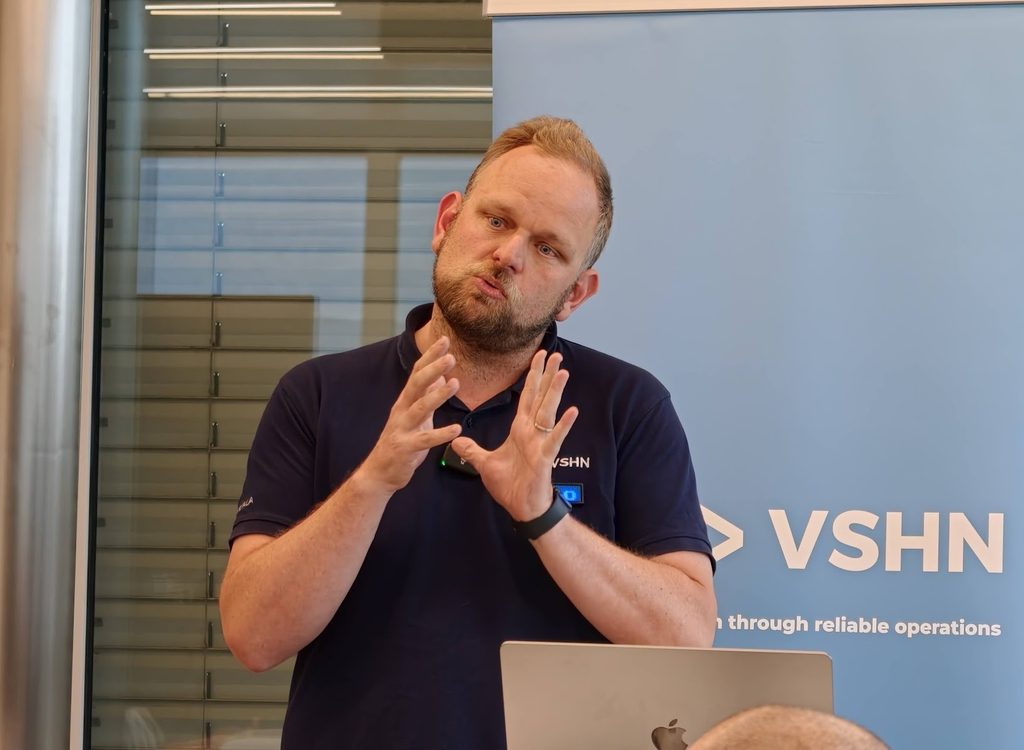
Aarno also showed the three ways to run MariaDB with VSHN: self-service via the Servala sovereign app store, directly from VSHN on APPUiO or VSHN Managed OpenShift, or in your own private cloud or data center. And with VSHN as authorized Swiss reseller, MariaDB Enterprise is available on the same platform – with VSHN’s service level on the platform and MariaDB’s on the database.
The story of MySQL and MariaDB – told by the man who wrote it
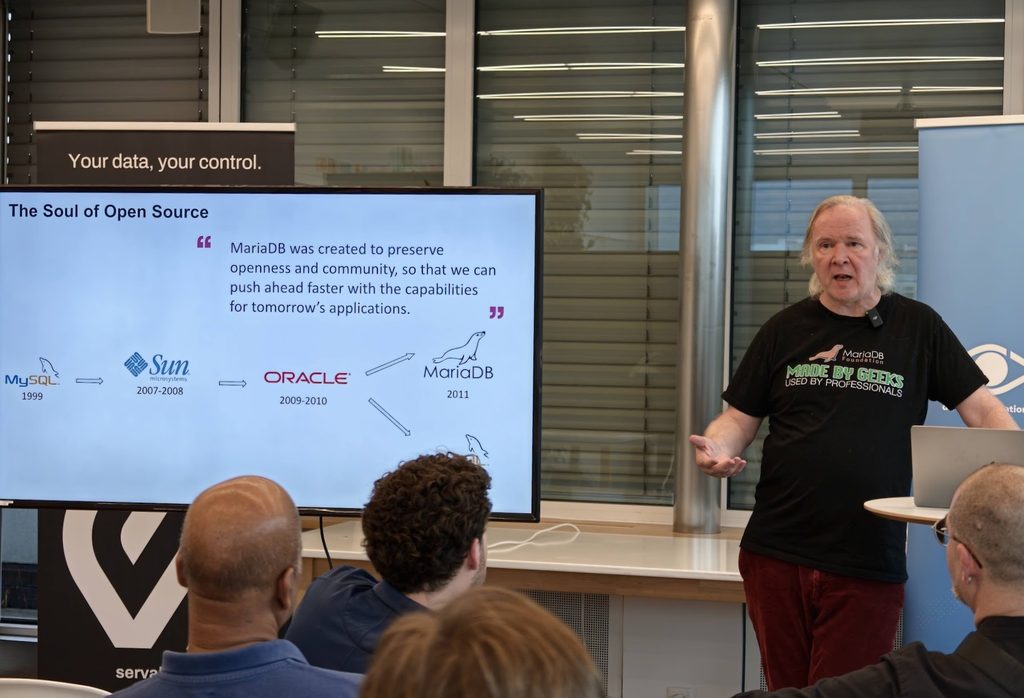
Then came the highlight of the afternoon: 75 minutes with Michael “Monty” Widenius, CTO of MariaDB plc and creator of both MySQL and MariaDB.
Monty took us all the way back to the beginning: how he built MySQL, and how a small Nordic project grew into the “M” in the LAMP stack that powered a huge part of the early web. Then came the sale to Sun Microsystems in 2008. Monty was candid about it: he genuinely believed Sun was the perfect home for MySQL – a company with open source at its core. And if there’s one thing that came through in every minute of his talk, it’s how deeply Monty believes in open source. Not as a business model, but as the right way to build software.
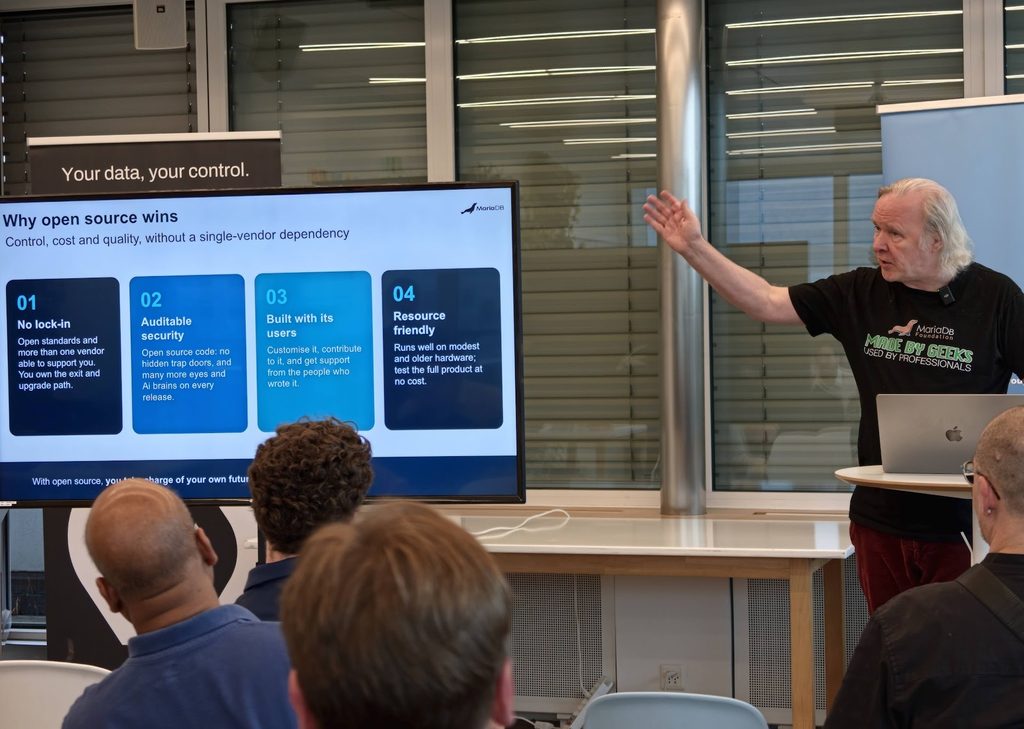
Then Oracle announced it would acquire Sun – and with it, MySQL. For Monty, that changed everything. So he decided to do it again. He forked the code, many of the core MySQL developers followed him, and MariaDB was born – named after his younger daughter Maria, just as MySQL had been named after his daughter My.
Hearing this story first-hand was something special. And Monty tells it with a lot of humor – the room was laughing more than once. Together, Monty and Anders are a fantastic team: the founder’s perspective on one side, Dr. Database on the other.
When the whole room reached for their phones
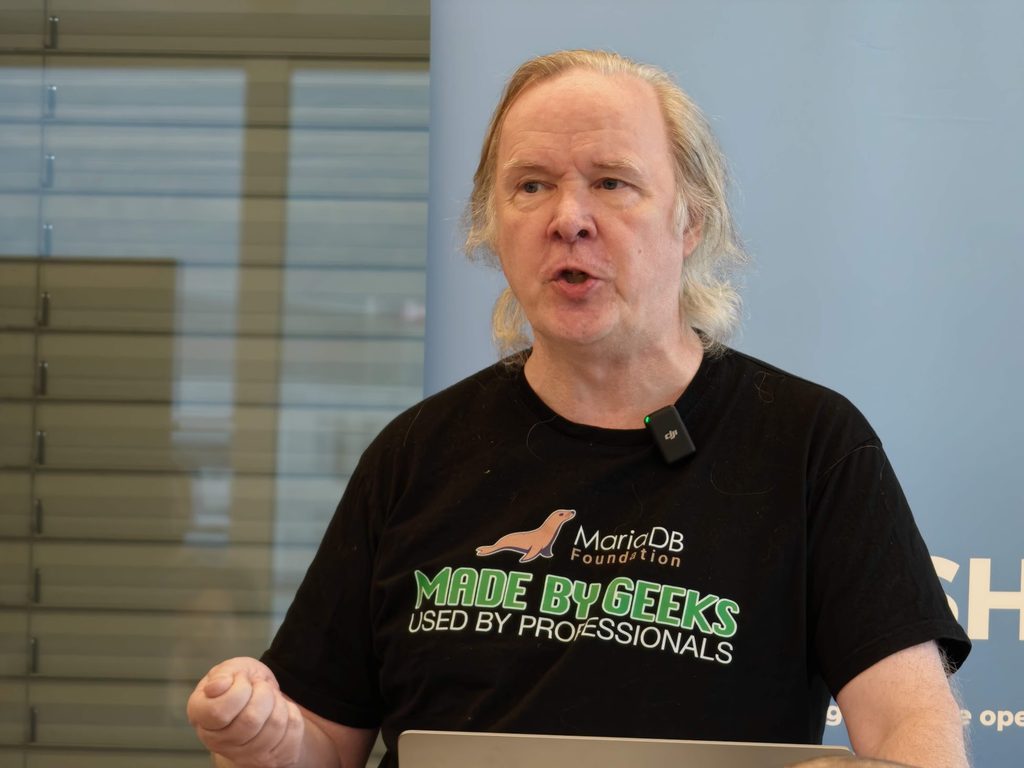
Monty didn’t only look back. When he showed what’s coming in the next MariaDB releases, something happened that one rarely sees at a tech event: the entire room pulled out their smartphones to take pictures of the slides. A few of the things that made people reach for their phones:
- MariaDB 13.0 (GA since September 15th) with a DuckDB storage engine for analytics right inside MariaDB,
RETURNINGfor updates and point-in-time recovery from the redo log - Performance: up to 2.5x OLTP throughput of 11.8 Enterprise compared to 10.6, and 2-4x write throughput on HDD in 12.3
- Plugins installed directly from SQL, from a signed MariaDB Foundation repository – new capabilities without waiting for the next LTS
- MariaDB 14 and beyond: parallel query, materialized views, row-level security, full outer joins and more
Monty also covered migrations: coming from MySQL 5.7 or earlier is in most cases a drop-in replacement, MariaDB replicates to and from MySQL so you can test side by side and keep a way back, and sql_mode=ORACLE runs a lot of PL/SQL as-is.
The future of tech, databases and AI
A thread running through the whole afternoon was the future: of databases, of technology in general and especially of AI. One point that stuck with us: large language models may feel like they came out of nowhere, but the ideas behind them have been around for a long time.
And there was a beautiful connection back to where MariaDB started. “Open weights” are not the same as open source – weights get published, but training data is withheld and licenses come with restrictions. The question that created MariaDB is now being asked again about AI models. Apertus, the open Swiss model from ETH Zurich, EPFL and CSCS, was shown as an example of how it can be done differently.
Lots of questions, and a great apéro
The audience was super engaged, and the open Q&A at the end brought lots of great questions for the MariaDB and VSHN engineers. And as always in the VSHN Tower, the conversations continued over drinks and finger food at the apéro.
Missed it? Slides and recordings
Didn’t get a spot, or want to go through everything again? No need to squint at your smartphone photos – Download the slides of the whole afternoon. The recordings of the talks will be online soon on vshn.tv – we’ll let you know as soon as they’re live.
Thank you
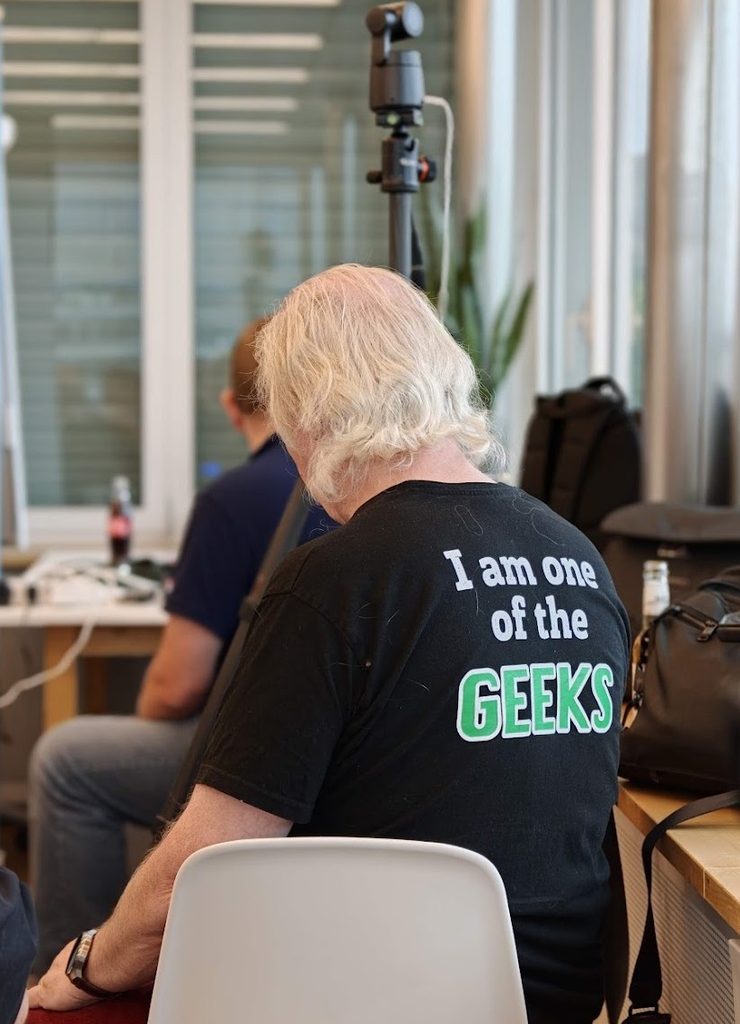
A huge thank you to everyone at MariaDB who made this happen – especially Monty, Anders and Jonas Schwegler for coming to Zürich and sharing so much of their time, knowledge and stories with us. Thanks to Aarno, Tania and all the VSHNeers who helped on site. And above all: thank you to everyone who came and spent the afternoon with us. You made it what it was.
Continue the conversation: Executive Breakfast Roundtable on November 17th
If you were there on Monday, you’ve seen what MariaDB can do technically. The next step is the business conversation – and that’s where your boss or manager comes in.
On November 17th, we’re hosting the Executive Breakfast Roundtable MariaDB & VSHN, again in the VSHN Tower. Over breakfast, we’ll talk about how MariaDB can help your organization and how VSHN runs it for you – sovereign, in Switzerland, fully managed. With a customer success story and an open roundtable with plenty of room for questions.
So here’s our ask: tell your boss about it. Forward them this post. Seats are limited to 20.
Register here: https://luma.com/2nsyt1ud
Can’t wait that long? Get a free estate review of your MariaDB or MySQL setup, check out managed-mariadb.ch or try Managed MariaDB on Servala.
See you in the VSHN Tower!

Markus Speth
Marketing, Communications, People