
VSHN at TalosCon 2026: Why we started all over


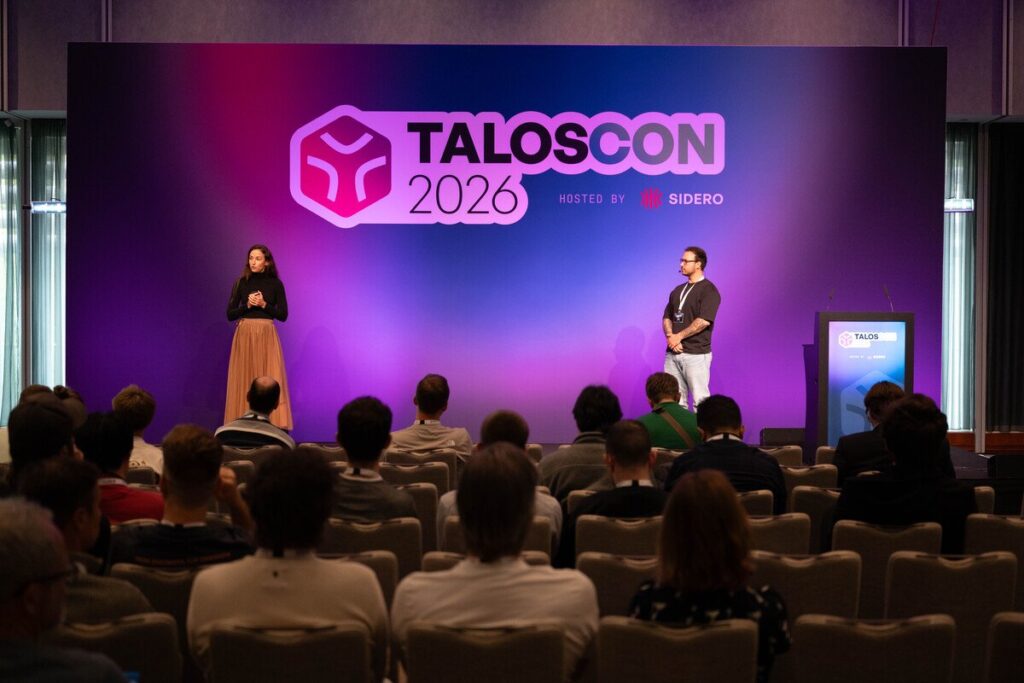
On October 15th and 16th, more than 400 people working with Talos Linux came together at Hotel Okura in Amsterdam for TalosCon 2026. Over two days, more than 30 speakers took the stage with live demos, real-world stories and plenty of ideas worth trying at home – or in production.
Big news from Sidero Labs
Sidero Labs used the stage for a series of announcements. The opening keynote included a clear commitment: Talos Linux, including Talos Hypervisor and its Kubernetes and container functionality, stays free and open source under MPL 2.0. The team also presented Talos 1.14, the largest Talos release so far, and gave Talos Hypervisor its first public live demo, running virtual machines directly on Talos without Kubernetes on the host. For all the details, check out the official TalosCon recap by Sidero Labs.
A conference built around its community
Talos remains dedicated to its community, and a large part of TalosCon was about real-world use cases, open-source tooling and homelab setups. One of the tools that got its moment on stage was TOPF, a tool for migrating and managing Talos Linux clusters. TOPF is developed and open-sourced by PostFinance – and we use it at VSHN too.
One recurring story I heard among attendees stood out: Talos often found its way into production because an engineer had a great experience with it in their homelab first. To be honest, that’s also how Talos came onto our radar.
VSHN on the main stage
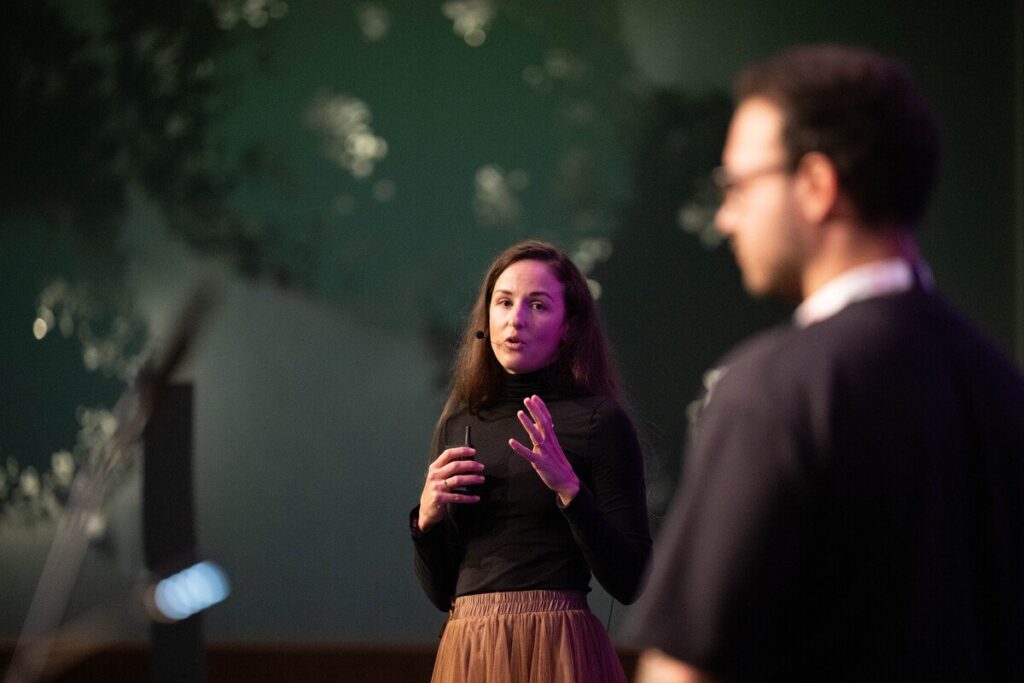
My colleague Marco De Luca and I had the honour of giving the closing talk on the main stage: “How to Convince Your Board to Drop Everything and Start All Over”. We shared how we built a new Talos-based managed platform at VSHN – and what it took to make the case for it. The full slide deck is embedded at the end of this post.
OpenShift got us this far
The story starts with VSHN Managed OpenShift, which runs a large part of our customer platforms today. OpenShift was the right call, and it still is for many customers: security and RBAC defaults that customers trust out of the box, a support relationship regulated customers can point to in an audit, and compliance certifications already mapped to the platform.
But it also comes at a cost: licensing per node, regardless of how the node is used, upgrade windows measured in weeks rather than hours, and a lot of weight that customers outside regulated industries never asked for.
Building a sovereign cloud with Servala
In parallel, we set out to build a sovereign cloud together with an ecosystem of specialists: Servala. The goal is infrastructure independence, without reinventing everything from scratch – customers get sovereignty by default, and providers connect through shared, interoperable APIs.
Building it meant making a series of bets, and each one came with its own catch. Gateway API worked well with shared gateways and port allocation per instance, but every cloud’s load balancer behaves a little differently. OpenTofu did its job with a dedicated Talos module per cloud provider that can be reused across many environments – yet it stops at the VM and knows nothing about Talos itself. Upgrades are handled by Tuppr, which runs both Talos and Kubernetes upgrades, although we had to add custom health checks. Cluster access works without a public Kubernetes API and without a bastion host, with access going through the Servala Portal instead. And for configuration, TOPF provides one config blueprint per cloud. The catch there? None – we simply love TOPF.
Or, as we put it in the talk: Talos was the easy part. The hard part was everything around it.
A parallel ask: something lighter
While Servala was taking shape, a different question kept coming up. Customers outside regulated industries wanted something lighter and faster to ship. They didn’t need OpenShift’s weight, and they didn’t need Servala’s sovereignty guarantees either. Regulated customers need compliance, an audit trail and high availability – OpenShift is built for exactly that. Everyone else needs speed, low cost and simplicity – and that was a platform not yet in our catalog.
The answer is VSHN Managed Talos: the same operations as our OpenShift fleet, for customers who need something smaller and lighter.
And the platform is only half the picture. With the VSHN Application Catalog (AppCat), we also provide fully managed services such as PostgreSQL, Redis and Keycloak. They connect to Kubernetes and OpenShift environments and can be ordered via Kubernetes resources, which makes them a natural fit for GitOps and CI/CD workflows.
Why Talos
Before landing on Talos, we took a close look at the alternatives. Managed Kubernetes from the cloud providers was ruled out because not every partner provider offers one, and operating them comes with subtle differences. OpenShift, our enterprise platform, would have been more than this segment needs. k3s is a great option, but it would have meant managing an operating system underneath. Rancher with RKE2 brought a complex management layer, and with Flatcar, Kubernetes would still have to be installed on top – and SSH would stay.
Talos Linux checked the boxes that mattered: immutable, managed via API, no SSH surface, and the same base on every cloud.
We wrote the decision down as an architecture decision record, originally for Servala and then reused for VSHN Managed Talos: run Talos Linux on plain VMs at every provider and reuse the same tooling and operational patterns. The trade-off is that we run more of the infrastructure ourselves – in return, we gain control, consistency, cost predictability and a smaller attack surface.
Lessons learned
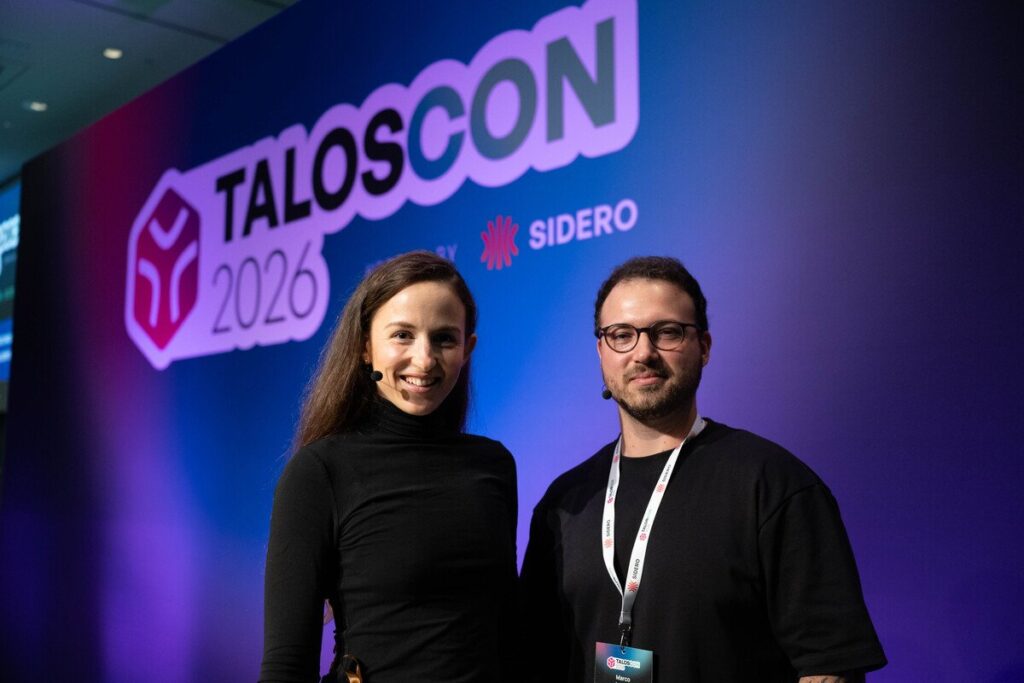
Marco and I closed with three things we’d tell our past selves. First, serve different needs with different products – one platform doesn’t have to fit every customer. Second, write the decision down, including what you said no to. And third, take a leap, because you never know until you try.
It’s not about choosing one distribution over another. It’s about the customer and matching their ever-evolving use case.
The recording of the talk
The recording of our talk will be available soon on the Sidero Labs YouTube channel. Until then, and if you want to dig deeper into how we run Talos, including the architecture decisions behind it, head over to kb.vshn.ch/talos.
A big thank you to Sidero Labs and everyone who made TalosCon 2026 such an inspiring event. See you at the next one!

Liene Luksika
Product Manager