KCD Suisse Romande 2025 at CERN – Community, Cloud Native, and Two Great Days in Geneva
5. Dec 2025
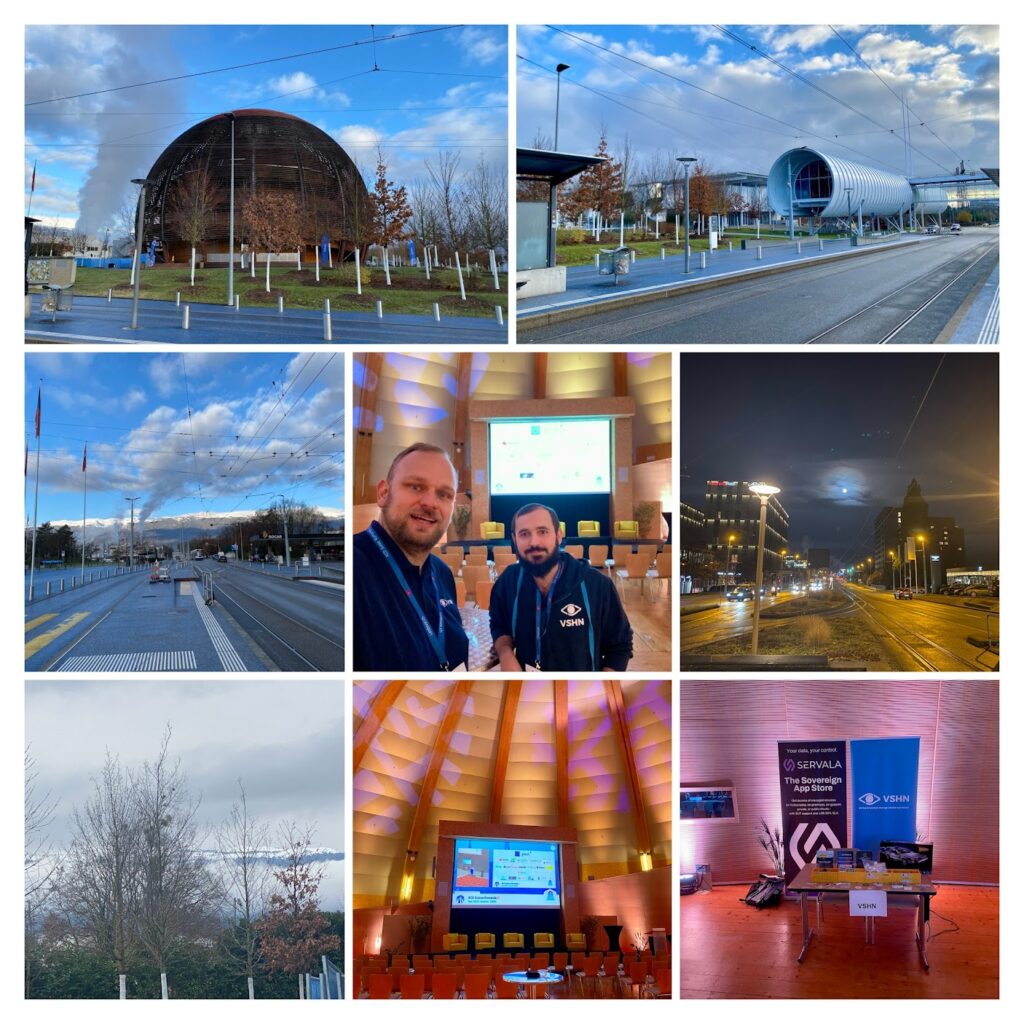
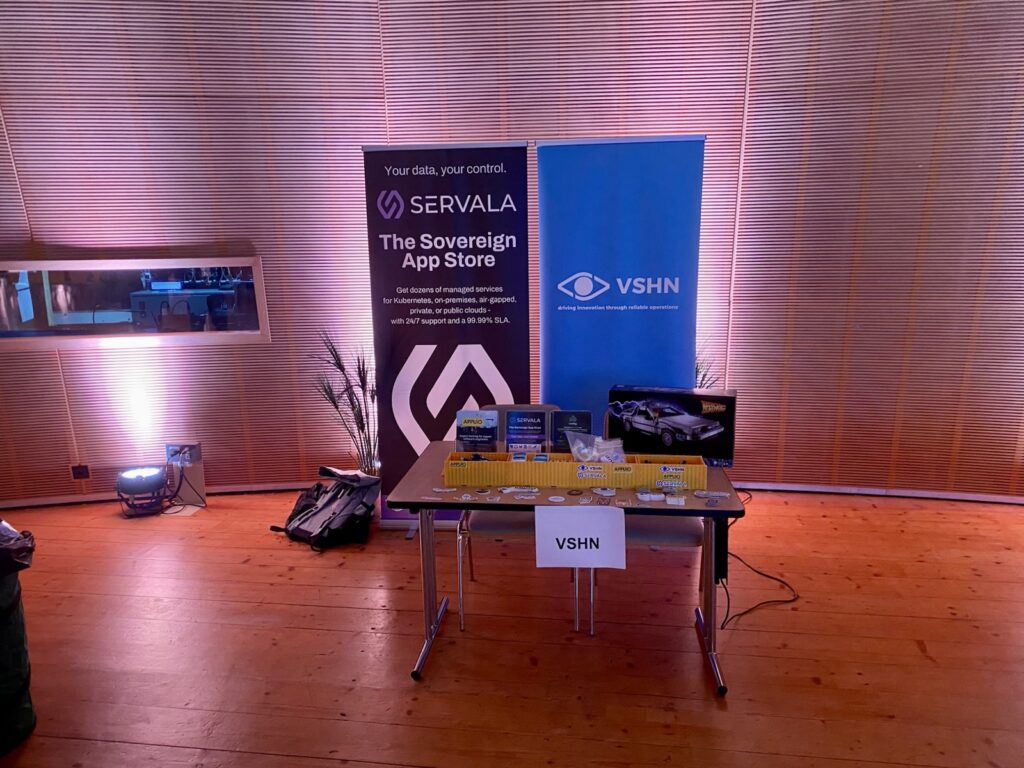
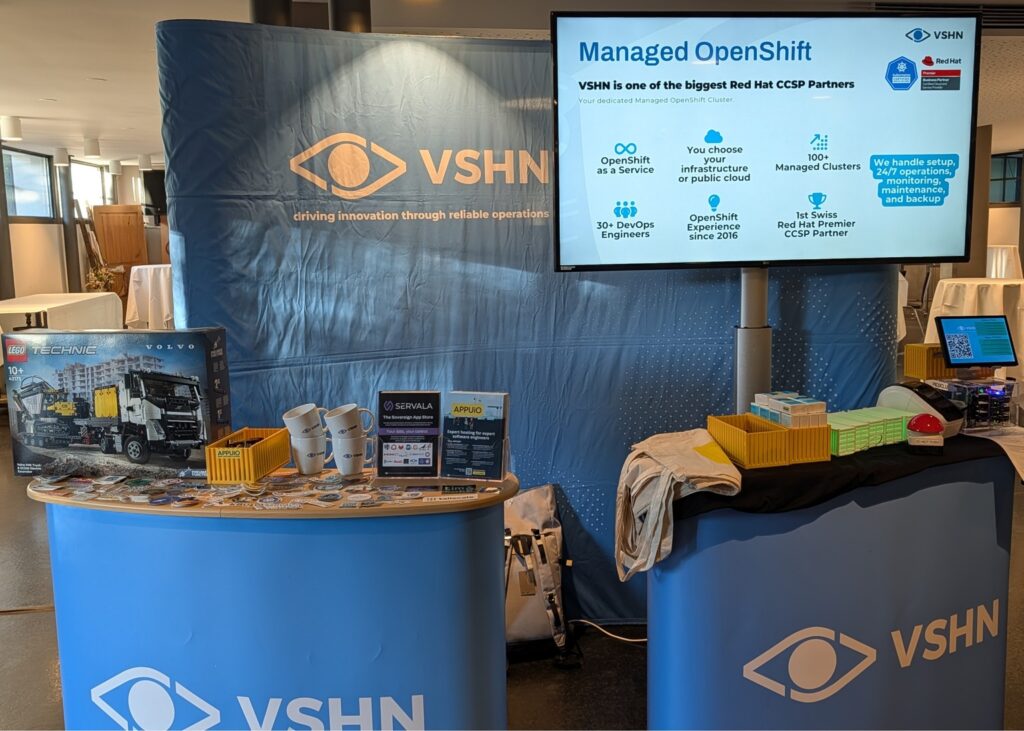
The first Kubernetes Community Days Suisse Romande took place on December 4-5, 2025 – and what a venue: CERN Science Gateway in Geneva. A place where science meets innovation made the perfect backdrop for the local cloud native community to come together, share ideas, learn, and collaborate. VSHN was proud to be Silver Sponsor of the KCD.
Around 300 participants from Switzerland and beyond gathered for two days filled with workshops, sessions, hallway talks, and a whole lot of Kubernetes energy. The atmosphere was fantastic – friendly, curious, and buzzing with exchange. Exactly what KCDs should be about.
Workshops, Talks and Great People
Day 1 kicked off with three parallel hands-on workshops, followed by CERN and LHC tours for those lucky enough to grab a spot. The combination of technology and the magic of CERN definitely created excitement early on.
Day 2 continued with even more workshops – and later the stage belonged to the speakers. Nearly 50 sessions touched on Kubernetes, platform engineering, open source tooling, DevOps culture, security, AI topics and more. Talks were held in French and English, highlighting the multilingual and open nature of the Swiss tech scene.
Among the featured speakers were well-known community voices including:
Jessie Frazelle – Zoo.dev
Sarah Novotny – Kosai / Operant AI
Mauricio Salatino – LearnK8s
Aurélie Vache – OVHcloud
Engin Diri – Pulumi
Shérine Khoury – Red Hat
Luc Juggery – Exoscale
Kasper Nissen – Lunar
But beyond names and sessions, what stood out most were conversations in the corridors, shared learnings, and genuine collaboration. Networking at events like this is where ideas turn into projects.
Why Events like KCD Matter
KCDs are community-driven by design – organized for practitioners and by practitioners, supported by CNCF. They create a space where we meet as peers, share solutions, discuss challenges, and grow together. For us at VSHN, this is exactly the spirit we believe in.
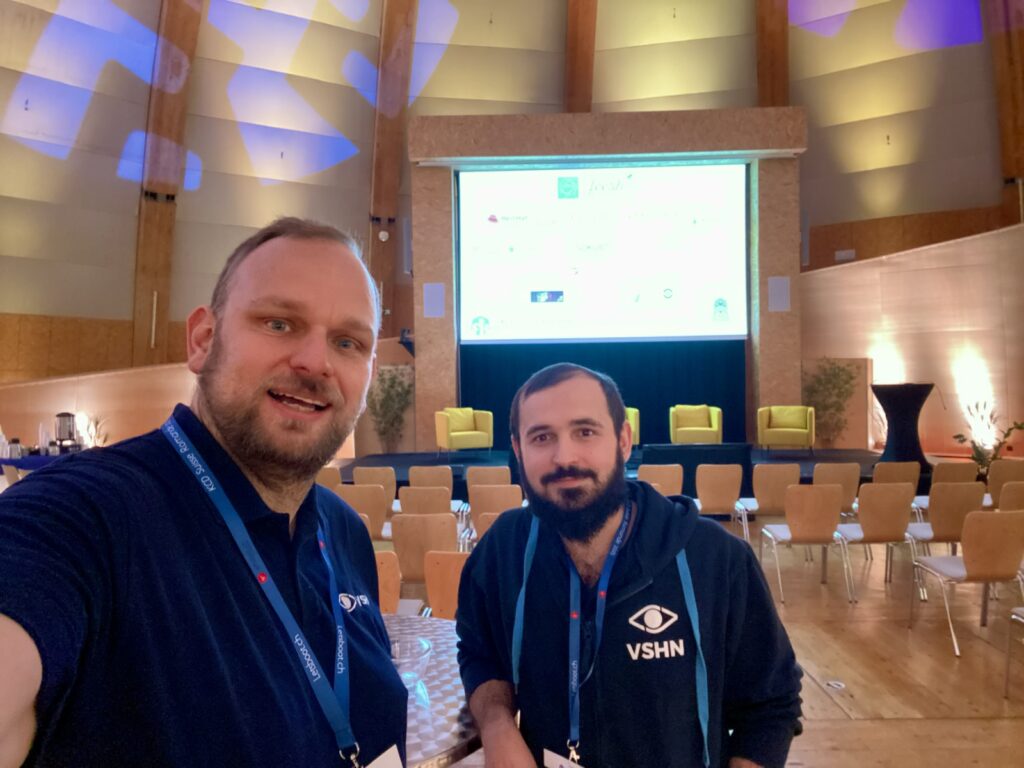
Cloud native is evolving fast – platforms, automation, developer experience, sovereignty, and AI are changing how we build and operate software. Meeting the community in person helps everyone stay ahead and shape what’s next. Aarno and Pierre were very happy to meet so many interested people.
See You Again in 2026
A huge thank you to the Cloud Native Suisse Romande organizers, all speakers, sponsors, and every participant we met at the booth. We loved the conversations, the exchange, and the energy inside CERN.
Already looking forward to next year!
📬 Want to continue the conversation about Kubernetes, OpenShift, or Servala? Reach out – we’re happy to connect.
Coming Full Circle: Reconnecting with Canada at the Invest in Canada Roadshow
3. Dec 2025
Being back at the Invest in Canada Roadshow today in Zurich feels a bit like coming full circle for us. Since 2019, the Canadian Embassy has been a constant and trusted supporter of our journey. When we first started exploring the idea of expanding beyond Switzerland, they were one of our very first points of contact – and an invaluable resource in helping us understand what it really means to build a company in Canada.
Our motivation back then was simple: we wanted to offer true follow-the-sun support to our customers. Night shifts are no fun for anyone, and we believed we could do better. That vision led us to Vancouver, British Columbia, where we decided to establish our Canadian subsidiary. The Embassy supported us with guidance, connections, and practical help in navigating an unfamiliar system – something we are still very grateful for today.
Three years ago, we officially launched VSHN Canada. For us, this was much more than just an investment – it was a big personal and entrepreneurial step into a new market, a new culture, and a new way of working globally. Since then, international expansion has become a natural part of our story, and our customers benefit directly from extended support coverage and a stronger global
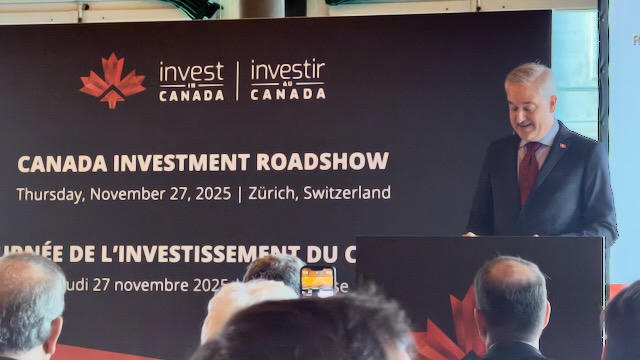
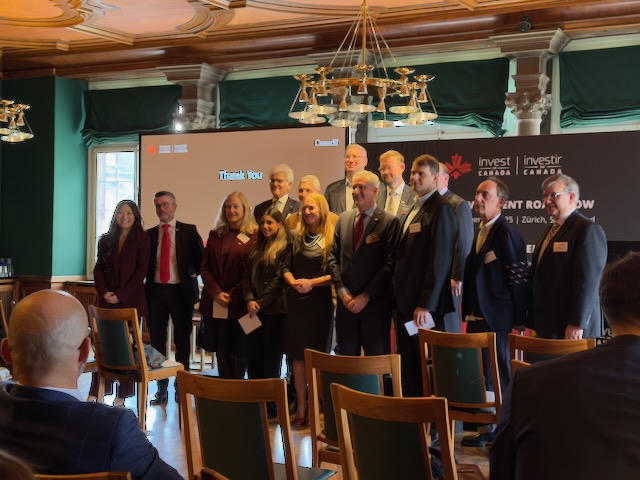
Today’s event at the Canada Investment Roadshow in Zurich was a great reminder of why we chose this path. The panel discussions on legal challenges, success factors, and real-life “war stories” from other companies were insightful and reassuring at the same time. Just as valuable were the many personal conversations and new connections with people who are genuinely passionate about helping companies grow
The Canada Investment Roadshow – organised by the Trade Commissioner Service – brings together Canadian government representatives, regional economic-development agencies, and interested European companies for panel discussions, sector briefings, and curated B2B-matchmaking opportunities. At the Zurich stop, participants explored potential across sectors such as advanced manufacturing, cleantech, digital technologies and life sciences – and had the chance to connect directly with Canadian cities and provinces keen to forge international partnerships.
VSHN Canada – The DevOps Company Inc. is a wholly owned subsidiary of VSHN AG. We started operations three and a half years ago with a clear mission: to provide our customers with outstanding services and truly global support – around the clock.
Markus Speth
Marketing, Communications, People
Latest news
Events
General
Sovereignty
Navigating Open Source at Scale: Why Swiss Organisations Need a Sovereign Database Strategy
DINAcon 2025: Sovereignty Needs Collaboration, Courage, and Real Openness
21. Nov 2025
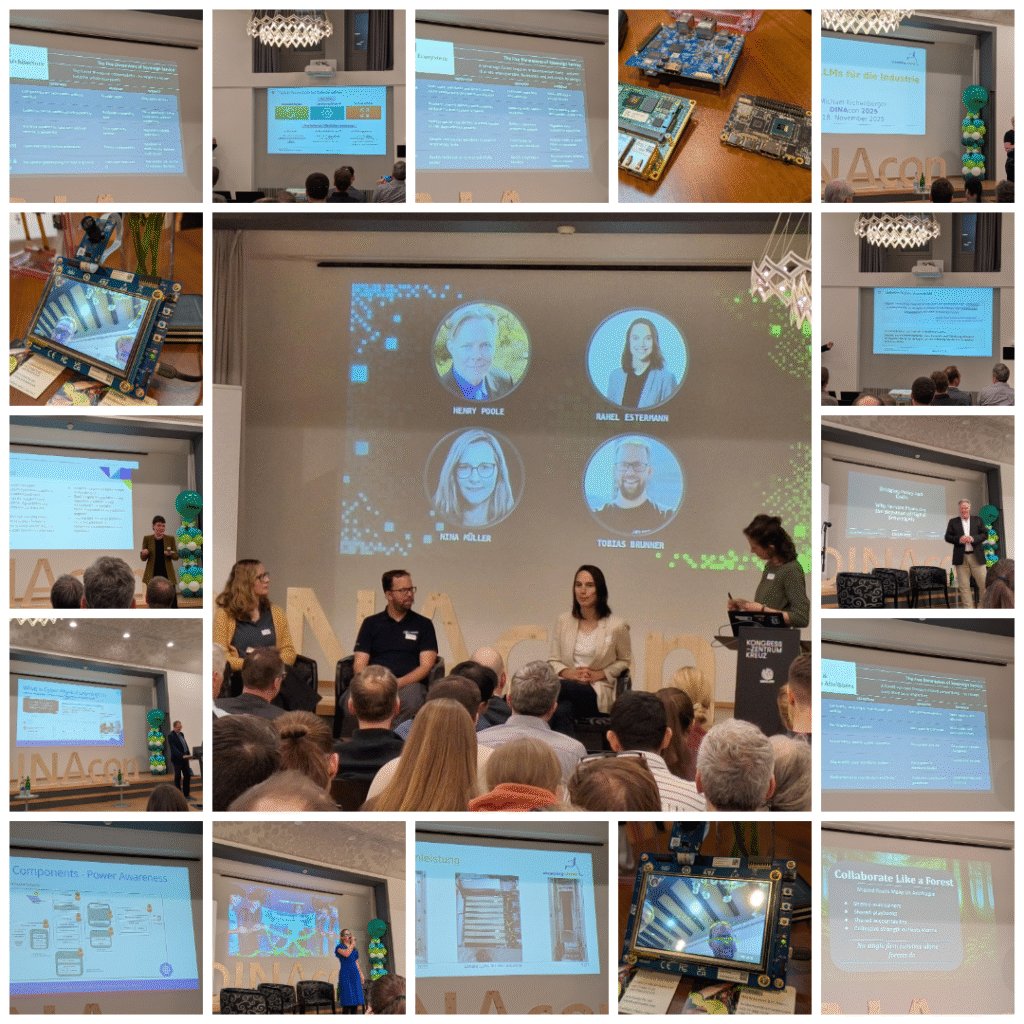
DINAcon 2025 took place on Tuesday, November 18 at the Kongresszentrum Kreuz in Bern, and VSHN was right in the middle of it. Tobias Brunner was invited as a panelist, joining Henry Poole, Nina Müller from Nextcloud, and Rahel Estermann to discuss digital sovereignty. The message was clear: we are moving in the right direction, but we are far from finished.
And the atmosphere? A mix of curiosity, realism, and momentum.
AI is everywhere. But it is not sovereign yet.
A dominant theme across the conference was Artificial Intelligence. Nearly every session, conversation, and coffee break circled back to it. The key realization: AI is already here, but it is not yet sovereign.
One highlight was the demo of MeLODy – Der intelligente Linked Open Data Chatbot, developed for public administration in the City of Zurich and the Canton of St. Gallen. Here, AI is not only being discussed in theory, but actively used in real applications. That is encouraging and shows that progress is not just conceptual, but operational.
Switzerland already has strong foundations: law, infrastructure, and community
There was also positive news. Tobias pointed out during the panel that Switzerland already has several important building blocks in place.
EMBAG creates clear legal requirements for the use of open source in public administration
GPU capacity for sovereign AI is already available, for example at Stepping Stone, and providers like Exoscale and Cloudscale also offer AI compute
With Apertus, a Swiss LLM is emerging. It is not finished yet and not on the level of large foundation models, but it is a start and publicly testable at Public AI Inference Utility
So the foundation exists. Now we need to build on it together.
Ecosystems are forming. Companies are investing.
Another key takeaway from DINAcon was the momentum in the European tech landscape.
The Heinlein Group is investing heavily in Open Cloud, a fork of ownCloud and direct competitor to Nextcloud, and is expanding its presence with a new office in Switzerland
Solche Entwicklungen zeigen, dass Open Source längst kein Nice-to-have mehr ist, sondern StThese developments show that open source is no longer a nice-to-have. It has become a strategic differentiator.
Panel insights from Tobias Brunner
During the panel, Tobias addressed three key questions.
What was the worst misuse of the term digital sovereignty?
Tobias began with a clear definition of sovereignty, summarised in three pillars:
Confidentiality: Who has access to my data and under which jurisdiction?
Availability: Do I always have access or is there a technical or legal kill switch?
Control: Am I free to move or export my data, or am I locked into proprietary licenses, APIs, or opaque operating models?
Many providers today fulfil only one or two of these pillars, yet still label their solutions as sovereign. Unfortunately, many such offerings already exist and there is even a name for it: Sovereignty Washing.
Ein Beispiel, das er nannte: Ein Anbieter betreibt Infrastruktur in einem Schweizer Rechenzentrum und Tobias shared an example: a provider runs infrastructure in a Swiss data center and advertises Swiss hosting and data portability. Yet the provider is subject to a foreign jurisdiction with extraterritorial access laws. The result: the solution looks sovereign on the surface, but underneath it is not. These grey areas make decision-making extremely difficult for organisations striving for sovereignty.
How can Switzerland take a sovereign role in global software supply chains?
His answer was clear: not by doing everything alone, but by working together. Tobias stressed that historically, Switzerland has always found ways to be part of global value chains, even when production physically happened elsewhere. The same applies to software. To achieve this, three things are needed:
open standards instead of proprietary protocols
open source software as a shared foundation
shared ecosystems and collaboration between cloud providers, developers, and operators
For years, hyperscalers have repeated the narrative that data must move to them. Today, this has led to dangerous centralisation of power and infrastructure. Tobias flipped the logic: why not bring the services to the data?
This idea was the spark for Servala – The Sovereign App Store. An open platform that connects cloud service providers, software vendors, and enterprise clouds while giving customers true freedom of choice.
At the end of the discussion, the panelists were asked for their call to action for organisations and public institutions.
Tobias closed with a simple but clear message:
Understand the value of sovereign software services for your organisation and start using them. It is never too late to become sovereign.
Conclusion
DINAcon 2025 made one thing clear: we have the expertise, the community, the infrastructure, and the legal frameworks. But we need more courage and more collaboration to achieve real digital sovereignty.
Not just marketing terms. Not just buzzwords. But real control over data, infrastructure, and value creation.
At VSHN, we will continue to drive this vision forward. And we look forward to building this sovereign future together.
If you would like to continue the discussion or have questions, get in touch. We are happy to continue the conversation.
Tobias Brunner
Tobias Brunner is working since over 20 years in IT and more than 15 years with Internet technology. New technology has to be tried and written about.
Latest news
Events
General
Sovereignty
Navigating Open Source at Scale: Why Swiss Organisations Need a Sovereign Database Strategy
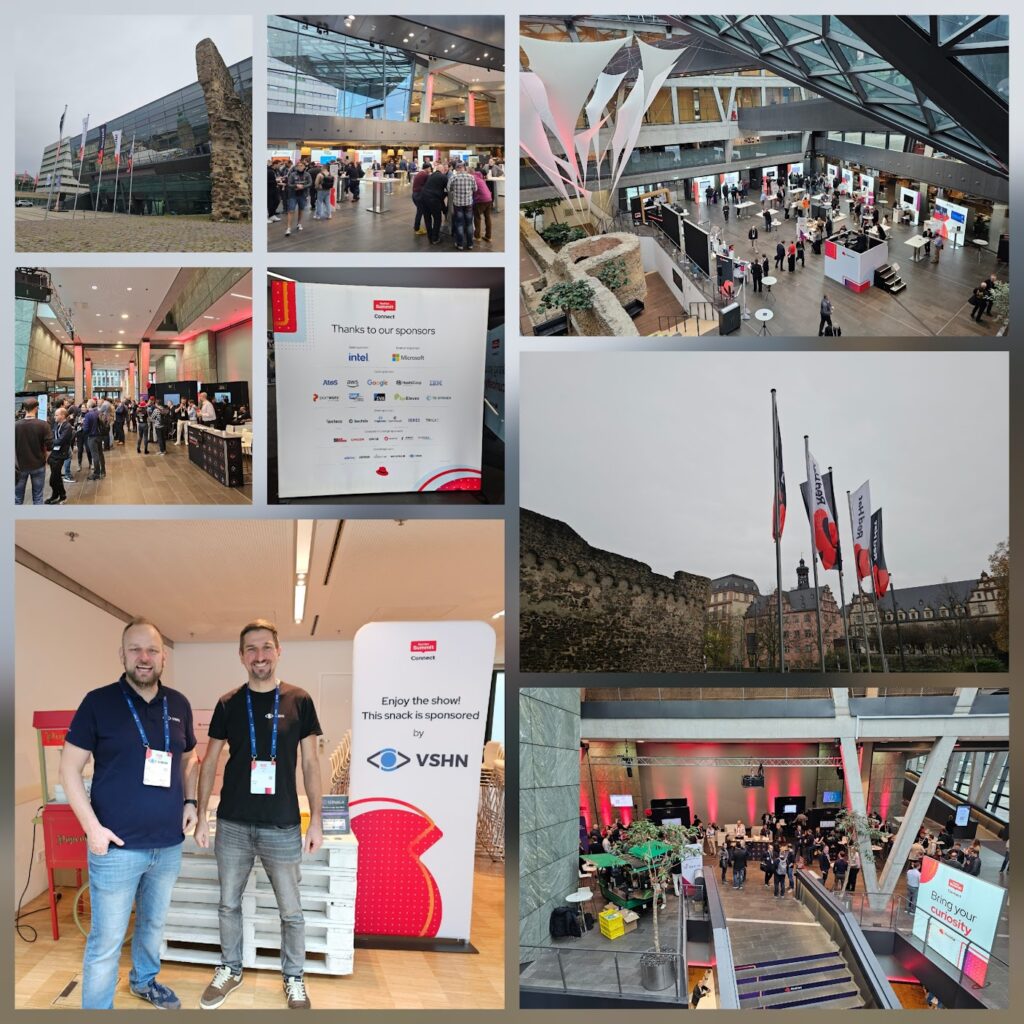
Yesterday we were at the Red Hat Summit: Connect in Darmstadt – and the trip was absolutely worth it. The event brought together cloud native specialists, platform engineers, partners, and long-time Red Hat users to discuss what’s next in AI, automation, Kubernetes, OpenShift, and enterprise open source.
For us at VSHN, events like this are always more than talks or product updates. They’re an opportunity to connect with the community, build new relationships, and exchange ideas with people who are actively shaping the future of digital infrastructure.
Aarno and Markus were at the VSHN booth, handing out delicious popcorn and talking with attendees about:
We had many great conversations with organizations expanding their OpenShift landscape, modernizing legacy applications, or taking on topics like digital sovereignty, automation, and hybrid cloud strategies.
A big thank you to the Red Hat team for the excellent organization, hospitality, and the strong community atmosphere we’ve come to appreciate.
Events like this remind us why open source continues to grow – because people come together, share knowledge, and build better technology together.
I’m Nabid, and I’m excited to join VSHN as part of Corporate IT while supporting the Polaris team! I graduated almost two years ago as a System Engineer (now called Platform Developer) and have since worked as a Workspace Engineer and in support at a financial institute.
Following a brief detour as an electrical planner, I’m thrilled to finally be working in the field I love. My journey into tech started young, after accidentally installing Ubuntu on the family computer and figuring out how to use it, I knew this was my path. IT has always fascinated me, especially hardware. During my IT apprenticeship, I even wrote laptop reviews for an Italian gaming/tech blog.
Outside of work, I’m into espresso making, tinkering with my home server, watches and playing Magic: The Gathering.
Looking forward to growing and contributing at VSHN!
Markus Speth
Marketing, Communications, People
Latest news
Events
General
Sovereignty
Navigating Open Source at Scale: Why Swiss Organisations Need a Sovereign Database Strategy
Sovereignty Washing – When ‘Sovereign Cloud’ Isn’t Really Sovereign
10. Nov 2025
In recent months, the word sovereignty has appeared everywhere in the tech world. From ‘sovereign clouds’ to ‘sovereign AI’, every vendor seems to offer something that sounds compliant, secure, and independent. But as with greenwashing or AI washing, we’re starting to see a new phenomenon emerge – sovereignty washing.
What is Sovereignty Washing?
Sovereignty washing happens when companies market their products as sovereign without truly giving users control, autonomy, or independence. Often, this means a provider hosts data in a local data center, adds a ‘.eu’ to their cloud name, and declares victory. But real digital sovereignty is much more than a ZIP code.
Sovereignty Is Not Just About Data Location
Yes, where your data resides matters. But even more important is who controls the infrastructure, software stack, and decision-making.
If the control plane, billing systems, or support teams still depend on a non-European parent company, then even a ‘local’ cloud can be forced to comply with foreign jurisdiction – whether through the CLOUD Act, extraterritorial export rules, or simply commercial lock-in.
In other words – sovereignty means the ability to make your own decisions, not just store your data in your preferred country or location.
Lessons from Industry – The Nexperia and Microsoft Cases
The recent story around Nexperia, a Dutch chipmaker owned by a Chinese company, and the German automotive industry’s current dependency on critical semiconductor supply already leading to short-time work and production stoppages, shows how strategic autonomy isn’t just a political slogan – it’s a business necessity.
When an entire sector relies on a single supplier, it loses bargaining power, flexibility, and resilience. The same applies to software and cloud platforms: If your critical systems only run on one hyperscaler, you are not sovereign – no matter how many ‘sovereign’ labels appear on your dashboard.
A recent case involving Microsoft underlines this risk on a global scale. The company blocked access to Outlook email accounts of employees at the International Criminal Court in The Hague, following U.S. sanctions compliance rules. The decision, reported by Heise Online, serves as a wake-up call for digital sovereignty in Europe – showing that control over essential communication infrastructure can be limited by non-European legal frameworks.
How to Spot Sovereignty Washing
So how can you tell if a vendor’s sovereignty claim holds up? Here are some questions worth asking:
Control: Who operates the platform and has access to the control plane?
Legal independence: Is the provider fully governed under EU or Swiss law, or are there foreign parent companies involved?
Open standards: Can I move my workloads to another provider without rewriting everything?
Transparency: Is the software stack open source or verifiable, or locked behind proprietary APIs?
Interoperability: Does the solution integrate with other vendors and clouds, or create another walled garden?
If the answer to most of these questions is ‘no’, chances are you’re looking at sovereignty washing.
Recent analyses like DNIP Briefing #48 – Dokumentierte Überwachung describe this problem vividly. The section “Cloud ohne Souveränität” points out how cloud providers without full jurisdictional control expose users to surveillance and dependency risks – demonstrating that technical sovereignty is meaningless without legal and operational sovereignty to match.
Why True Sovereignty Matters
For governments, public institutions, and regulated industries, true digital sovereignty is about long-term independence, not short-term convenience. It ensures continuity, resilience, and the freedom to innovate without being tied to one vendor’s roadmap.
At VSHN, we see sovereignty not as isolation, but as collaboration across open ecosystems – where European cloud providers, software vendors, and enterprises work together on open standards and interoperable solutions.
That’s the vision behind Servala – the Sovereign App Store, connecting vendors and providers and ensuring services can run on any cloud or on-premise, without lock-in.
Because real sovereignty means – choice, transparency, and trust.
📬 Curious to see how sovereignty works in practice? Join us at the Servala Ecosystem Day on December 1st in Zurich and help shape the future of open, sovereign cloud services.
The Cloud Native Computing Foundation (CNCF) has officially announced that Crossplane is now a Graduated project. (cncf.io) This confirms what we at VSHN AG have known for years: Crossplane is no longer an experiment. It’s a mature, production-ready technology backed by a strong community and solid governance.
It was accepted to CNCF in 2020 and entered incubation in 2021 and has now reached the Graduated maturity level on October 28, 2025 (cncf.io)
Over 3,000 contributors from 450+ organizations actively shape the project (cncf.io)
Why this is important
Graduation within CNCF means stability, proven governance, and community maturity. For the cloud-native and platform engineering world, this is a clear signal: Crossplane is not just an interesting idea – it’s a cornerstone of modern infrastructure management. For us at VSHN, it reinforces our long-standing trust in the technology and confirms our choice to build on a project that’s open, well-governed, and future-proof.
How VSHN Uses Crossplane
At VSHN, we’ve been working with Crossplane in production since early 2021. We were among the early adopters in Europe to embrace its declarative approach to cloud-native infrastructure management and have since built essential parts of our service platform on top of it. We use all major components of Crossplane – including Compositions, Composition Functions, Claims, Providers, and Configurations – to standardize and automate how we deliver infrastructure and applications across clouds.
Where we use Crossplane
Application Catalog – Our unified catalog of deployable applications and services for customers and partners is powered by Crossplane. It provides consistent definitions, templates, and provisioning logic that can run on any Kubernetes or OpenShift environment.
Servala Control Plane – Crossplane plays a key role in the orchestration layer of Servala, our Sovereign App Store. It manages and provisions services across different cloud providers and on-prem environments, ensuring that everything remains open, compliant, and vendor-independent.
How it helps us (and our customers)
Enables self-service provisioning of applications and services without manual intervention
Provides a single control plane for managing infrastructure across multiple cloud and on-prem environments
Makes our deployments repeatable, auditable, and compliant by design
Allows us to integrate and scale services easily across our multi-cloud ecosystem – from Exoscale and Cloudscale to on-prem enterprise setups
Related Reading
Want to learn more about how we use Crossplane at VSHN? Check out our other blog posts:
Crossplane’s CNCF Graduation is more than a badge – it is proof that the project has matured into a reliable, production-ready standard for cloud-native infrastructure. We are proud to have been part of this journey from the early days, using Crossplane to build scalable, compliant, and open platforms like the VSHN Application Catalog and the Servala Control Plane.
VSHN also has a CNCF Sandbox project: K8up – the backup operator for Kubernetes. It is another example of how we contribute to and shape the cloud-native ecosystem together with the community.
Markus Speth
Marketing, Communications, People
Latest news
Events
General
Sovereignty
Navigating Open Source at Scale: Why Swiss Organisations Need a Sovereign Database Strategy
VSHN @ Smart Country Convention 2025 – Recap from Berlin
6. Oct 2025
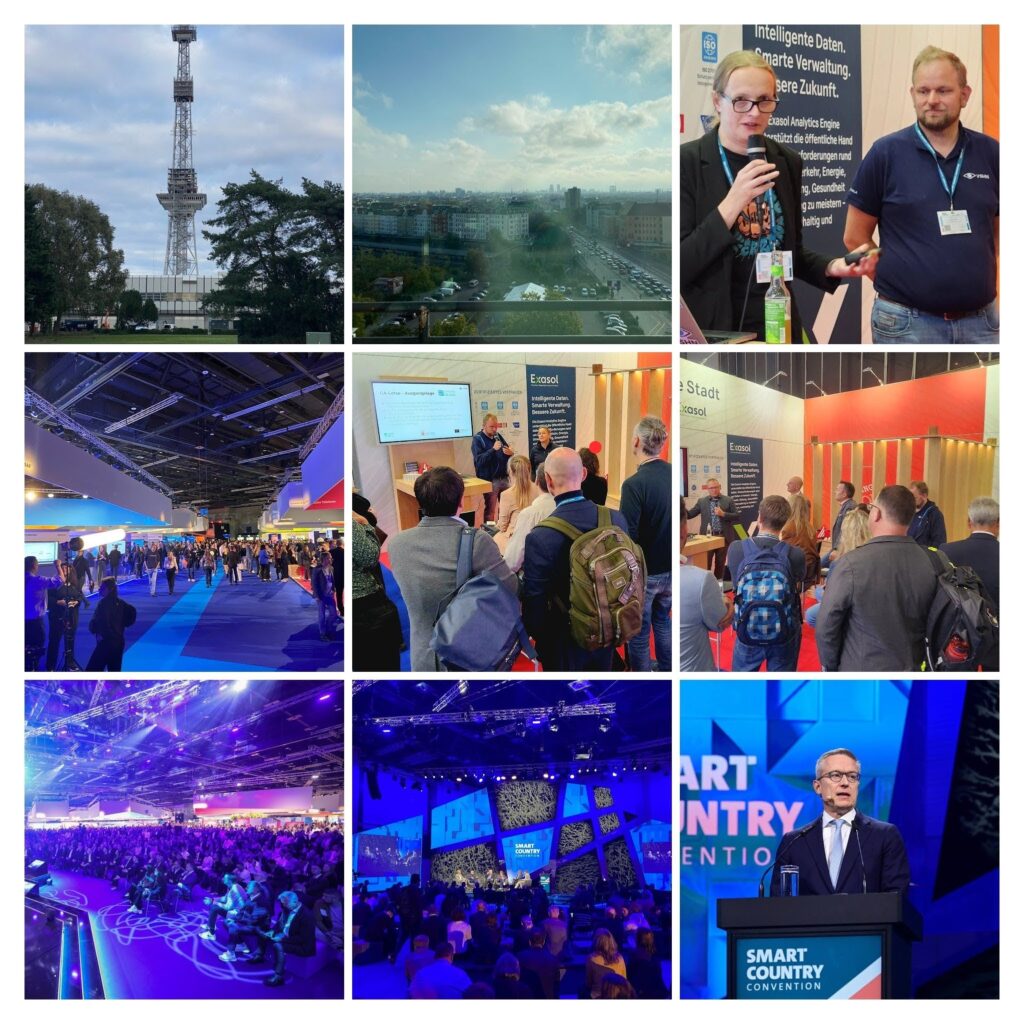
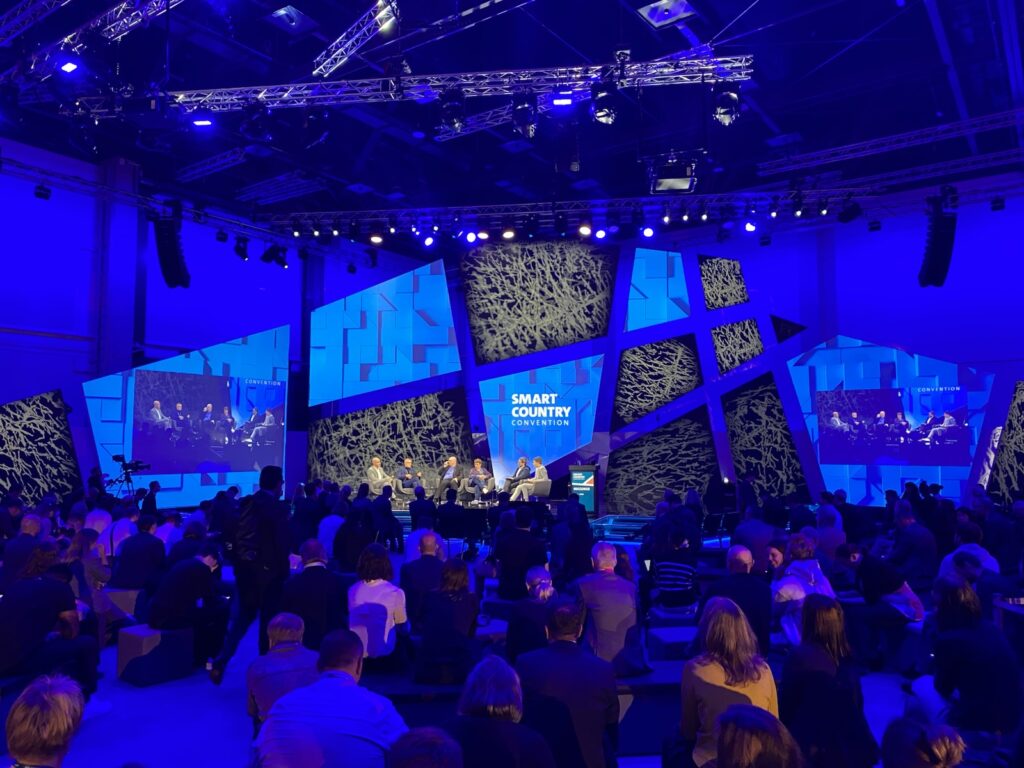
The Smart Country Convention 2025 (#SCCON25) has come to an end – and what an inspiring three days it was. From September 30 to October 2, hub27 at Messe Berlin became the central meeting point for everyone driving the digital transformation of government and public administration in Germany and beyond.
SCCON25 in Numbers and Highlights
Thousands of participants from government, politics, research, and technology
Numerous keynotes, panels, and workshops on topics such as digital government, AI and cloud, cybersecurity, smart cities, mobility, energy and sustainability, digital inclusion, and international cooperation
International delegations from over 140 countries took part in the matchmaking program
Startup competitions, awards, and best practice showcases
Among the most important political and industry voices were:
Dr. Karsten Wildberger, Federal Minister for Digital Transformation and Government Modernisation
Karin Prien, Federal Minister for Education, Family, Seniors, Women and Youth
Andrea Nahles, Chairwoman of the Federal Employment Agency
Bernd Wagner, CEO of STACKIT (the sovereign cloud of the Schwarz Group)
Dr. Markus Noga, Chief Technology Officer (CTO) at IONOS
Philipp Amthor, Parliamentary State Secretary at the Federal Ministry for Digital and State Modernisation
Other ministers, political leaders, and technology experts helped shape the program and made SCCON25 a key milestone on Germany’s path toward a digital future.
Day 1: Opening, Smart City Index, and Political Impulses
The event was officially opened under the patronage of the new Federal Ministry for Digital Transformation and State Modernisation. In a video message, Dr. Karsten Wildberger emphasized: “The Smart Country Convention has long been the hotspot for the digital state and our digital society – an innovation hub, think tank, and networking platform in one.”
A highlight of the first day was the presentation of the Smart City Index 2025, where Munich successfully defended its position as Germany’s leading digital city.
On the Plaza Stage, State Secretary Dr. Markus Richter and Bitkom CEO Dr. Bernhard Rohleder made it clear that digitalization has now reached the core of political strategy – it is not just about technology, but about the future viability of the state.
Day 2: Digital Government in Focus and Startup Energy
The second day focused on leadership, inclusion, and innovation:
Andrea Nahles opened with a keynote emphasizing that digital administration must be a leadership priority – not just a technical task for IT departments
Karin Prien called for stronger digital inclusion, highlighting the connection between public services, education, and trust in democracy
In the evening, the Smart Country Startup Award was presented – GovIntel won the competition, showing how agile innovation is essential for modernizing public administration
Day 3: Keynote and Outlook
The third day featured one of the most anticipated highlights:
At 13:30, Dr. Karsten Wildberger delivered his closing keynote outlining Germany’s digital priorities – from interoperable platforms to secure infrastructures and citizen-oriented services
Numerous workshops and sessions explored topics such as the Germany-Stack, AI in public administration, cybersecurity, and digital participation
During the international matchmaking sessions, more than 140 delegations engaged in targeted exchanges – a clear sign that digital government is a global topic
VSHN at SCCON25: GA-Lotse in the Spotlight
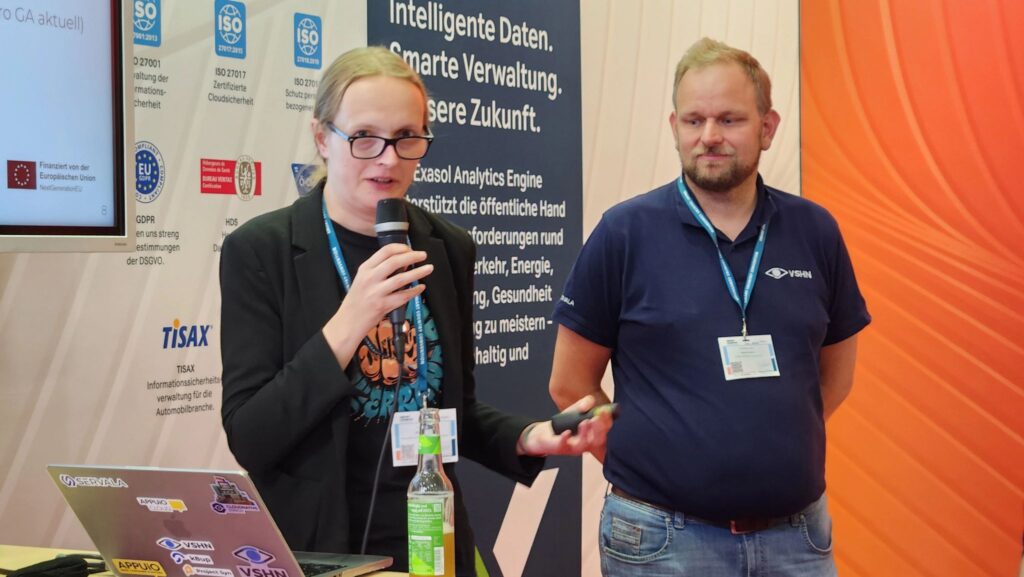
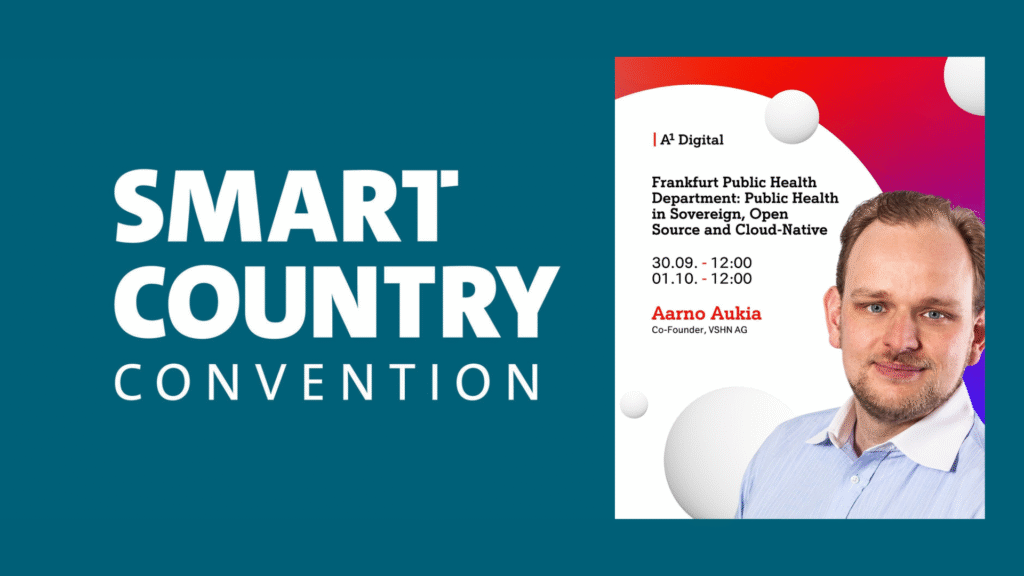
For VSHN, SCCON25 was the perfect opportunity to showcase our collaboration with the Public Health Authority of the City of Frankfurt am Main (Gesundheitsamt Frankfurt) and the open-source project GA-Lotse.
At the A1 Digital booth (Hall 25, Booth 100G), Aarno Aukia presented how GA-Lotse is helping to digitally transform the public health sector:
Created during the COVID-19 pandemic to meet the need for secure communication and scalable infrastructure
EU-funded and live since 2024 – already supporting several districts in the state of Hessen with modern, efficient digital services
Built on cloud-native infrastructure, zero-trust security, and DevOps practices provided by VSHN
Modular, sovereign, and open source – ensuring long-term reliability, data protection, and trust
👉 For more information about how VSHN supports the Frankfurt Health Department, read our success story.
Our presence at SCCON25 also highlighted the strength of our partnerships with A1 Digital and Exoscale, which enable us to deliver sovereign, cloud-native services for public institutions across Europe.
Key Takeaways from SCCON25
Digital transformation is a leadership responsibility – it must be driven from the top, not left to individual departments
Sovereign, open infrastructures are essential – especially for sensitive areas such as health and government
Startups are key partners – GovIntel’s success shows how agile innovation can strengthen the public sector
Education and inclusion go hand in hand – digital services must be accessible, trustworthy, and inclusive
International cooperation is becoming increasingly important – with over 140 delegations, it is clear that digital administration must be approached globally
Cities are the drivers of digital innovation – the Smart City Index shows where municipal transformation is already happening
Looking Ahead
SCCON25 was more than just a conference – it was a showcase of how Germany and Europe are shaping the digital state. For VSHN, it was a strong confirmation of our mission: to provide open, secure, cloud-native managed services that empower public institutions and citizens alike.
Our next steps:
Expanding GA-Lotse to additional regions and use cases
Strengthening partnerships with public authorities, governments, and technology providers
Applying the lessons learned to new public sector projects
A big thank you to everyone who visited us, joined Aarno’s talk, or connected with us at the booth. We are already looking forward to SCCON26 and to continuing the digital transformation together.
Contact VSHN
📬 Want to learn more about what we do or how we can support you? Get in touch – we look forward to hearing from you.
Markus Speth
Marketing, Communications, People
Latest news
Events
General
Sovereignty
Navigating Open Source at Scale: Why Swiss Organisations Need a Sovereign Database Strategy
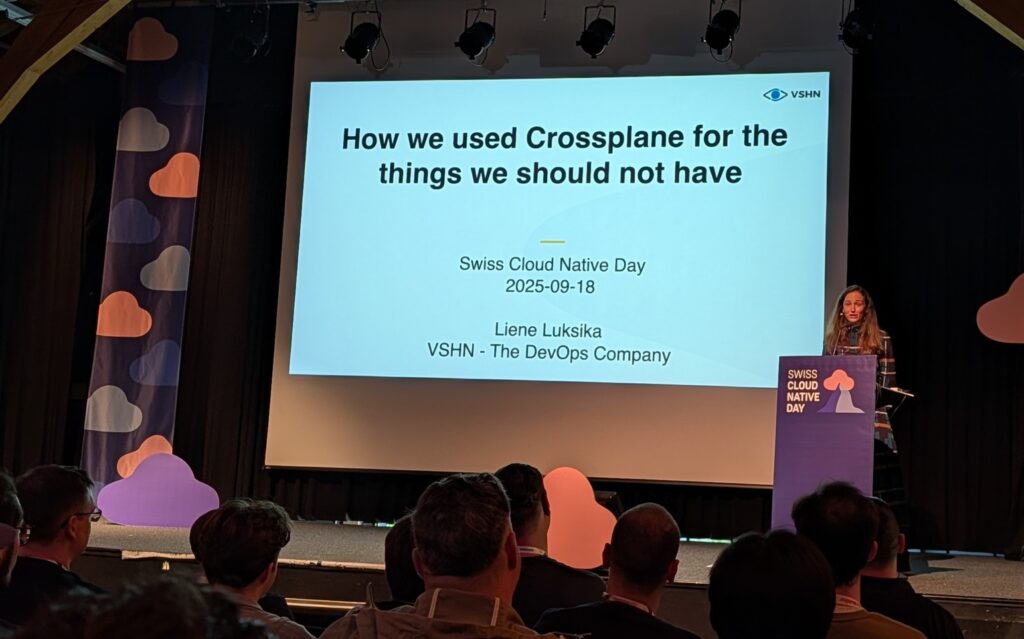
How we used Crossplane for the things we should not have
30. Sep 2025
At Swiss Cloud Native Day 2025 in Bern, our colleague Liene Luksika shared an honest and entertaining story about VSHN’s journey with Crossplane. What started as a simple use case evolved into a complex architecture, full of learnings, mishaps, and valuable lessons for anyone building managed services on Kubernetes.
From healthcare to cloud native
Liene comes from the healthcare sector, so when she joined the cloud native world at VSHN, she had to quickly get used to Kubernetes lingo – namespaces, instances, and of course, the obsession with laptop stickers. Luckily, VSHN has been around for more than 10 years, providing 24/7 managed services and building cloud native platforms for customers in Switzerland, Germany, and beyond.
Why Crossplane?
As customers increasingly asked VSHN to run their software as a service – databases, Nextcloud, and other critical apps – we needed a solid way to provision and manage infrastructure across private and public clouds. Crossplane seemed like the perfect fit:
It lets engineers define desired state vs. observed state
It automatically reconciles the two – like making coffee appear if that is your desired state
It provides flexible building blocks to expose clean APIs for managed services on Kubernetes
VSHN has used Crossplane in production since early 2021 (around v0.14) and runs the Crossplane Competence Center in Switzerland.
The evolution: from simple to complex
Our first use case was straightforward: a customer wanted two types of databases (Redis and MariaDB), T-shirt sized, no extras. Crossplane handled this beautifully.
Then reality hit. Customers wanted backups and restores, logs and metrics, alerting, maintenance and upgrades, scaling and user management, special features like Collabora for Nextcloud, and the freedom to choose infrastructure. To serve this, we adopted a split architecture:
A control cluster for all Crossplane logic
Separate service clusters for customer workloads
This runs today with customers like health organizations in Gesundheitsamt Frankfurt and HIN in Switzerland, on providers such as Exoscale and Cloudscale, keeping data sovereign and operations reliable.
When things go wrong
Building complex platforms means learning in production:
Deletion protection surprise: a minor Crossplane change removed labels before deletion, wiping our safeguard. Backups saved the day
Race conditions: a split approach to connection details occasionally made apps unreachable until we cleaned up code
The big one: during a planned “no-downtime” maintenance for a fleet with 1’300+ databases, objects hit an invalid state and Kubernetes garbage collection deleted 230 database objects. Some restores were fresh, some older. We pulled in 20 people overnight, communicated openly, and recovered together with the customer
Key lessons: test at realistic scale and keep recent, tested backups. Also, practice the restore path, not just the backup.
Crossplane 2.0 – where next?
Crossplane 2.0 introduces major breaking changes. Staying put is not an option, but migrating means real effort, especially for our split control plane architecture. We are evaluating whether Crossplane 2.0 fits our needs or if alternatives are a better match. As always, we will document our decisions openly in VSHN’s Architecture Decision Records.
Final thoughts
Cloud native success is not just about tools. It is about learning fast, designing for failure, and communicating clearly with customers. Crossplane has enabled a lot of innovation for us, and it has also tested us. Whether we proceed with Crossplane 2.0 or chart a different course, we will keep building sovereign, reliable, open managed services for our customers.
👉 Watch the whole video on YouTube:
Markus Speth
Marketing, Communications, People
Latest news
Events
General
Sovereignty
Navigating Open Source at Scale: Why Swiss Organisations Need a Sovereign Database Strategy
We’re excited to announce that VSHN (represented by Aarno Aukia) will be participating in the Smart Country Convention (SCCON) from 30 September to 2 October 2025, at hub27 on Messegelände Berlin. SCCON is Germany’s premier event for the digital state and public services.
What is the Smart Country Convention?
Smart Country Convention is a three-day congress, expo, and workshop format gathering public administrations, private sector innovators, researchers, and technology experts. It’s focused on:
Digital Government
AI & Cloud Technologies
Cybersecurity
Smart Cities & Regions
Mobility
Energy & Sustainability
Digital Inclusion & Skills
International Cooperation
Key Political Speakers & Agenda Highlights
Some of the top politicians and government leaders confirmed as speakers for SCCON25 include:
Dr. Karsten Wildberger – Federal Minister for Digitalization and Government Modernization (Germany)
Karin Prien – Federal Minister of Education, Family etc.
Other important names from politics, several ministers and corporate leaders will also be on stage, making SCCON25 a key meeting point for the digital future of Germany.
One of VSHN’s flagship projects is its collaboration with the Public Health Authority of the City of Frankfurt am Main (Gesundheitsamt Frankfurt), in the open-source initiative called GA-Lotse.
Highlights:
Why it started: COVID-19 accelerated the need for secure communication, scalable infrastructure, and better digital tools for health authorities
GA-Lotse: An EU-funded, open-source platform that provides modular, secure, scalable digital infrastructure for public health management
VSHN’s role: In 2024, VSHN won a public tender to provide platform engineering & DevOps for GA-Lotse, including cloud-native infrastructure, Zero-Trust security, and managed services
Results: The platform launched in October 2024 and is now supporting districts across Hessen with modern, efficient, and secure digital services
What We’ll Do: VSHN & Gesundheitsamt Frankfurt at SCCON
At the convention, VSHN’s Aarno Aukia will be giving a talk about our work with Gesundheitsamt Frankfurt. We’ll be at the A1 Digitalbooth, so if you are in Berlin, come by to chat. Topics we plan to cover:
The digital transformation process at Gesundheitsamt Frankfurt: challenges, lessons, outcomes
Cloud technologies, infrastructure, security: ensuring reliability, scalability, and privacy in public health services
Citizen-oriented services: what makes digital public health tools accessible, trustworthy, and resilient
Future outlook: what comes next, and what collaboration opportunities exist across government, technology providers, and citizens
Strong Partnerships: A1 Digital & Exoscale
We’re particularly happy to be present at the A1 Digital booth. This highlights our long-standing partnership with A1 Digital and Exoscale, which has been instrumental in building cloud-native, sovereign, and reliable services for enterprises and public institutions across Europe. Together, we empower customers with scalable infrastructure and trusted managed services.
Come Visit Us
If you’re planning to attend SCCON 2025:
📅 30 September – 2 October 2025, Berlin
📍 Hall 25, Booth 100G – hub27, Messe Berlin – at the A1 Digital booth, together with our partners A1 Digital & Exoscale
👋 We’ll have stories and insights ready – come by and let’s talk about the future of digital public services
We’d love to meet you, exchange ideas, and explore how we can together move forward the digital transformation of public health in Germany and beyond.
Markus Speth
Marketing, Communications, People
Latest news
Events
General
Sovereignty
Navigating Open Source at Scale: Why Swiss Organisations Need a Sovereign Database Strategy
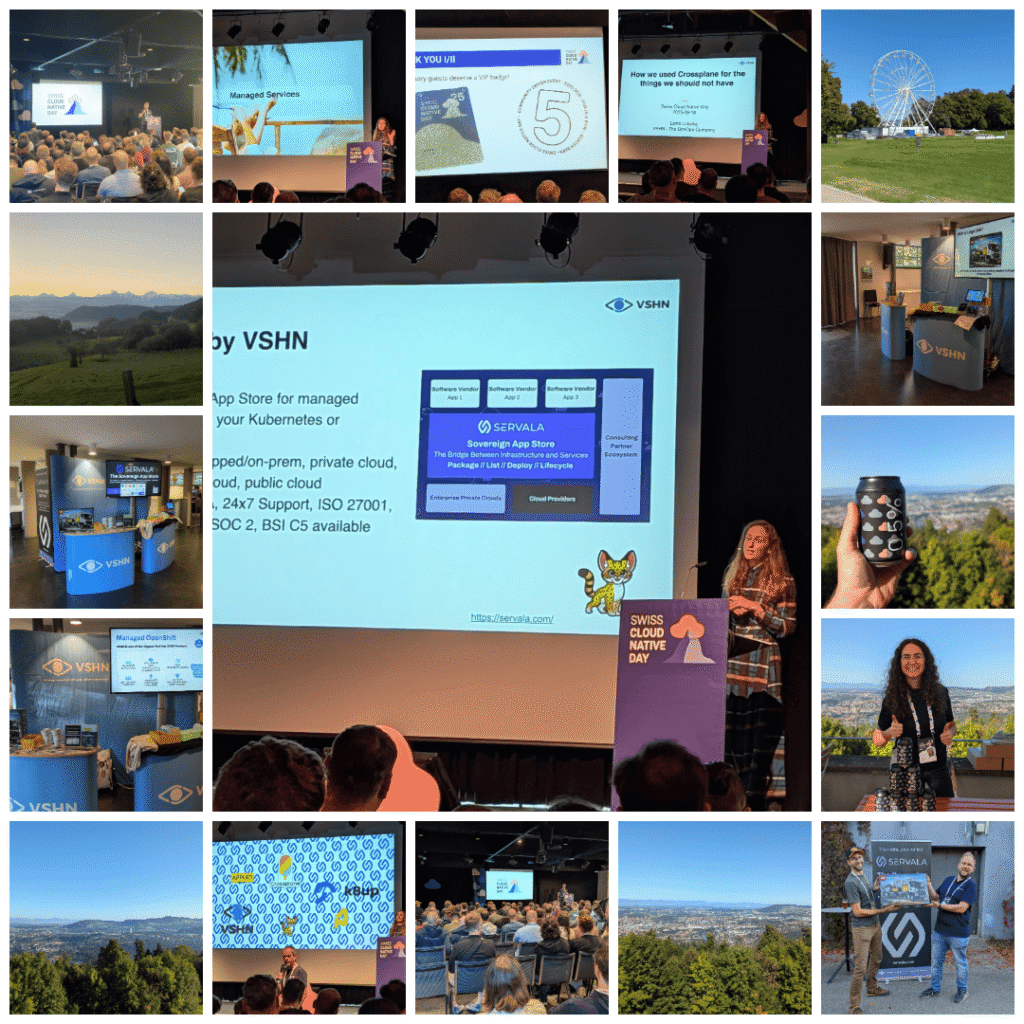
Swiss Cloud Native Day 2025 – A New Peak of Innovation & Community on Mount Gurten
September 18, 2025 – Bern, Switzerland
The clouds cleared, the funicular was full, and the Swiss cloud-native community came together once again – this time high up on beautiful Mount Gurten in Bern. Swiss Cloud Native Day 2025 was one of those special days where you could truly feel the energy: curiosity, knowledge sharing, and the momentum of a community building something big together. From newcomers to long-time experts, from platform engineers to toolmakers – innovation and collaboration were everywhere.
What made this year special
Location & setting. Mount Gurten offered an inspiring backdrop: beautiful, accessible, and high enough for big ideas. A perfect place for the cloud-native community to summit together.
Community focus. Organized by “bernerit.rocks”, the event showed once again that Swiss practitioners are not just consumers of cloud technology, but active shapers of how cloud-native culture, practice, and governance evolve locally – with a global outlook.
Great speakers. The program was packed with talks from PostFinance, SAP, Canonical, Exoscale, CERN and many more. Highlights included:
Julia Baum and Mohit Dalal on SAP’s internal developer platform
Benjamin Schimke from Canonical
Paul Farver from the LEGO Group, blending humor and deep insights with his role as “YAML Engineer & Minifigure Poser”
Our VSHNeer Liene Luksika with a powerful story about Crossplane
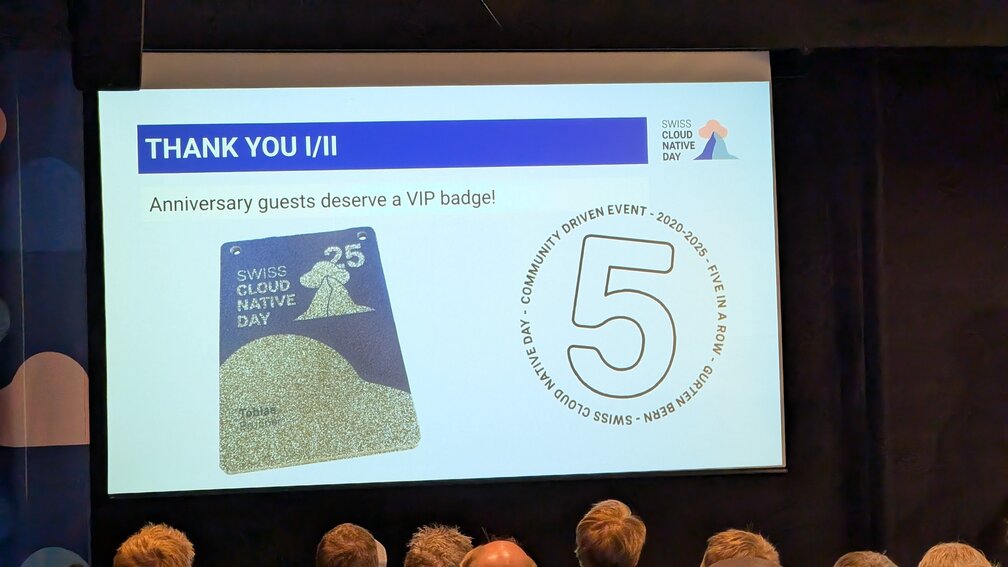
5 Year Swiss Cloud Native Day Special VIP Badge for attendees who attended all 5 years:
VSHNeer Spotlight – Liene Luksika on Crossplane
One of the day’s highlights was the talk by our colleague Liene Luksika: “How we used Crossplane for the things we should not have”.
Frameworks are meant to be tweaked – that is part of an engineer’s daily life. Even if a new cloud-native open source framework promises exactly what you are trying to build yourself.
Liene told the story of what Crossplane is and what we hoped it would be. She highlighted why the emerging Crossplane V2 is necessary and how it differs. Most striking was the real-life experience: when bending turned into breaking – and during a maintenance window we lost 230 production databases for a customer. The silver lining – we kept the customer, but fundamentally changed our approach. An honest, educational and inspiring session that gave the audience plenty of food for thought.
The LEGO touch
LEGO once again brought its magic to the event. A true highlight was Paul Farver’s talk “The Bricks That Make Us – How the LEGO Group Avoids 50 Mediocre Kubernetes Implementations”. With humor and seriousness alike, he showed how large organizations can avoid technical sprawl, ensure consistency, share best practices – and prevent reinventing too many wheels (or bricks).
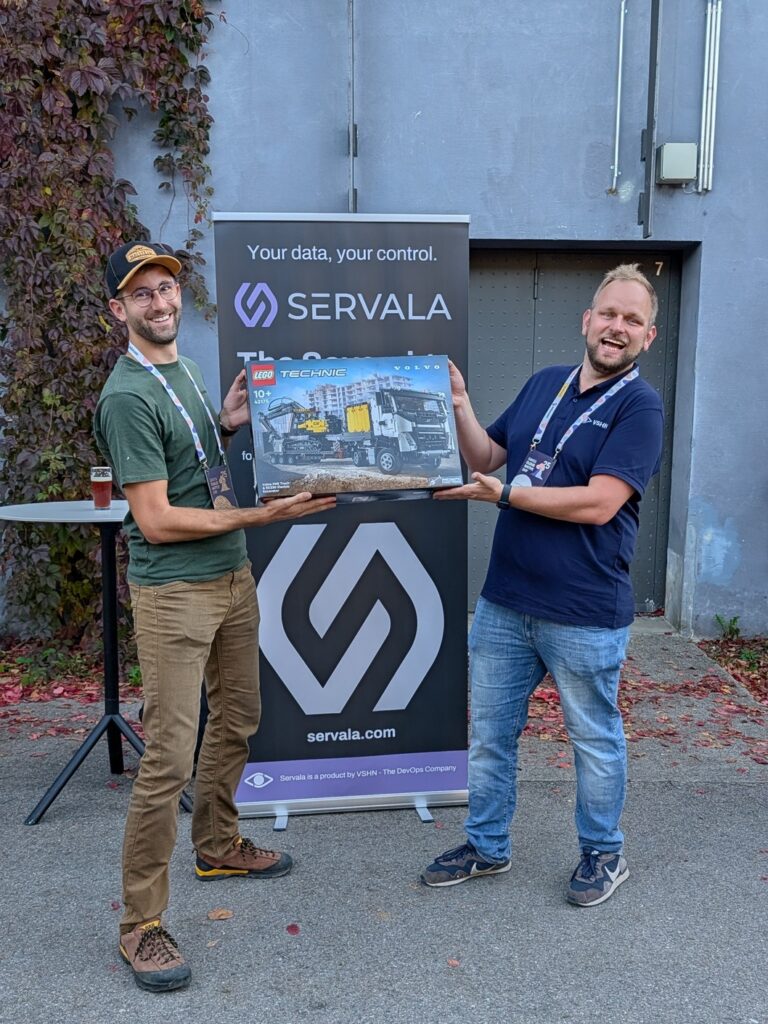
The VSHN LEGO competition once again lit up the room. This year’s winner Clément was celebrated with applause and lots of photos – a perfect symbol of the event: building together, brick by brick. Congratulations Clément!
Servala – Sovereign App Store
Another central theme at this year’s Swiss Cloud Native Day was Servala, the new Sovereign App Store by VSHN.
Why Servala stood out:
For software vendors, Servala offers an easy way to provide their products as managed services, distribute them through the marketplace, and reach enterprises without having to build their own operational infrastructure.
For enterprises and private clouds, Servala means standardized, managed services that meet compliance, security, and audit requirements – while still offering flexibility. A major step toward digital sovereignty.
For cloud providers, Servala is a true differentiator: infrastructure alone is no longer enough. The real value lies in services. A sovereign catalog of vetted managed applications is becoming increasingly important.
Conversations around Servala were lively: How do SLAs work, how is trust between providers and users established, what does data locality and regulation mean in Switzerland and Europe? The audience was clearly ready to dive deep into these questions.
What people talked about after the event
How to avoid reinventing the same Kubernetes architecture in different parts of an organization
What “sovereignty” really means in cloud-native contexts: data location, governance, open source, auditability, avoiding vendor lock-in
The role curated marketplaces like Servala play in helping teams move faster – but also safer
Interoperability and standardization – across cloud providers and within deployment pipelines
Conclusion
Swiss Cloud Native Day 2025 may have only lasted one day, but it truly packed a punch. Once again it showed that in the cloud-native ecosystem, technology alone is not enough – culture, community, trust, and sovereignty are just as important.
From Mount Gurten, the view was not just over Bern – it was also over a future where Swiss and European cloud-native solutions do not simply follow the big players, but carve their own path – shaped by openness, control, compliance, and innovation.
Markus Speth
Marketing, Communications, People
Latest news
Events
General
Sovereignty
Navigating Open Source at Scale: Why Swiss Organisations Need a Sovereign Database Strategy
I’m excited to join the Schedar team at VSHN as a DevOps Engineer. In my new role, I’ll be working on building and maintaining AppCat Services. I recently completed my apprenticeship in July as part of the first generation of platform engineers at the Canton of Aargau.
Computer science has always been a big part of my life. I grew up in a family of computer scientists, and as a kid, I would go to work with my dad and help him with small tasks like replacing server disks or installing new hardware. From that point on, I knew I wanted to follow in his footsteps.
During my first year of apprenticeship, I discovered containerization and instantly fell in love with it. I was able to support the team maintaining our Kubernetes environment, helping build it from the ground up, automating processes with Crossplane, and providing customers with the best possible experience. This work has always been more than just a job for me – it’s a growing passion.
Outside of work, I play baseball and serve as an umpire for the Swiss Baseball and Softball Federation. I also have a nerdy hobby: I’m a speedcuber. Solving Rubik’s cubes never fails to turn heads!
I’m looking forward to growing with the team and contributing to the excellent work here at VSHN!
Markus Speth
Marketing, Communications, People
Latest news
Events
General
Sovereignty
Navigating Open Source at Scale: Why Swiss Organisations Need a Sovereign Database Strategy
The Path to Digital Sovereignty – Kickoff Event of the SDS Network in Bern
28. Aug 2025
Today, on August 28, 2025, the kickoff event of the SDS Network – Sovereign Digital Switzerland took place at the Bern University of Applied Sciences. Numerous representatives from politics, public administration, and research shared valuable insights into current projects, challenges, and visions on the path toward greater digital sovereignty in Switzerland. Our colleague Tobias Brunner was on site and reported back from an inspiring morning.
Political and Strategic Perspectives
After the welcome by Matthias Stürmer and Pascal Stöckli from the Institute Public Sector Transformation (IPST), Nationalrat Gerhard Andrey presented the political dimension of digital sovereignty. It became clear: the demand for independence, transparency, and control over digital infrastructures is broadly supported and increasingly urgent.
Further contributions came from Matthias Schmutz of the Federal Department of Justice and Police (EJPD), and from Dominika Blonski, Data Protection Officer of the Canton of Zurich, who both emphasized the importance of governance and security architecture. Valentina Sulmoni from the Swiss Federal Office for Cybersecurity (BACS) highlighted the contributions of the National Cybersecurity Strategy to strengthening digital sovereignty.
Practical Examples from Federal and Local Authorities
Particularly interesting were the insights into concrete implementations:
Erica Dubach Spiegler from the Federal Chancellery presented the proof-of-concept “Office Automation with Open Source Software” (BOSS), based on open-source office software.
Werner Kipfer from the City of Zurich (OIZ) showed how the administration evaluates and pilots open-source solutions to reduce long-term dependency on proprietary systems.
International Impulses from Germany
A highlight of the event was the visit from the German Center for Digital Sovereignty (ZenDiS). Managing Director Alexander Pockrandt, Pamela Krosta-Hartl, and Leonhard Kugler presented the key solutions openDesk and openCode. The focus was not only on software but also on strengthening open-source communities and fostering cross-border cooperation in Europe.
Networking and Exchange
The event concluded with a panel discussion and a networking lunch – a valuable opportunity for participants to ask questions and make new connections. Tobias reported on an inspiring atmosphere and a clear message: digital sovereignty in Switzerland is moving from vision to practical implementation.
Official Review by the SDS Network
The SDS Network itself draws a very positive conclusion: more than 200 participants attended the kickoff event in Bern and online. A key outcome was the signing of a Letter of Intent between the Bern University of Applied Sciences (IPST) and the German ZenDiS. The two institutions plan to cooperate closely in the future on openDesk, the OSS Directory, and the planned Sovereignty Check.
All presentations, the event recording, and additional media coverage are publicly available. You can find the detailed review here: 👉 SDS Network Kickoff Event Recap
What does SDS mean?
The official definition of the SDS Network – Sovereign Digital Switzerland is as follows: “Digital sovereignty of a state or an organization necessarily includes full control over stored and processed data, as well as the independent decision about who may access it. It also encompasses the ability to independently develop, modify, control, and complement technological components and systems with other components.”
VSHN and Servala – The Sovereign App Store
For VSHN, digital sovereignty has been a key topic for many years. With Servala, our Sovereign App Store, we provide a platform where enterprises and public institutions can instantly and securely consume dozens of open-source services as managed services – with full control over data, infrastructure, and compliance. Servala combines the principles of digital sovereignty with the flexibility of modern cloud and DevOps technologies, making open source easy to use.
What is Kubernetes? The Engine of the Digital World, Simply Explained
22. Jul 2025
1. For the Curious but Non-Technical – What Are Containers, and What Is Kubernetes?
Imagine Switzerland’s world-famous logistics system: trains, trucks, planes, and, well, not too many ships – all reliably moving goods through mountains, valleys, cities, and across borders.
Now picture a few freight trains: each wagon is loaded with a container, and each container holds a specific product – cheese from Gruyères, watches from Biel, or chocolate from Bern.
In the digital world, software containers work the same way. Each container carries a specific application or service, along with everything it needs to run – the code, settings, and dependencies – so it can be moved and operated anywhere, whether that’s a laptop, a data center, or the cloud.
But what if you had hundreds or thousands of these containers running at once – all needing to be loaded, routed, monitored, restarted if they fail, and scaled up when demand grows?
That’s where Kubernetes comes in.
Just like a logistics control center coordinates trains, planes, and trucks across Switzerland and beyond, Kubernetes coordinates software containers. It decides where they should run, makes sure they’re healthy, scales them up and down, and restarts them if something goes wrong – all automatically.
Originally developed by Google, Kubernetes was inspired by the company’s internal system “Borg” and released as open source in 2014. Today, it’s maintained by the Cloud Native Computing Foundation and backed by a global community.
And even if you’ve never heard of Kubernetes before, it’s likely already part of your life. From online banking to e-commerce shops to streaming services – many of the apps you use every day are running on Kubernetes behind the scenes.
Just one example:
In short:
A container is a standardized software package that runs anywhere
Kubernetes is the smart system that operates thousands of containers efficiently
Without Kubernetes, companies would have to manage each container manually – like sending cargo across Switzerland without signals, schedules, or a central control tower.
A few ideas on how to explain Kubernetes in one sentence: 😊
2. A bit more technical – What Kubernetes actually does
Modern applications are no longer monolithic – they’re modular, cloud-native, and increasingly built around DevOps workflows. Instead of installing software directly on static servers, teams now package their applications into containers – lightweight, isolated units that include everything an app needs to run.
Now imagine you’re running:
50 services
500 containers
Across multiple environments (development, testing, production)
In a mix of public cloud, private servers, and edge locations
Managing that manually is not just difficult – it’s nearly impossible. That’s where Kubernetes comes in.
Kubernetes solves problems like:
Automatically starting and stopping containers based on real-time demand.
Restarting containers when something goes wrong.
Ensuring services are available and responsive.
Rolling out updates without downtime.
Distributing workloads to avoid overloading servers.
Real-world examples:
In retail: online shops use Kubernetes to handle traffic spikes, such as those on Black Friday. Kubernetes scales up – and then back down again to save costs.
In finance: Banks use Kubernetes to run apps that need high security and zero downtime, while continuously deploying new features.
In healthcare: Patient data platforms use Kubernetes to ensure compliance, redundancy, and secure access.
In SaaS: Tech companies use Kubernetes to ship updates faster, run multiple versions in parallel, and reduce infrastructure overhead.
Without Kubernetes, teams would still rely on scripts and manual steps to deploy and maintain software – slowing down innovation and increasing the risk of failure.
3. For the Tech-Curious – Clusters, Distributions, and What VSHN Does
What is a Kubernetes Cluster?
A single Kubernetes system is called a cluster. It includes:
Control plane: the brains of the operation, deciding what should run where.
Worker nodes: the servers where containers actually run.
Services and tools to keep things secure, observable, and resilient.
You can have a small cluster on your laptop or a massive multi-cluster setup across global data centers.
What is a Kubernetes Distribution?
Kubernetes is open source, but it comes in different versions called distributions – similar to how Linux has different flavors like Ubuntu or Red Hat. These are tailored variants of Kubernetes with added features, support, or integration.
Example Kubernetes distributions include:
Vanilla Kubernetes – the plain open source version.
Red Hat OpenShift – adds developer tools, hardened security, and enterprise support.
Rancher – focuses on multi-cluster and edge use cases.
EKS, AKS, GKE – managed Kubernetes services by AWS, Azure, and Google.
Each distribution serves different needs. Some focus on governance and compliance, others on developer experience or cost efficiency.
What VSHN Does with Kubernetes
At VSHN, Kubernetes is the backbone of everything we do.
We were the first Swiss Kubernetes Certified Service Provider (KCSP) and the first Swiss Red Hat Premier Certified CCSP Partner – official recognitions of our deep expertise and long-standing commitment to the Kubernetes ecosystem.
VSHN manages hundreds of Kubernetes clusters for customers of all sizes – from startups to banks and public institutions – running in public cloud, private cloud, on-premises, or Swiss or EU sovereign clouds like Exoscale, Cloudscale or IONOS.
We offer:
Managed OpenShift – We set up and operate your OpenShift cluster and take care of its entire lifecycle: security, monitoring, upgrades, and backups.
APPUiO – Expert hosting for expert software engineers. Our OpenShift Project-as-a-Service offering, ideal for getting started with Kubernetes at low cost. Try APPUiO for free at appuio.cloud/register with the code: K8s2025
Servala – Sovereign App Store – Our newest platform lets you deploy fully managed services – like databases, developer tools, and monitoring – in just a few clicks, all powered by Kubernetes.
Over the years, we’ve developed automation frameworks, monitoring tools, and proven best practices to help our customers focus on building software – not managing infrastructure.
Out of this experience, we’ve also launched two Open Source projects:
K8up – A Kubernetes backup operator and CNCF Sandbox project.
Project Syn – A modular, secure toolbox to manage fleets of Kubernetes clusters.
Where do Red Hat, OpenShift, and VSHN fit in the railway analogy?
Let’s stay with our Swiss railway analogy.
Kubernetes is the Swiss railway infrastructure – tracks, switches, schedules, and the control center. It ensures all trains (containers) run safely and efficiently.
Red Hat OpenShift is the premium freight rail operator – it adds polished locomotives, cargo workflows, and integrated safety systems to the tracks.
VSHN is your logistics partner and train operator – we run and maintain the network, the trains, and even the cargo. We make sure everything is on time, scalable, and secure.
Even better: with our Solutions, we don’t just operate the trains – we help you load, monitor, and optimize the containers inside.
And Servala? Think of it as the logistics warehouse next to the railway yard – a place where you can grab pre-packed cargo (managed services) and deploy it directly onto your Kubernetes rail network with a few clicks.
In this picture:
Red Hat builds the system and provides the premium trains (OpenShift).
VSHN operates the system reliably for you (Managed OpenShift, VSHN Solutions).
You focus on your cargo (apps) – while we ensure everything runs like a Swiss clock.
Why You Should Care – Even If You’re Not a Dev
Kubernetes is behind many of the services you use every day:
Online banking
E-commerce shops
Streaming services
Public digital services
Kubernetes is also a key technology for teams adopting DevOps – helping developers and operations work together more efficiently through automation, self-service infrastructure, and repeatable workflows.
For businesses, Kubernetes enables:
Faster time to market – deploy features daily, not quarterly.
Higher reliability – systems recover automatically from failure.
Cost optimization – only use the resources you need, when you need them.
Vendor flexibility – avoid cloud lock-in by running your workloads anywhere.
TL;DR
In 2025, Kubernetes is no longer a luxury – it’s the foundation of modern IT. Not just for tech giants – but for any team that wants to work faster and better. Kubernetes automates the deployment, scaling, and reliable operation of modern applications – in the cloud, on-premises, or in hybrid environments.
At VSHN, we make Kubernetes simple, reliable, and accessible – so you can build great digital products.
VSHN Joins the ‘Sovereign Digital Switzerland (SDS)’ Network
17. Jul 2025
SDS Network – The Network for a Sovereign Digital Switzerland
Zurich, July 17, 2025 – VSHN is proud to announce its membership in the SDS – Sovereign Digital Switzerland – network. As a company committed to openness, transparency, and digital self-determination since day one, we’re excited to further strengthen this mission alongside other forward-thinking organizations in the SDS community.
For us, digital sovereignty means having the freedom to decide where data is stored, how software is operated, and which technologies are used – without lock-in, and without relying on proprietary ecosystems. Achieving this requires open standards, interoperable systems, and a trusted ecosystem built on collaboration. These principles are at the core of everything we build:
and our open source projects K8up (Kubernetes backup) and Project Syn (DevOps automation).
Joining the SDS network is a natural next step. We believe that ensuring digital sovereignty can’t be done alone – it requires strong partnerships between the private sector, public institutions, academia, and civil society. The SDS network offers a unique platform to exchange ideas, develop joint solutions, and promote independent alternatives.
At VSHN, we embrace Open Source because we believe openness is the foundation of trust, innovation, and long-term independence. Through our involvement in SDS, we want to actively contribute to shaping a sovereign digital future for Switzerland – pragmatic, open, and responsible.
I joined the Nunki team in July as DevOps Engineer and already feel welcome. At Nunki I will support their AppOps efforts and help improve AppFlow.
My first job as Software Engineer was for schulNetz. After a quick break in Cameroon where I taught a PHP course at LinuxFriends (The site was put together by themselves after some hours of HTML4). I continued as Software Engineer at Supercomputing Systems. There, I retrofitted ticket vending machines for public transport and was involved in all stacks, from the provisioning of the vending machines over the Java application selling the tickets to the backend services. When we moved some parts over to Kubernetes, my previous knowhow from eCamp came handy.
My first steps with Kubernetes were with eCamp https://www.ecamp3.ch/en/, an open source platform to plan camps for boy and girl scouts, Jubla and other youth organsiations. Here I can live the developers dream: a good CI pipeline allows automated dependency updates with renovate, feature branch deployments simplify review and testing, and the deployment to prod is also mostly automated.
That’s more or less what’s left of my boy scout career. Once a week I am at my Judo club first lecturing a children’s training and then training myself in the evening. I am also always available for a board or card game.
I am eager to learn even more and help VSHN succeed. Lucius
Markus Speth
Marketing, Communications, People
Latest news
Events
General
Sovereignty
Navigating Open Source at Scale: Why Swiss Organisations Need a Sovereign Database Strategy
Success Story with the Frankfurt Public Health Authority: VSHN wins GA-Lotse tender to support the digitalization of German health departments
1. Jul 2025
How a Swiss SME is helping to digitalize Germany’s public healthcare system
VSHN wins public tender for GA-Lotse – a milestone for digital sovereignty and open source in public administration
Digitalizing Germany’s public healthcare infrastructure is a massive undertaking – complex, federally organized, and security-critical. That makes it all the more remarkable when a small, highly specialized company from Switzerland plays a central role: VSHN – The DevOps Company won the 2024 public tender issued by the City of Frankfurt am Main to host the unified software platform for Hesse’s public health departments. Since then, VSHN has been supporting the rollout of the digital infrastructure behind the open source GA-Lotse project.
VSHN was able to build the infrastructure in a short time – the public launch took place on schedule on October 1, 2024.
From Swiss DevOps specialist to digitalization partner in Germany
VSHN contributes its expertise in cloud-native operations, DevSecOps, and open source architecture – providing the GA-Lotse platform as a secure, scalable managed service. The project demonstrates clearly: small companies with the right know-how, experience, and modern practices can achieve great things – even in the highly regulated public sector.
GA-Lotse: Digitalization with sovereignty
GA-Lotse was created through EU funding aimed at modernizing public health offices. It deliberately focuses on:
Open source instead of vendor lock-in
Sovereign cloud instead of hyperscalers
Zero-trust architecture instead of outdated IT
Federated structures instead of centralization
Each county in Hesse runs its own GA-Lotse instance – compliant with data protection laws, adaptable, and interoperable. At the same time, anonymized statistics can be securely shared with state authorities. This model combines autonomy with collaboration – a prime example of digital sovereignty.
Why Frankfurt chose VSHN
By awarding the platform engineering and DevOps operations contract to VSHN, Frankfurt chose not just technology, but a mindset: openness, transparency, collaboration, and security at the highest level.
This SaaS-based approach relieves local health departments from infrastructure burdens, giving them more time to focus on their core mission – and lays the foundation for a modern, resilient IT infrastructure in the public sector.
A project with impact
The successful implementation of GA-Lotse shows what is possible when European values like data protection, sovereignty, and open source meet modern IT expertise. For VSHN, this is not just a technical project, but a contribution to the digital resilience of public infrastructure.
“I’m proud to help shape such an important part of our society together with our partners,” says Aarno Aukia, Co-Founder of VSHN.
Conclusion
Digital sovereignty starts with bold decisions – such as the choice to rely on open technologies. The fact that a Swiss SME like VSHN can help drive this development in Germany shows: expertise knows no borders. And neither does successful collaboration.
Read the full Success Story
Learn how VSHN and the Frankfurt Public Health Authority are driving digital transformation – read the full Success Story now.
Markus Speth
Marketing, Communications, People
Latest news
Events
General
Sovereignty
Navigating Open Source at Scale: Why Swiss Organisations Need a Sovereign Database Strategy
DevOps Meetup at Zühlke: Launching the DevOps in Switzerland Report 2025
27. Jun 2025
What an evening! On Wednesday, June 25th 2025, 50 DevOps professionals, platform engineers, and tech enthusiasts gathered at the Zühlke offices in Schlieren for a special edition of the DevOps Meetup – and the big reveal of the DevOps in Switzerland Report 2025.
🧩 Opening Talk: Simplicity – the Key to Survival for a 3‑Person DevOps Team
The evening kicked off with an inspiring talk by Urs Enzler, who shared lessons learned from running a time tracking application with a lean DevOps setup: just three developers and two business stakeholders – for nearly ten years!
Their secret? Simplicity.
Radical simplification across the board – from architecture and testing to communication and monitoring.
Minimal tooling – every tool must prove its value before being adopted.
Fast feedback cycles – enabling agility and continuous improvement.
The result: a low-maintenance, high-impact system with fast decision-making and sustainable DevOps practices. A powerful reminder that small teams can achieve big things – when they keep things simple.
📊 Report Presentation: DevOps in Switzerland 2025
Next up, Patrick Mathers and Romano Roth presented the findings of our brand-new DevOps in Switzerland Report 2025, based on input from hundreds of practitioners across the country. Key takeaways included:
Continued growth in automation, cloud maturity, and of course, AI
The rising importance of platform engineering and developer experience
Ongoing challenges with legacy modernization and organizational change
After the talks, the meetup transitioned into open discussions, snacks, and drinks. We’re incredibly grateful to everyone who joined, shared insights, and helped make this a true community event. Huge thanks to the Zühlke team for hosting!
Thanks again to everyone who made this evening a success – here’s to building the future of DevOps in Switzerland, together! 💪
Swiss Software Festival 2025 – A Celebration of Software, Community, and Innovation
26. Jun 2025
Wow – what a day! On June 24, 2025, the very first Swiss Software Festival took place in Basel – and it was absolutely fantastic. The atmosphere was inspiring, the conversations open and honest, and the program packed with top-tier content. At VSHN, we were proud to support the event as a Matterhorn Sponsor – and we’re already incredibly excited for the next edition! 🎉
Powerful Keynotes – Real Impulses for the Future
The two plenary sessions framed the day perfectly – with visionary perspectives on the future of software development and pressing questions around digital sovereignty.
Plenary 1 – The future of software development
Beat Fluri (CTO, Adnovum)
Staying Relevant in the Age of AI-Native Software Engineering
How AI-native approaches are transforming software development practices.
Egle Bronzini (Global Head of Informatics Chapters, Roche)
Creating a New Breed of Business Software for a New Generation of Users
What modern business solutions look like for today’s users.
Marc Stöcklin (Principal Research Scientist & Head of Security Research, IBM Research)
Cybersecurity in the Age of Quantum Computing
What security risks emerge in the era of quantum computing.
David Nüscheler (Adobe Fellow & VP Enterprise Technology, Adobe Systems)
Taking Digital Experience to a Next Level – Chat with David Nüscheler
How digital user experiences are evolving through new technologies.
Plenary 2 – Digital sovereignty versus global tech This session explored the tension between local control and global technology dependence – and how Switzerland can secure its digital future through open standards, resilient infrastructure, and political will.
Gerhard Andrey (Nationalrat, Grüne / Co-Founder & Verwaltungsrat, Liip)
The Importance of Digital Sovereignty for Democracy and the Economy
Why digital autonomy is strategically vital for Switzerland.
Marcel Salathé (Professor & Co-Director, EPFL AI Center)
Open Standards and Open Source as Foundations of Digital Independence
How tech ecosystems must be built to remain sustainable, open, and independent.
Safia Agueni (Präsidentin, Women in Tech Switzerland)
Sovereignty Begins with Diversity
Why true digital sovereignty is not possible without inclusion and diversity.
Panel Discussion with:
Patrick Geiser (Managing Director, Phoenix Technologies AG)
Özlem Civelek (COO, Basler Kantonalbank)
Alain Gut (Public & Regulatory Affairs, IBM Switzerland)
The panel explored how businesses, politics, and society can jointly develop solutions for digital independence – and how realistic it is to establish Swiss alternatives to global platforms.
This session clearly demonstrated how Switzerland can shape its digital autonomy – balancing regulation, technological sovereignty, and international competition.
While Switzerland – like Europe as a whole – is unlikely to compete directly with hyperscaler clouds or global hardware and chip production in the next 5 to 10 years, our talent, innovative strength, and collaborative spirit can help us build focused, valuable alternatives.
Gerhard Andrey summed it up well – just like Airbus was Europe’s answer to Boeing’s dominance, ambitious visions can succeed when driven by cooperation.
Cloud Native Track – Curated by Aarno Aukia
We were especially proud of the Cloud Native Track, curated by our Co-Founder Aarno Aukia (VSHN) – featuring a strong program of real-world challenges and practical solutions.
Session 1 – Cloud-Native Software in Practice
Aarno Aukia (VSHN) – Cloud Native in Switzerland 2025 – Definition, Benefits, and Outlook
Corsin Decurtins (CTO, G+D Netcetera) – Business-Critical Applications in the Cloud
Lena Fuhrimann (Founder, bespinian / Coalist) – Learnings from Ten Years of Cloud-Native and Serverless
Andreas Ruppen & Daniel Hogg (Adnovum) – Application Modernization and Migration from Legacy Mainframes
Session 2 – Cloud Infrastructure and Organisational Transformation
Mike Mannion (Senior Software Engineer, Karakun) – Organizational Shift to the Cloud
Stephane Barbey (Head of Product Development & Partner, Opacc) – Cloud Platform Design for High Standards
Ramon Bisswanger (Senior Software Engineer, Adobe Switzerland) – AEM as a Cloud Service – Seamless Upgrades at Scale
From platform building to sovereignty and modernization – these talks covered everything that truly matters in Cloud Native today.
Why VSHN Supported the Festival
At VSHN, it’s clear to us: the Swiss tech community is unique – and it deserves a stage like this. We had the opportunity to showcase VSHN, APPUiO, and Servala – Open Cloud Native Service Hub – while connecting with many inspiring new people. The Swiss Software Festival brings people together, sparks innovation, and strengthens Switzerland’s digital future. As a Matterhorn Sponsor, we were proud to support this mission – and thrilled by the energy, ideas, and open exchange throughout the event.
A Big Thank You ❤️
A huge thank you goes to the organizing team – you turned the Swiss Software Festival into a real highlight. From the carefully curated program to the smooth execution – everything was top-notch. The event clearly showed – there’s a genuine demand for formats like this.
We truly hope – and are confident – that there will be a sequel. Because when a premiere goes this well, the next step should be a no-brainer. 😊
Looking Ahead to 2026 – And Staying Involved 👋
Thank you to all the speakers, attendees, partners, and organizers – you made this day truly special. We’re already looking forward to the next edition of the Swiss Software Festival!
Now Available: DevOps in Switzerland Report 2025 🚀
25. Jun 2025
We’re absolutely thrilled to release the sixth edition of our “DevOps in Switzerland” report – and this time with a special focus on Platform Engineering and Artificial Intelligence (AI)! 🤖
From January to April 2025, we conducted a study with professionals from the Swiss tech community. The result: valuable insights into how DevOps teams in Switzerland work today – what tools they use, how their teams are structured, the challenges they face, and where AI is already being used in practice.
💡 Want a sneak peek?
💡Swiss companies are no longer asking whether to adopt DevOps – they’re asking how to scale it.
📈 Platform Engineering and AI are reshaping how teams ship software faster, safer, and smarter.
💡1 in 3 Swiss DevOps teams already use AI in production – for code reviews, CI/CD optimization, and architecture support. Another third are gearing up to follow.
💡54% of Swiss companies now have dedicated Platform Engineering teams.
Internal Developer Platforms (IDPs) are becoming the secret weapon for enabling autonomy and reducing complexity.
💡 Devs say yes to AI! 79% of Swiss developers are comfortable using AI in their workflows – but only 20% believe it’s fully ready.
The report shows: AI is promising, but needs better measurement and trust to scale.
You’ll find all of this (and much more!) in our compact PDF report (available in English only). Just like last year, the report begins with an executive summary – perfect for those short on time.